x


Hand-painted oil on canvas in your size and frame, made to order by our artists.





























Pick from our preset sizes that match the artwork's original proportions.

You may enter your own dimensions to fit a specific frame or space. If your selected size does not match the original image's proportions, we will either crop the artwork or extend the painting with additional hand-painted elements. A digital mockup will be sent for your approval before production begins.
Please note that the on-screen preview does not reflect the actual cropping or extension. Only the mockup will accurately show the final composition.
While custom sizes are available, we recommend selecting a dimension from the predefined list to preserve the original proportions.
Worldwide Delivery () in 3/4 weeks instead of standard 5 weeks. (18 July). No compromise on quality.


In Morocco
Reproduction Size
In the sun-drenched landscapes of North Africa, Sir John Lavery captures a scene of profound grace and leisurely splendor in his evocative work, In Morocco. The painting presents a captivating tableau of Edwardian elegance meeting the exotic allure of the Moroccan terrain. At the heart of this composition, a woman sits poised atop a majestic horse, her white dress luminous against the warm, earthy tones of the surroundings. As she holds an umbrella to shield herself from the North African sun, there is a palpable sense of tranquility and high-society adventure. The presence of companions and a loyal dog near the periphery adds a layer of domestic intimacy to this grand setting, suggesting a moment of respite during a much larger journey through a vibrant, foreign land.
Lavery’s mastery of light and atmosphere is on full display here, as he utilizes a painterly technique that breathes life into the heat and dust of the Moroccan landscape. The brushwork is fluid and confident, characteristic of his training at the Académie Julian, allowing the textures of the horse's coat, the delicate fabric of the woman's attire, and the ruggedness of the background to coexist in a harmonious balance. The composition is dynamic, with the diagonal line created by the horse’s body leading the viewer's eye across the canvas, creating a sense of movement that mimics the slow, rhythmic pace of travel through a desert oasis.
Created around 1910, this piece serves as a window into an era of colonial fascination and the romanticized view of the Orient held by European society. Sir John Lavery, a titan of portraiture, moves beyond his usual focus on the upper echelies of British society to explore a more expansive, atmospheric subject matter. This work reflects the broader artistic movement of the time, where painters sought to capture the "exotic" through a lens of light-filled Impressionism. The painting does not merely document a scene; it evokes the sensory experience of the era—the warmth of the sun, the scent of the dry earth, and the quiet luxury of a life lived with aesthetic intention.
For the discerning collector or interior designer, In Morocco offers more than just visual beauty; it provides a sophisticated focal point that brings a sense of worldly adventure and timeless class to any space. The neutral palette, punctuated by the brilliant white of the subject's dress, makes it an incredibly versatile piece for high-end decor. Whether placed in a sunlit library or a grand hallway, this reproduction invites conversation about history, travel, and the enduring power of the human spirit to find beauty in the most distant corners of the globe.

Sir John Lavery, born in Belfast in 1856, was a painter who effortlessly captured the spirit of his age – an era defined by both opulent Edwardian society and the somber realities of wartime. His journey from humble beginnings to becoming one of Britain’s most sought-after portraitists is a testament to his talent, ambition, and ability to navigate the complex social currents of his time. Orphaned early in life, Lavery found himself transplanted to Scotland, where he received foundational training at Haldane Academy in Glasgow during the 1870s. This initial exposure ignited a passion that would lead him to further studies at the Académie Julian in Paris in the early 1880s, immersing him in the heart of European artistic innovation.
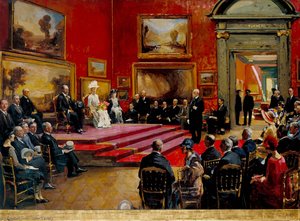
Upon his return to Glasgow, Lavery quickly became associated with the influential Glasgow School movement, absorbing its aesthetic principles and forging connections that would shape his early development. A pivotal moment arrived in 1888 when he secured a prestigious commission: painting Queen Victoria’s state visit to the Glasgow International Exhibition. This marked a turning point, catapulting him into the orbit of high society and prompting a move to London shortly thereafter. The commission wasn't merely a professional triumph; it signaled Lavery’s arrival as a painter capable of capturing not just likeness but also the grandeur and authority of his subjects.
Lavery’s artistic sensibilities were profoundly shaped by several key influences, most notably James McNeill Whistler. He admired Whistler's emphasis on tonal harmony, atmospheric effects, and a refined aesthetic sensibility – qualities that would become hallmarks of Lavery’s own style. The influence is visible in the delicate brushwork and subtle color palettes found throughout his oeuvre. Beyond Whistler, Lavery absorbed lessons from French Impressionism, incorporating elements of its broken color and emphasis on capturing fleeting moments of light. However, he never fully embraced Impressionism's radical departure from traditional form; instead, he synthesized these influences into a uniquely personal style that balanced elegance with modernity.
His early work often featured scenes of everyday life and landscapes, but it was his mastery of portraiture that truly established his reputation. Lavery possessed an exceptional ability to capture the essence of his sitters – their personality, social standing, and inner lives – on canvas. He skillfully blended Impressionistic techniques with a keen eye for detail, creating portraits that were both aesthetically pleasing and psychologically insightful. He wasn’t simply recording appearances; he was interpreting character.
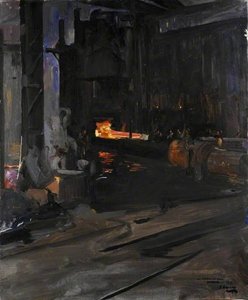
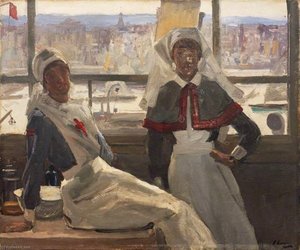
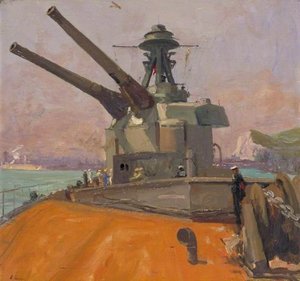
The outbreak of World War I brought a new dimension to Lavery's artistic practice. Like William Orpen, he was appointed an official war artist, tasked with documenting the conflict. However, persistent ill-health and a harrowing car accident – a consequence of a Zeppelin bombing raid – prevented him from serving on the Western Front. Undeterred, Lavery focused his attention on scenes within Britain, capturing the atmosphere of wartime life through depictions of boats, aeroplanes, and airships. These works offer a unique perspective on the war effort, focusing not on the horrors of trench warfare but on the technological advancements and logistical challenges that defined the conflict on the home front.
Following the war, Lavery’s contributions were formally recognized with a knighthood in 1921 and election to the Royal Academy. His life became increasingly intertwined with the social and political elite, particularly the Asquith family. He spent considerable time at their Thames-side residence, creating portraits and idyllic scenes that offered glimpses into their privileged world. He also found himself drawn into the turbulent events surrounding Irish independence, providing his London home as a neutral ground for crucial treaty negotiations.
Sir John Lavery’s legacy extends beyond his impressive body of work. He was a charismatic figure who moved effortlessly between artistic circles and high society, becoming a symbol of the era's cultural dynamism. His portraits remain highly prized for their elegance, technical skill, and insightful characterizations. Notably, his allegorical figure of Ireland appeared on Irish banknotes from 1928 until 1975 – a testament to his enduring national significance.
Lavery’s artistic style, characterized by its blend of Impressionistic techniques and meticulous detail, continues to inspire artists today. His ability to capture the essence of his subjects, combined with his mastery of light and color, ensures that his work will continue to captivate audiences for generations to come. He was a painter who not only documented his time but also helped define it, leaving an indelible mark on British art history.
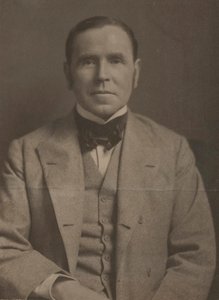
1856 - 1941 , Ireland

Explore 10 iconic portrait paintings – from Mona Lisa to Van Gogh’s self-portraits. Discover the stories behind these masterpieces, artistic techniques & find museum-quality art reproductions for your home at Most-Famous-Paintings.com.

Explore 10 iconic white paintings by Monet, Whistler & Rothko! Discover the stories behind these serene masterpieces and their impact on art history. Find museum-quality reproductions for your home decor at .

Explore the captivating world of vintage portrait art! Discover styles, techniques & the enduring appeal of 19th-century masterpieces. Expert restoration, custom reproductions & appraisal services at Most-Famous-Paintings.
Commission a timeless oil portrait from skilled artists at Most-Famous-Paintings. Preserve your family's legacy with museum-quality paintings, crafted to cherish for generations. Expert guidance & personalized service.
Explore 25 captivating portraits by Sir Joshua Reynolds, a master of British art. Discover stories behind his iconic paintings, elegant style & historical influence. Find museum-quality reproductions and elevate your home decor on Most-Famous-Paintings.com.


Stay updated with the latest art news, exclusive offers, and decoration ideas.
Tell us about your project and our art experts will provide you with 3 personalized art suggestions.
Let Us Curate 3 Options Just for You - Free!


 Buy print
 Send
Send Share
Share
 Details

 Download
 Similars
 X-Ray
X-Ray Diaporama

 Read More







 Glass option is only available in size under 110 CM