x


 OilWallArt18th Century Portraiture
 1768
1768 76.0 x 64.0 cm
 National Trust
Hand-painted oil on canvas in your size and frame, made to order by our artists.





























Pick from our preset sizes that match the artwork's original proportions.

You may enter your own dimensions to fit a specific frame or space. If your selected size does not match the original image's proportions, we will either crop the artwork or extend the painting with additional hand-painted elements. A digital mockup will be sent for your approval before production begins.
Please note that the on-screen preview does not reflect the actual cropping or extension. Only the mockup will accurately show the final composition.
While custom sizes are available, we recommend selecting a dimension from the predefined list to preserve the original proportions.
Worldwide Delivery () in 3/4 weeks instead of standard 5 weeks. (18 July). No compromise on quality.


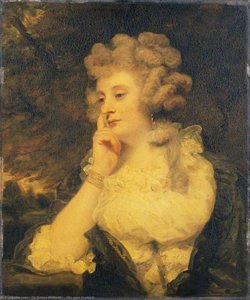
Montagu Edmund Parker of Whiteway (1737–1813)
Reproduction Size
The portrait of Montagu Edmund Parker of Whiteway, painted in 1768 by the towering figure of Sir Joshua Reynolds, is more than a simple likeness; it's a meticulously constructed tableau vivant, offering a rare glimpse into the opulent world of Georgian England. Reynolds, a master of the “Grand Style,” didn’t merely capture a man’s appearance; he sculpted an entire narrative around him – one that speaks volumes about status, wealth, and the prevailing ideals of the era. The painting depicts Parker in full military regalia, a testament to his position as a respected landowner and, crucially, a Sheriff of Devon. The rich blue uniform, meticulously embroidered with vibrant red trim, immediately announces his elevated social standing. His posture is upright, conveying an air of authority and self-assuredness, while the inclusion of the pipe – a common accessory for gentlemen of leisure – subtly hints at a cultivated, intellectual side.
Reynolds's approach to portraiture was revolutionary. He moved beyond simple representation, striving instead to create an idealized image that reflected the subject’s character and social standing. This is evident in Parker’s face – a carefully rendered study of features designed to project an impression of nobility and composure. Note the subtle modeling of the cheeks and forehead, the precise shading around the eyes, and the delicate rendering of his mustache. Reynolds employed a technique known as ‘chiaroscuro,’ skillfully manipulating light and shadow to create depth and drama within the composition. The diffused lighting, characteristic of his style, softens Parker’s features while simultaneously highlighting the textures of his uniform – the sheen of the silk, the intricate embroidery, and the polished gleam of his boots. The background, a subtly clouded sky, provides a neutral backdrop that doesn't distract from the subject but reinforces the sense of formality and importance.
Understanding the significance of Whiteway House – Parker’s estate near Chudleigh in Devon – is crucial to appreciating the portrait's full meaning. Built in the 1770s by John Parker, a prominent figure within the local gentry, the house represented the culmination of generations of wealth and influence. The commission of this portrait by Montagu Edmund Parker himself underscores his desire to solidify his family’s legacy and project an image of prosperity and respectability. The fact that Reynolds, one of the most celebrated artists in England at the time, was chosen speaks volumes about Parker's social standing and the esteem in which he was held within Devon society. The house itself, a Grade II* listed Georgian masterpiece, stands as a tangible link to this period of aristocratic grandeur.
Beyond its technical brilliance, the portrait is laden with symbolic meaning. The military attire signifies Parker's civic duty and his connection to the established order. The pipe, a symbol of leisure and contemplation, suggests an appreciation for intellectual pursuits – a common trait among the landed gentry of the time. Furthermore, the inclusion of the cloudy sky can be interpreted as a reflection of the uncertainties and challenges faced by society during this period, subtly acknowledging the complexities beneath the veneer of aristocratic privilege. The portrait isn’t simply a depiction of a man; it's a carefully orchestrated statement about his identity, his family, and his place within Georgian England.
Reproductions of Sir Joshua Reynolds’s Portrait of Montagu Edmund Parker of Whiteway offer an exceptional opportunity to experience the artistry and sophistication of this iconic work. The meticulous detail, masterful use of light and shadow, and profound understanding of human character are all faithfully captured in high-quality reproductions. Whether adorning a grand salon or a more intimate space, this portrait serves as a powerful reminder of the elegance, social complexities, and enduring artistic legacy of Georgian England. It’s an investment not just in art, but in a window into a fascinating era.


1723 - 1792 , United Kingdom
Explore 25 captivating portraits by Sir Joshua Reynolds, a master of British art. Discover stories behind his iconic paintings, elegant style & historical influence. Find museum-quality reproductions and elevate your home decor on Most-Famous-Paintings.com.

Explore 10 iconic portrait paintings – from Mona Lisa to Van Gogh’s self-portraits. Discover the stories behind these masterpieces, artistic techniques & find museum-quality art reproductions for your home at Most-Famous-Paintings.com.

Journey through 18th century art! Explore 10 iconic paintings – from Rococo elegance to Neoclassical grandeur. Discover Fragonard, David & more. Find museum-quality reproductions and elevate your home decor on Most-Famous-Paintings.com.

Explore the life & work of Sir Joshua Reynolds, a master of British portraiture and founder of the Royal Academy. Discover his 'Grand Style,' techniques, and lasting influence on art history. Learn more at Most-Famous-Paintings.
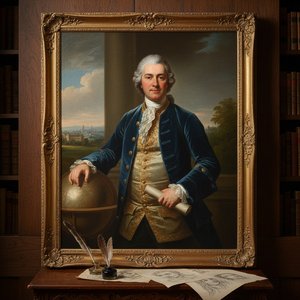
Explore the life & work of Thomas Hudson, a leading 18th-century British portraitist. Discover his mastery of the 'Grand Manner,' influential style, and lasting impact on British art. Learn about his notable portraits like Judge William Noel & Alexander Van Aken.


Stay updated with the latest art news, exclusive offers, and decoration ideas.
Tell us about your project and our art experts will provide you with 3 personalized art suggestions.
Let Us Curate 3 Options Just for You - Free!


 Buy print
 Send
Send Share
Share
 Details

 Download
 Similars
 X-Ray
X-Ray Diaporama
 Read More







 Glass option is only available in size under 110 CM