x


Hand-painted oil on canvas in your size and frame, made to order by our artists.





























Pick from our preset sizes that match the artwork's original proportions.

You may enter your own dimensions to fit a specific frame or space. If your selected size does not match the original image's proportions, we will either crop the artwork or extend the painting with additional hand-painted elements. A digital mockup will be sent for your approval before production begins.
Please note that the on-screen preview does not reflect the actual cropping or extension. Only the mockup will accurately show the final composition.
While custom sizes are available, we recommend selecting a dimension from the predefined list to preserve the original proportions.
Worldwide Delivery () in 3/4 weeks instead of standard 5 weeks. (18 July). No compromise on quality.


The Adoration of the Magi (detail)
Reproduction Size
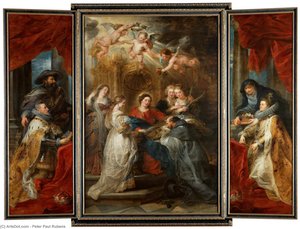
Sir Peter Paul Rubens’ “Adoration of the Magi” is not merely a painting; it's an immersive experience, a vibrant testament to the dynamism and emotional intensity that defined the High Baroque era. Completed in 1633-34 during his time in Cambridge, England, this monumental work transcends its biblical subject matter to become a profound meditation on faith, humanity, and the sublime beauty of creation. The painting’s scale – measuring an impressive 4.2 meters by 3.2 meters – immediately commands attention, drawing the viewer into a meticulously constructed world teeming with life, color, and intricate detail.
Rubens, a master of composition and color theory, employs a dramatic pyramidal structure to organize the scene. At its apex stands the Virgin Mary, radiating serenity and maternal grace, presenting her newborn Jesus to the assembled Magi. The figures are not static; they surge forward with an almost palpable energy, their gestures and expressions conveying a sense of joyous reverence. The use of *chiaroscuro*, the dramatic interplay of light and shadow – a hallmark of Rubens’ style – intensifies this dynamism, highlighting key figures and creating a rich tapestry of textures and tones. Notice how the light seems to emanate from the star above, bathing the central group in an ethereal glow.
The painting's narrative is rooted firmly in the Gospel account of the Magi’s journey to Bethlehem, but Rubens elevates it through a complex layering of symbolism. The Magi themselves – Gaspar, Melchior, and Balthazar – represent the diverse cultures and ethnicities that contribute to the Christian faith. Their opulent robes and lavish gifts—gold, frankincense, and myrrh—symbolize the richness and value of their devotion. Beyond the biblical story, Rubens skillfully incorporates classical allusions. The ruins in the background, reminiscent of Roman temples, subtly connect the scene to antiquity, suggesting a continuity between pagan and Christian worlds. The presence of these architectural fragments hints at the triumph of Christianity over the old order.
The inclusion of figures like Saint Joseph, observing from the side, adds another layer of complexity. He represents the earthly wisdom and guidance necessary for nurturing the divine child. Even the seemingly minor details—the peacock perched on a classical column, the palm tree reaching towards the heavens—are laden with symbolic meaning, enriching the painting’s visual vocabulary.
Rubens' virtuosity is evident in every brushstroke. He employed a technique known as *alla prima*, working directly onto the wet canvas without underdrawing, allowing for spontaneous expression and vibrant color saturation. The painting’s palette is extraordinarily rich and varied, utilizing a dazzling array of reds, blues, greens, and golds. Rubens was renowned for his use of oil paint, which allowed him to achieve incredible luminosity and depth. He skillfully layered glazes to create an almost three-dimensional effect, capturing the textures of fabrics, skin, and hair with astonishing realism.
The canvas itself is a crucial element. Rubens often used large-scale canvases, allowing him to work with expansive compositions and capture a sense of grandeur. The scale of “Adoration of the Magi” perfectly reflects this approach, creating an immersive experience for the viewer. It’s important to note that the painting was originally intended as an altarpiece, designed to dominate a chapel space and inspire awe in its viewers.
“Adoration of the Magi” remains one of Rubens' most celebrated works, admired for its dramatic intensity, masterful composition, and breathtaking color. It embodies the spirit of the Baroque era—a time of exuberant emotion, dynamic movement, and a profound engagement with religious themes. Today, reproductions offer a remarkable opportunity to experience this monumental masterpiece in your own home or office, bringing its vibrant energy and timeless beauty into your space. Consider how the painting’s rich colors and dramatic lighting can transform any room, creating an atmosphere of reverence and inspiration.
Sir Peter Paul Rubens, a name that resonates with the very essence of Baroque dynamism, was far more than simply a painter. He was a diplomat, a scholar, and a cultural architect who fundamentally reshaped the artistic landscape of 17th-century Europe. Born in Siegen, Germany, in 1577, his early life was marked by displacement—a formative experience that would subtly permeate his later work with an undercurrent of drama and emotional depth. His father, Jan Rubens, a lawyer fleeing religious persecution for his Calvinist beliefs, uprooted the family from their native Antwerp, then under Spanish rule. This initial exile instilled in young Peter Paul a sense of resilience and adaptability, qualities that would serve him well throughout his multifaceted career. Following his father’s death in 1587, the family returned to Antwerp, where he received a humanist education before embarking on his artistic training around 1590, apprenticing under Tobias Verhaecht and Adam van Noort, honing foundational skills in drawing and painting techniques. However, it was his time with Otto van Veen that proved pivotal, exposing him to the rich legacy of Italian Renaissance art—a world he would soon embrace wholeheartedly.
In 1600, Rubens embarked on a transformative journey to Italy, a pilgrimage that irrevocably shaped his artistic vision. For eight years, he immersed himself in the masterpieces of Michelangelo, Raphael, and Titian, absorbing their mastery of form, color, and composition. The influence of these Renaissance giants is readily apparent in his early Italian works, characterized by classical themes and idealized figures. Yet, Rubens didn’t merely imitate; he synthesized these influences with his own innate talent, developing a distinctive style marked by vibrant hues, dynamic compositions, and a sensuous depiction of the human form. He studied anatomy meticulously, resulting in figures that possessed both physical realism and emotional power—robust bodies imbued with life and movement. This period wasn’t solely about artistic development; it was a profound intellectual awakening, fostering a deep appreciation for classical mythology and literature which would become recurring motifs throughout his oeuvre. Upon returning to Antwerp in 1608, Rubens swiftly established himself as the leading artist of his time, receiving a flood of commissions that testified to his burgeoning reputation and solidifying his position at the forefront of Flemish art.
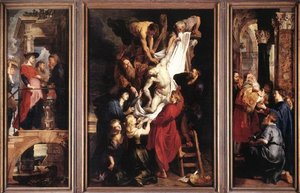
Rubens’s artistic output was astonishingly diverse and prolific. He didn't confine himself to a single genre; instead, he excelled in history paintings, mythological scenes, portraits, landscapes, and religious works—a testament to his versatility and boundless creativity. His large-scale canvases, often intended for churches, palaces, and public spaces, were breathtaking displays of technical virtuosity and dramatic storytelling. The Descent from the Cross (c. 1616-1617) exemplifies his masterful use of light and shadow to create a scene of profound emotional intensity, drawing viewers into the heart of the narrative. The Raising of the Cross (1610-1611), with its swirling figures and dynamic composition, showcases his ability to convey movement and energy—a hallmark of his Baroque style. Even in seemingly static subjects like The Judgement of Paris (c. 1636), Rubens infused a sense of life and vitality through his vibrant color palette and sensual depiction of the human form. His technique was equally remarkable – a masterful command of oil painting, employing impasto to create texture and depth, alongside delicate glazing techniques to achieve luminous effects. He frequently employed allegorical figures and symbolic imagery, layering narratives with complex meanings that invited contemplation and interpretation.
Rubens’s influence extended far beyond the realm of art. His diplomatic skills were highly sought after by the Southern Netherlands (modern-day Belgium), and he undertook numerous missions to England, France, and Spain, negotiating treaties and fostering political alliances—a unique dual role that afforded him a nuanced perspective on European affairs and further enhanced his reputation as a man of intellect and influence. In 1630, he married Hélène Fourment, who became both his muse and frequent subject in his paintings – her youthful beauty gracing many of his later works, embodying the sensuality and vitality that characterized his style. He continued to paint prolifically until his death in Antwerp in 1640, leaving behind a vast legacy that continues to inspire awe and admiration. His impact on subsequent generations of artists is immeasurable; painters like Anthony van Dyck, Jacob Jordaens, and Eugène Delacroix all drew inspiration from his dynamic compositions, vibrant colors, and sensuous figures. Rubens didn’t just define the Baroque style—he elevated painting to a new level of prestige and influence, solidifying Antwerp as a major center of artistic production during the 17th century. He remains, centuries later, a towering figure in the history of art, a testament to the power of human creativity and the enduring allure of Baroque splendor.

1577 - 1640 , Germany

Explore the dramatic world of Baroque painting! Discover its history, defining characteristics, iconic artists like Caravaggio & Rubens, and lasting influence on Western art. Expert insights for collectors.
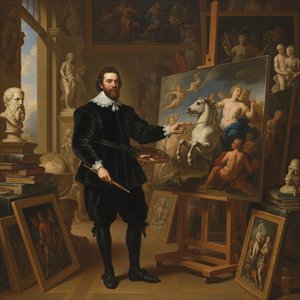
Discover the life & art of Peter Paul Rubens, the most influential artist of the Flemish Baroque tradition. Explore his masterpieces, legacy, and impact on art history with Most-Famous-Paintings.

Journey through art history with our guide to 10 legendary oil on canvas masterpieces! Explore iconic works by Van Gogh, Monet & Rembrandt. Find museum-quality reproductions and elevate your home decor at . Discover all masterpieces online.

Journey into the Early Netherlandish Renaissance! Explore 10 iconic paintings by Jan van Eyck, Rogier van der Weyden & more. Discover stunning detail, symbolism, and oil painting techniques. Find museum-quality art reproductions for your home at Most-Famous-Paintings.com.
Explore 25 breathtaking Raphael paintings! Journey through the Italian Renaissance with masterpieces like 'School of Athens' & iconic Madonnas. Find museum-quality art reproductions and elevate your home decor on Most-Famous-Paintings.com.


Stay updated with the latest art news, exclusive offers, and decoration ideas.
Tell us about your project and our art experts will provide you with 3 personalized art suggestions.
Let Us Curate 3 Options Just for You - Free!


 Buy print
 Send
Send Share
Share
 Details

 Download
 Similars
 X-Ray
X-Ray Diaporama

 Read More







 Glass option is only available in size under 110 CM