


x


Hand-painted oil on canvas in your size and frame, made to order by our artists.





























Pick from our preset sizes that match the artwork's original proportions.

You may enter your own dimensions to fit a specific frame or space. If your selected size does not match the original image's proportions, we will either crop the artwork or extend the painting with additional hand-painted elements. A digital mockup will be sent for your approval before production begins.
Please note that the on-screen preview does not reflect the actual cropping or extension. Only the mockup will accurately show the final composition.
While custom sizes are available, we recommend selecting a dimension from the predefined list to preserve the original proportions.
Worldwide Delivery () in 3/4 weeks instead of standard 5 weeks. (18 July). No compromise on quality.


Updating Yamantaka
Reproduction Size
Tenzing Rigdol's "Updating Yamantaka" isn't merely a painting; it’s an arresting collision of ancient Tibetan iconography and contemporary unease. Created in 2010, this work transcends the boundaries of traditional thangka art, forcing us to confront uncomfortable truths about power, death, and the unsettling ways they intersect within our world. At first glance, the composition appears deceptively serene – a vibrant tapestry woven with pastel hues, intricate textile patterns reminiscent of Tibetan prayer rugs, and the solemn script of sacred texts. However, a closer examination reveals a deliberate subversion of established artistic conventions, culminating in an image that is both profoundly unsettling and intellectually stimulating.
The central figure, Yamantaka – the Lord of Death and King of the Law within the Tibetan Buddhist tradition – dominates the canvas. Traditionally depicted astride a buffalo relentlessly pursuing a human victim, symbolizing the inescapable cycle of life and death, Rigdol’s interpretation diverges dramatically. The anonymous, everyman figure representing the sacrificed individual is replaced with the unmistakable face of Osama bin Laden. This jarring juxtaposition isn't gratuitous; it serves as a potent metaphor for the anxieties of the 21st century – a world grappling with global terrorism, political instability, and the pervasive sense that ancient philosophical concepts are suddenly rendered terrifyingly relevant.
Rigdol’s artistic approach is deeply rooted in his Tibetan heritage, yet he doesn't simply replicate traditional styles. He masterfully blends these established techniques with elements of contemporary art, incorporating influences from American Sign Language (ASL) – a subtle nod to his dual identity as a Tibetan-American artist – and personal iconography that speaks to his own experiences. The deliberate layering of sacred text alongside the unsettling image of bin Laden creates a dynamic tension, suggesting a critical engagement with both spiritual and secular realms. The use of pastel colors, typically associated with serenity and spirituality, is deliberately juxtaposed against the stark reality presented by the central figure, amplifying the work’s emotional impact.
Born in Kathmandu, Nepal, in 1982, Rigdol's upbringing was shaped by his family’s displacement from Tibet. This personal history profoundly informs his artistic practice, fueling a desire to explore themes of cultural identity, exile, and the enduring legacy of tradition. His work is not simply an aesthetic exercise; it’s a deeply considered meditation on the complexities of navigating multiple worlds and grappling with profound questions about mortality and morality.
The symbolism within “Updating Yamantaka” operates on multiple levels. The buffalo, traditionally representing relentless pursuit and destruction, embodies the forces of chaos and violence that threaten to overwhelm human existence. Yamantaka himself represents the inevitable cycle of death and rebirth, a concept central to Buddhist philosophy. However, by placing the face of Osama bin Laden upon this figure, Rigdol transforms the traditional symbolism into a commentary on contemporary global conflict. The image becomes a visual representation of how ancient philosophical concepts can be reinterpreted and applied to address modern challenges – suggesting that even seemingly immutable truths are subject to change and re-evaluation.
Furthermore, the inclusion of scripture alongside the unsettling imagery highlights the ongoing dialogue between faith and reason. Rigdol invites us to consider how traditional beliefs can be both comforting and challenging in a world increasingly defined by uncertainty and conflict. The work ultimately compels viewers to confront their own assumptions about power, death, and the role of violence in shaping human destiny.
“Updating Yamantaka” is more than just a striking image; it’s a powerful statement about the interconnectedness of past and present. Most-Famous-Paintings offers high-quality reproductions that faithfully capture the painting's intricate details and emotional depth. Whether you are an art collector, an interior designer seeking to infuse your space with thought-provoking imagery, or simply someone captivated by this unique work, a reproduction of “Updating Yamantaka” is a compelling addition to any collection – a reminder of the enduring relevance of ancient wisdom in our rapidly changing world.


1982 - , Nepal

Journey through 25 iconic artworks at the Metropolitan Museum of Art! Explore Van Gogh, Monet, Rembrandt & more. Discover art history, inspiring stories, and museum-quality reproductions to elevate your home decor. Explore the full collection on Most-Famous-Paintings.com.
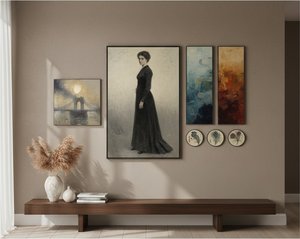
Journey through 25 iconic James Abbott McNeill Whistler paintings! Explore his masterpieces of Aestheticism, from 'Nocturne in Black and Gold' to captivating portraits. Find museum-quality art reproductions & elevate your home decor with Most-Famous-Paintings.com. Discover the full collection online.
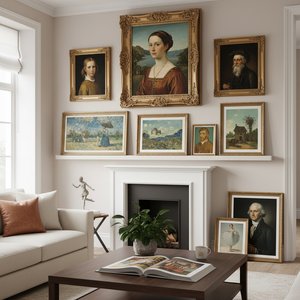
Explore 25 iconic artworks from Washington DC's National Gallery of Art! Discover masterpieces by Cézanne, Matisse & Picasso. Find museum-quality art reproductions and elevate your home decor with timeless paintings. Explore the full collection online at Most-Famous-Paintings.com.

Journey through 25 iconic artworks at the Detroit Institute of Arts! Explore Van Gogh, Monet, Rembrandt & more. Discover art history, stunning techniques & find museum-quality reproductions to elevate your home decor on Most-Famous-Paintings.com.
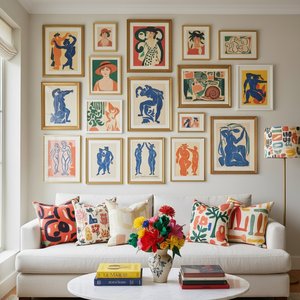
Journey through Henri Matisse's 25 most iconic paintings! Explore Fauvism, vibrant colors & the stories behind masterpieces like 'The Dance'. Find museum-quality art reproductions and curated decor ideas to elevate your space. Discover all masterpieces on Most-Famous-Paintings.com.


Stay updated with the latest art news, exclusive offers, and decoration ideas.
Tell us about your project and our art experts will provide you with 3 personalized art suggestions.
Let Us Curate 3 Options Just for You - Free!


 Buy print
 Send
Send Share
Share
 Details

 Download
 Similars
 X-Ray
X-Ray Diaporama


 Read More







 Glass option is only available in size under 110 CM


