


x


 Acrylic On CanvasWallArtConcrete Art
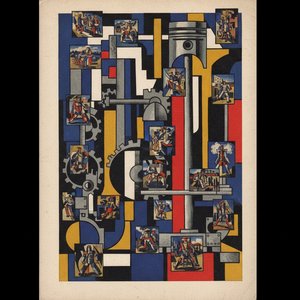
 1949
1949 72.0 x 53.0 cm
 Centro Cultural Banco do Brasil Rio de Janeiro
Hand-painted oil on canvas in your size and frame, made to order by our artists.





























Pick from our preset sizes that match the artwork's original proportions.

You may enter your own dimensions to fit a specific frame or space. If your selected size does not match the original image's proportions, we will either crop the artwork or extend the painting with additional hand-painted elements. A digital mockup will be sent for your approval before production begins.
Please note that the on-screen preview does not reflect the actual cropping or extension. Only the mockup will accurately show the final composition.
While custom sizes are available, we recommend selecting a dimension from the predefined list to preserve the original proportions.
Worldwide Delivery () in 3/4 weeks instead of standard 5 weeks. (18 July). No compromise on quality.


Sem título
Reproduction Size

Waldemar Cordeiro was a significant figure in the Brazilian art scene, recognized as both an influential artist and a compelling art critic. Born in Recife, Brazil, in 1924, he tragically passed away in 1973. His legacy is deeply intertwined with the Concrete Art movement in Latin America, where he played a pivotal role in shaping the artistic landscape of his country.
Cordeiro's career began with an innovative foray into computer art – a groundbreaking pursuit for its time. He was among the first artists to experiment with this emerging medium, establishing himself as a pioneer in the field. His involvement with Grupo Ruptura proved crucial in his artistic development. This group of artists aimed to advance modern art in Brazil and became instrumental in fostering the Concrete Art movement.
Cordeiro’s artistic style is characterized by a distinct use of strong geometric shapes and bold colors. His work reflects a commitment to creating objects that exist independently of representational imagery, aligning with the core principles of Concrete Art. He collaborated with other notable artists like Carlos Alberto Zilio, another prominent figure in Brazilian Concrete Art. Some of his most recognized works are displayed at the Museu de Valores do Banco Central do Brasil in Brasília. His paintings often feature alongside works by Amílcar Augusto Pereira de Castro, known for his contributions to the neo-constructivist movement.
Cordeiro’s dedication to Grupo Ruptura directly contributed to the development of the Concrete Art movement. This movement emphasized creating works that exist as objects rather than representations of reality, prioritizing pure form and geometric abstraction. His theoretical writings significantly shaped the philosophy behind this movement. He was influenced by Max Bill's Concrete Art concepts and Visual Gestalt principles. Cordeiro’s work also reflects a Marxist political perspective, believing art should be accessible to all and rejecting “art for art’s sake.”
Waldemar Cordeiro's legacy continues to resonate within the art world. His contributions to Concrete Art have inspired generations of artists, and his work stands as a testament to innovation and experimentation. Institutions like the Museu de Valores do Banco Central do Brasil and the São Paulo Museum of Modern Art recognize his significant impact. Beyond painting, he was also a landscape designer, creating sculptural gardens and public spaces that disseminated modern architecture and landscaping throughout Brazil. His pioneering use of computers in art, known as Arteonica, further solidified his place as a visionary artist who pushed the boundaries of artistic expression.

1924 - 1973 , Brazil

Journey through 25 iconic artworks at the Metropolitan Museum of Art! Explore Van Gogh, Monet, Rembrandt & more. Discover art history, inspiring stories, and museum-quality reproductions to elevate your home decor. Explore the full collection on Most-Famous-Paintings.com.
Explore 25 iconic Fernand Léger paintings that defined the Machine Age & Cubism. Discover the stories behind his bold colors, geometric forms & avant-garde style. Find museum-quality art reproductions on Most-Famous-Paintings.com.
Journey through 25 iconic James Abbott McNeill Whistler paintings! Explore his masterpieces of Aestheticism, from 'Nocturne in Black and Gold' to captivating portraits. Find museum-quality art reproductions & elevate your home decor with Most-Famous-Paintings.com. Discover the full collection online.
Journey through Henri Matisse's 25 most iconic paintings! Explore Fauvism, vibrant colors & the stories behind masterpieces like 'The Dance'. Find museum-quality art reproductions and curated decor ideas to elevate your space. Discover all masterpieces on Most-Famous-Paintings.com.
Explore 25 iconic artworks from Washington DC's National Gallery of Art! Discover masterpieces by Cézanne, Matisse & Picasso. Find museum-quality art reproductions and elevate your home decor with timeless paintings. Explore the full collection online at Most-Famous-Paintings.com.


Stay updated with the latest art news, exclusive offers, and decoration ideas.
Tell us about your project and our art experts will provide you with 3 personalized art suggestions.
Let Us Curate 3 Options Just for You - Free!


 Buy print
 Send
Send Share
Share
 Details

 Download
 Similars
 X-Ray
X-Ray Diaporama
 Read More







 Glass option is only available in size under 110 CM


