


x


Hand-painted oil on canvas in your size and frame, made to order by our artists.





























Pick from our preset sizes that match the artwork's original proportions.

You may enter your own dimensions to fit a specific frame or space. If your selected size does not match the original image's proportions, we will either crop the artwork or extend the painting with additional hand-painted elements. A digital mockup will be sent for your approval before production begins.
Please note that the on-screen preview does not reflect the actual cropping or extension. Only the mockup will accurately show the final composition.
While custom sizes are available, we recommend selecting a dimension from the predefined list to preserve the original proportions.
Worldwide Delivery () in 3/4 weeks instead of standard 5 weeks. (26 July). No compromise on quality.


Spring Dream
Reproduction Size
William-Adolphe Bouguereau’s “Spring Dream” is more than just a depiction of a serene female figure; it’s an immersion into a world meticulously crafted to evoke the very essence of Romantic beauty. Painted in the style deeply rooted in classical ideals, this oil on canvas transports the viewer to a verdant forest sanctuary, where innocence and grace intertwine with a profound sense of timelessness. The composition immediately draws the eye to the central figure, seated upon a stone ledge, her posture radiating an almost ethereal calm. Around her flutter three cherubic infants – winged embodiments of joy and protection – engaged in playful gestures that further amplify the painting’s idyllic atmosphere. Bouguereau's masterful handling of light and shadow, employing a technique reminiscent of chiaroscuro, dramatically enhances the figures' forms, lending them an almost sculptural quality while simultaneously blurring the boundaries between reality and dream.
The technical execution of “Spring Dream” is nothing short of extraordinary. Bouguereau’s meticulous brushwork creates a remarkable softness in the transitions between colors, resulting in a surface that appears both luminous and incredibly tactile. The artist's deliberate attention to texture – from the polished smoothness of the woman’s garments and the stone ledge to the rougher surfaces of the foliage – adds significant depth and realism to the scene. The color palette, dominated by warm golds, browns, and reds contrasted with cooler greens and blues, is not merely decorative; it serves to heighten the emotional impact of the work, evoking feelings of warmth, tranquility, and perhaps even a touch of melancholy. The use of atmospheric perspective – subtly muted tones in the distant trees – skillfully guides the viewer’s eye into the heart of the composition, creating an illusion of vastness and reinforcing the sense of depth.
Beyond its technical brilliance, “Spring Dream” is rich in symbolic meaning. The cherubic figures, representing love, joy, and divine protection, are central to the painting’s narrative. Their playful interactions with the woman suggest a harmonious union between earthly beauty and celestial grace. The setting itself – a lush forest teeming with life – symbolizes rebirth and renewal, aligning perfectly with the themes of spring. The subject matter, rooted in classical mythology, speaks to enduring human values such as innocence, purity, and the pursuit of beauty. This painting resonates with the artistic conventions of its time, reflecting Bouguereau’s commitment to portraying idealized forms and narratives.
"Spring Dream" firmly establishes itself within the context of French Romanticism, a movement that prioritized emotion, imagination, and an appreciation for nature. While influenced by artists like William-Adolphe Bouguereau, it showcases his unique style – characterized by meticulous detail, luminous color palettes, and an unwavering commitment to portraying beauty in its most idealized form. Bouguereau’s work was hugely influential during the 19th century, and continues to be admired for its technical skill and emotional resonance. This painting represents a pinnacle of Bouguereau's career, demonstrating his mastery of light, color, and composition – qualities that have secured his place as one of the most celebrated artists of the Romantic era.


1825 - 1905 , France

Journey through 25 iconic Claude Monet masterpieces! Explore Impressionism’s beauty, from Water Lilies to Rouen Cathedral. Discover stunning art reproductions & curated decor ideas – explore the full collection online at Most-Famous-Paintings.com.

Explore 25 iconic artworks by Dante Gabriel Rossetti, a leading Pre-Raphaelite artist. Discover the stories behind masterpieces like 'Proserpine' & 'Beata Beatrix'. Find museum-quality art reproductions and elevate your home decor with Most-Famous-Paintings.com.
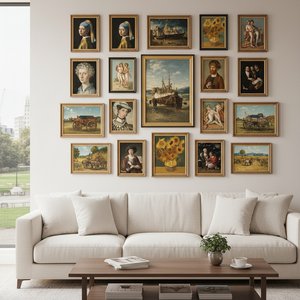
Journey through the National Gallery London's 25 most iconic paintings! Explore Van Gogh, Monet, Rembrandt & more. Discover art history, techniques & find museum-quality reproductions for your home decor on Most-Famous-Paintings.com.

Journey through the vibrant world of Marianne North’s botanical paintings! Explore 25 iconic artworks from this Victorian artist, celebrating exotic flora & travel. Find museum-quality reproductions and curated decor ideas at Most-Famous-Paintings.com.

Explore 25 iconic Georges Braque paintings that revolutionized Cubism & modern art. Discover the stories behind his masterpieces, from Fauvism to Analytical Cubism. Find museum-quality reproductions & elevate your home decor with Most-Famous-Paintings.com.


Stay updated with the latest art news, exclusive offers, and decoration ideas.
Tell us about your project and our art experts will provide you with 3 personalized art suggestions.
Let Us Curate 3 Options Just for You - Free!


 Preview
 Buy print
 Send
Send Share
Share
 Details

 Download
 Similars
 X-Ray
X-Ray Diaporama

 Read More







 Glass option is only available in size under 110 CM


