x


Hand-painted oil on canvas in your size and frame, made to order by our artists.





























Pick from our preset sizes that match the artwork's original proportions.

You may enter your own dimensions to fit a specific frame or space. If your selected size does not match the original image's proportions, we will either crop the artwork or extend the painting with additional hand-painted elements. A digital mockup will be sent for your approval before production begins.
Please note that the on-screen preview does not reflect the actual cropping or extension. Only the mockup will accurately show the final composition.
While custom sizes are available, we recommend selecting a dimension from the predefined list to preserve the original proportions.
Worldwide Delivery () in 3/4 weeks instead of standard 5 weeks. (18 July). No compromise on quality.


Mountains and Fields
Reproduction Size
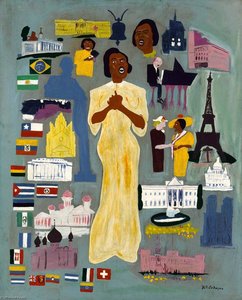
In the evocative landscape of Mountains and Fields, created in 1938, we encounter a world where the terrestrial and the celestial seem to dance in a rhythmic, chromatic harmony. The painting presents a breathtaking vista of undulating mountains, rendered not in the muted tones of realism, but in a courageous palette of fiery reds, sun-drenched oranges, and deep, verdant greens. This is a landscape that breathes with life; the foreground field stretches toward the viewer, inviting them into a serene pastoral dream, while scattered trees act as silent sentinels across the terrain. A solitary house rests in the distance, a subtle nod to human presence within the vastness of nature, suggesting a quiet, rural existence where man and earth exist in a delicate, peaceful equilibrium.
The technique employed here is a masterful testament to the artist's ability to blend modernist abstraction with a profound sense of folk tradition. The brushwork, though seemingly direct, carries an intentionality that builds texture and depth, allowing the vibrant colors to vibrate against one another. This stylistic approach creates a visual energy that transcends mere representation; it becomes an emotional experience. For the collector or interior designer, this piece offers more than just a depiction of scenery—it provides a focal point of warmth and vitality. The way the light seems to emanately from within the pigments themselves makes it an ideal centerpiece for spaces seeking to evoke feelings of tranquility, strength, and natural splendor.
To truly appreciate Mountains and Fields, one must look through the lens of its creator, William H. Johnson. As a pivotal figure of the Harlem Renaissance, Johnson’s work is deeply intertwined with the cultural resurgence of African American identity in the early 20th century. While this specific piece captures a landscape, it carries the weight of his unique visual language—a synthesis of modernist experimentation and the soulful iconography of his heritage. The bold, saturated colors and simplified forms are not merely aesthetic choices; they reflect a movement toward reclaiming narrative through a distinctively American, yet globally resonant, modernist lens.
The emotional impact of the work lies in its ability to evoke a sense of resilience and spiritual connection. There is a rhythmic quality to the mountains that mirrors the gospel and storytelling traditions Johnson absorbed during his formative years. Even in this serene landscape, one can sense the underlying pulse of life and the enduring beauty of the natural world as a source of spiritual sustenance. For those looking to adorn their homes with art that possesses both historical gravity and aesthetic brilliance, this reproduction serves as a window into a transformative era of American art history, offering a timeless connection to the earth and the human spirit.


1901 - 1970 , United States of America
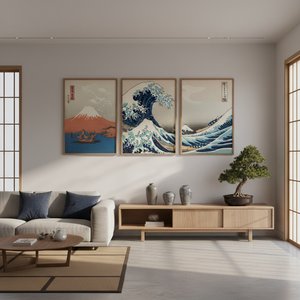
Journey through Katsushika Hokusai’s 25 most iconic artworks, including *The Great Wave*. Explore the ukiyo-e master's history, style & timeless Japanese woodblock prints. Find museum-quality reproductions for your home at Most-Famous-Paintings.com.
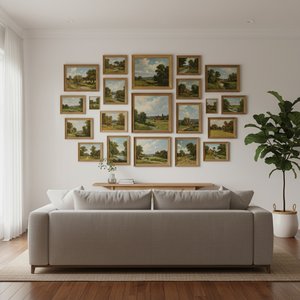
Journey through John Constable's 25 most celebrated landscapes. Explore Romanticism, Dedham Vale & his masterful use of light in iconic paintings like 'Hay Wain'. Find museum-quality art reproductions and elevate your home decor on Most-Famous-Paintings.com.
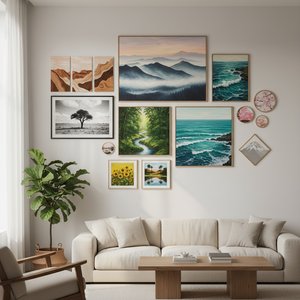
Journey through 10 breathtaking landscape paintings by Monet, Van Gogh & more! Explore iconic artworks, artistic techniques & find inspiration for your home decor. Museum-quality reproductions at Most-Famous-Paintings.com. Discover all masterpieces on Most-Famous-Paintings.com

Journey through 10 Romantic landscape masterpieces by Friedrich, Turner & Cole. Explore emotional art, sublime nature scenes & iconic 19th-century paintings. Find museum-quality reproductions for your home at Most-Famous-Paintings.com – discover the full collection online!

Explore the rich history of rural landscape painting with Most-Famous-Paintings. Discover Impressionist masterpieces, key artists & movements. Find your perfect serene artwork and bring nature's beauty home.


Stay updated with the latest art news, exclusive offers, and decoration ideas.
Tell us about your project and our art experts will provide you with 3 personalized art suggestions.
Let Us Curate 3 Options Just for You - Free!


 Buy print
 Send
Send Share
Share
 Details

 Download
 Similars
 X-Ray
X-Ray Diaporama


 Read More







 Glass option is only available in size under 110 CM