x


Hand-painted oil on canvas in your size and frame, made to order by our artists.





























Pick from our preset sizes that match the artwork's original proportions.

You may enter your own dimensions to fit a specific frame or space. If your selected size does not match the original image's proportions, we will either crop the artwork or extend the painting with additional hand-painted elements. A digital mockup will be sent for your approval before production begins.
Please note that the on-screen preview does not reflect the actual cropping or extension. Only the mockup will accurately show the final composition.
While custom sizes are available, we recommend selecting a dimension from the predefined list to preserve the original proportions.
Worldwide Delivery () in 3/4 weeks instead of standard 5 weeks. (18 July). No compromise on quality.


Backgammon
Reproduction Size
Winslow Homer's "Backgammon," painted in 1877, isn’t merely a depiction of two women playing a board game; it’s a poignant study of friendship, intimacy, and the subtle language of domestic life. This remarkable work, now housed within the Fine Arts Museums of San Francisco, offers a rare glimpse into the private world of 19th-century America – a world often rendered through grand historical narratives but frequently overlooked in its quieter, more intimate moments. Homer, deeply rooted in his observations of New England’s rural and urban landscapes, masterfully translates this sensibility to the domestic scene, imbuing it with a remarkable sense of realism and emotional resonance.
The painting immediately draws the eye with its carefully orchestrated composition. The women, positioned close together on a substantial couch – a symbol of shared comfort and connection – are bathed in soft, diffused light, characteristic of Homer’s watercolor technique. Their postures suggest a relaxed engagement, not one of intense competition, but rather a comfortable companionship built upon years of familiarity. The arrangement of the backgammon pieces scattered around them isn't haphazard; it feels deliberately placed, almost like a still life within the larger scene, adding to the painting’s quiet formality. The inclusion of two chairs – one slightly angled towards the left and another positioned near the center-right – subtly reinforces the sense of shared space and conversation.
Homer was a pioneer in American watercolor, elevating it from a primarily illustrative medium to one capable of capturing profound emotional depth and nuanced detail. In “Backgammon,” his mastery is evident in the delicate layering of washes, creating an atmospheric quality that feels both luminous and slightly melancholic. He employs a loose, expressive brushstroke, allowing the colors to bleed softly into each other – particularly noticeable in the rendering of the couch upholstery and the folds of the women’s clothing. This technique isn't about photographic accuracy; it’s about conveying *feeling* through color and texture. The subtle variations in tone and hue create a sense of depth and volume, drawing the viewer into the intimate space of the scene.
Notably, Homer combined watercolor with charcoal on wove paper, a technique that adds to the painting's richness and definition. The charcoal outlines provide structure and sharpness to the figures’ faces and hands, grounding the ethereal quality of the watercolor in a tangible reality. This hybrid approach is a testament to Homer’s versatility and his willingness to experiment with different materials to achieve his desired effect.
Beyond its technical brilliance, “Backgammon” is rich in symbolic meaning. The game itself – backgammon – has long been associated with chance, strategy, and social interaction. However, here, it’s presented not as a competitive activity but as a shared pastime enjoyed between friends. The closeness of the women suggests a deep bond built on trust and mutual understanding. Their averted gazes, focused on the game yet seemingly lost in their own thoughts, hint at unspoken connections and shared memories.
Furthermore, the setting – a comfortable couch within a domestic interior – speaks to the importance of home and family life in 19th-century America. Homer’s depiction challenges the often idealized portrayals of rural life prevalent during that era, offering instead a realistic glimpse into the everyday routines and relationships of ordinary people. The painting subtly celebrates the quiet dignity of these simple moments – a shared game, a comfortable conversation, a connection forged through companionship.
"Backgammon" is more than just a snapshot of two women playing a board game; it’s a powerful meditation on friendship, intimacy, and the beauty of ordinary moments. Winslow Homer's masterful use of watercolor, combined with his keen observational skills and insightful understanding of human nature, creates an artwork that continues to resonate with viewers today. A reproduction of this evocative painting offers a wonderful opportunity to bring this quiet moment of connection into your home, serving as a reminder of the enduring value of friendship and the simple pleasures of life.

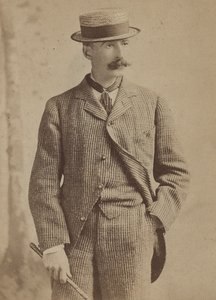
1836 - 1910 , United States of America

Explore the captivating world of Abbott Handerson Thayer, a pioneer of American realism & Symbolism. Discover his ethereal angel paintings, innovative techniques, and lasting influence on art history. Learn about his scientific pursuits & Transcendentalist spirit.
Explore 10 defining American Realism masterpieces – Hopper, Homer & more. Discover the stories behind these iconic paintings and bring timeless art to your home with Most-Famous-Paintings's museum-quality reproductions. Explore the full collection online.

Explore the powerful social commentary & artistic representation of American Realism. Discover key artists like Bellows & Sloan, and understand the movement's lasting impact on 20th-century art history.

Explore the life & legacy of Robert Henri, a pivotal figure in American Realism. Discover his captivating portraits, influence on the Ashcan School, and enduring impact on art history. Learn more at Most-Famous-Paintings.

Explore 25 iconic Winslow Homer paintings – from dramatic seascapes to poignant genre scenes. Discover the stories behind American realism's master & find museum-quality reproductions for your home at Most-Famous-Paintings.com.


Stay updated with the latest art news, exclusive offers, and decoration ideas.
Tell us about your project and our art experts will provide you with 3 personalized art suggestions.
Let Us Curate 3 Options Just for You - Free!


 Buy print
 Send
Send Share
Share
 Details

 Download
 Similars
 X-Ray
X-Ray Diaporama
 Read More







 Glass option is only available in size under 110 CM