Introduction
To embark on a journey through the top 25 artworks of Kazimir Malevich is to enter a realm where color and form transcend representation, becoming pure feeling made visible. It’s an encounter with radical simplicity, a challenge to everything we believe about art itself.
Born in Ukraine in 1878, Malevich emerged from a world steeped in rural folk traditions yet possessed an unyielding desire to forge a new artistic language – one unbound by the constraints of depicting reality. His early explorations spanned Impressionism, Symbolism, and Cubism, but it was his groundbreaking development of Suprematism around 1915 that irrevocably altered the course of art history.
Suprematism wasn’t merely a style; it was a philosophy – a belief in ‘the supremacy of pure feeling’ as the ultimate subject of art. Rejecting recognizable objects, Malevich distilled his vision into basic geometric forms: squares, circles, rectangles, floating on fields of color. These weren't arbitrary shapes, but expressions of spiritual and emotional depth, intended to evoke a sense of liberation from the material world.
His most iconic work, Black Square (1915), remains a potent symbol of this revolution – a stark, uncompromising statement that continues to provoke and inspire. But Malevich’s genius extends far beyond this single masterpiece. Through works like White on White , he pushed abstraction to its very limits, exploring the nuances of color and form with breathtaking subtlety.
The artworks presented here are not simply paintings; they are windows into a new consciousness, testaments to Malevich’s unwavering commitment to artistic innovation. They invite us to look beyond the visible world, to experience art as pure sensation, and to contemplate the fundamental questions of existence. Prepare to be challenged, moved, and perhaps even transformed by the power of these extraordinary creations.
Black Square - Kazimir Malevich
Kazimir Malevich’s Black Square (1915) isn't simply a painting; it is, arguably, the most radical gesture in modern art. Its inclusion among the top 25 artworks of Malevich speaks to its foundational role – a zero degree of painting that simultaneously annihilated representation and birthed an entirely new artistic vocabulary.
Emerging from the tumultuous pre-revolutionary Russian landscape, this deceptively simple composition rejected centuries of tradition, prioritizing ‘pure feeling’ over objective depiction. The textured surface, far from being monolithic, reveals subtle variations in tone and a network of cracks – evidence of the artist's hand and the passage of time. These imperfections aren’t flaws but integral to its character, hinting at fragility and impermanence.
Black Square challenged viewers to confront the very essence of art itself: what is it beyond imitation? What remains when all representational elements are stripped away? Its impact reverberates through movements like Minimalism and Conceptual Art. Today, it continues to provoke questions about perception, spirituality, and the power of abstraction.
Imagine this artwork in a contemporary space – its stark simplicity offering a powerful counterpoint to ornate decor or bustling energy. It’s a timeless conversation starter, inviting reflection on humanity's enduring quest for meaning beyond the visible world. A testament to Malevich’s genius and a cornerstone of any discerning collection.
Suprematist Composition - Kazimir Malevich
 Suprematist Composition - Kazimir Malevich
Kazimir Malevich’s Suprematist Composition (1916) is a landmark of abstract art, radiating an energy that continues to captivate over a century later. Its place among the top 25 artworks by Malevich isn't merely historical; it embodies the very essence of his revolutionary vision – a rejection of representation in favor of ‘pure feeling’ expressed through geometric form.
Floating against a neutral ground, dynamic rectangles and squares intersect with deliberate precision. The smooth application of paint, devoid of visible brushstrokes, emphasizes flatness and rejects traditional perspective. This isn't about *depicting* something; it’s about the inherent power of shape and color to evoke emotion directly.
Created during a period of profound societal upheaval in Russia, this work reflects the revolutionary spirit of its time – a dismantling of old structures and an embrace of new possibilities. Today, Suprematist Composition resonates with contemporary design sensibilities, influencing minimalist interiors and graphic aesthetics.
Imagine this artwork adorning a modern living space – its bold forms creating a focal point that sparks conversation and contemplation. It’s a timeless piece, inviting us to experience art not as a reflection of the world, but as a gateway to pure sensation and emotional resonance. A testament to Malevich's enduring legacy.
An Englishman in Moscow - Kazimir Malevich
 An Englishman in Moscow - Kazimir Malevich
An Englishman in Moscow is a fascinating departure for Kazimir Malevich, revealing a playful yet complex side to his artistic genius. This captivating collage, brimming with surrealist energy and dynamic composition, earns its place among the top 25 artworks by showcasing his willingness to experiment beyond the strict confines of Suprematism.
The layered tableau – a fusion of geometric shapes, recognizable objects like churches and ladders, interwoven with text – creates a sense of visual tension and intrigue. It’s as if Malevich is dismantling reality itself, reassembling it into a dreamlike landscape that invites multiple interpretations. The bold color palette and fragmented forms evoke the revolutionary spirit of early 20th-century Russia.
This artwork isn't simply about aesthetics; it’s a commentary on cultural identity, societal change, and perhaps even a touch of personal reflection. Imagine this piece adorning a contemporary space – its unique energy sparking conversation and adding a layer of intellectual depth to any collection.
At Most-Famous-Paintings, we faithfully reproduce the intricate details and emotional resonance of An Englishman in Moscow , allowing you to experience Malevich’s visionary artistry firsthand. It's a testament to his enduring legacy – a timeless conversation between culture, history, and the power of abstract expression.
Woman with Pails Dynamic Arrangement - Kazimir Malevich
 Woman with Pails Dynamic Arrangement - Kazimir Malevich
Unveiling Woman with Pails Dynamic Arrangement is to encounter a pivotal moment in Kazimir Malevich’s artistic evolution – a work that bridges the gap between Cubism and his revolutionary Suprematism. Its inclusion among the top 25 artworks by Malevich speaks to its profound influence on the development of abstract art.
Painted around 1912, this isn't merely a depiction of peasant women; it’s a radical dismantling of visual representation itself. The figures are fractured into geometric planes, rendered in a cool palette of blues, greys, and greens, creating a dynamic composition that vibrates with energy.
Malevich elevates the everyday to an artistic plane, transforming a mundane scene into an exploration of form, space, and ‘pure feeling.’ This artwork challenges conventional notions of perspective and depth, paving the way for his iconic non-objective paintings.
Imagine this piece gracing a modern living space – its sophisticated palette and geometric forms adding a layer of intellectual depth and refined elegance. It’s a testament to Malevich's enduring legacy, inviting contemplation on the very essence of art itself.
Suprematism (17) - Kazimir Malevich
 Suprematism (17) - Kazimir Malevich
Imagine a quiet room bathed in soft light, where geometric forms seem to float on a pale canvas – that is the essence of Kazimir Malevich’s Suprematism (17) . This pivotal work, created in 1916, isn't about *seeing* something; it’s about *feeling* pure artistic emotion.
Rejecting all representational imagery, Malevich constructs a dynamic interplay of rectangles, squares, and lines within a neutral beige field. The flat painting technique, devoid of traditional perspective, emphasizes the two-dimensional surface and invites contemplation on form itself. A dominant black rectangle anchors the composition, while smaller shapes dance across the upper portion, creating a delicate balance.
Born from the revolutionary fervor of post-revolution Russia, Suprematism (17) embodies Malevich’s belief in ‘the supremacy of pure feeling.’ It's an invitation to transcend the material world and experience art as a purely spiritual aesthetic.
Envision this artwork adorning a minimalist living space – its subtle energy adding a layer of intellectual depth and refined calm. A testament to Malevich’s enduring legacy, it’s a timeless piece that invites reflection on the very nature of perception.
Suprematic group using the triangle - Kazimir Malevich
 Suprematic group using the triangle - Kazimir Malevich
A universe reduced to its essential elements – that is the captivating power of Kazimir Malevich’s Suprematic Group Using the Triangle . This work, created in 1920, stands among the top 25 artworks by Malevich not for its complexity, but for its profound simplicity and unwavering commitment to pure feeling.
Against a stark white ground, black geometric forms – a dominant square, dynamic triangles, and an assertive ‘X’ shape – float in perfect balance. This isn't about depicting reality; it’s about constructing a new one based on the fundamental language of form and color. The precise lines and deliberate asymmetry evoke a sense of intellectual rigor and spiritual contemplation.
Born from the revolutionary fervor of post-revolution Russia, this piece embodies Malevich’s belief in ‘the supremacy of pure artistic feeling.’ Imagine this artwork adorning a minimalist space – its quiet energy adding a layer of sophistication and calm. A testament to his enduring legacy, it invites us to experience art not as representation, but as a gateway to inner emotion.
Sin titulo - Kazimir Malevich
 Sin titulo - Kazimir Malevich
Imagine a moment of profound stillness – a quiet room bathed in soft light, where color and form seem to breathe with their own life. That is the essence of Kazimir Malevich’s ‘Sin titulo’ (Untitled). This striking composition embodies his groundbreaking Suprematist style, earning its place among the top 25 artworks by Malevich for its unwavering commitment to pure feeling.
Against a pristine white background, dynamic rectangular shapes – rendered in bold primary colors—interact with remarkable clarity. There are no figures, landscapes, or recognizable objects; only the essential elements of form and color. This isn't about depicting reality; it’s about constructing a new one based on geometric abstraction.
Born from the revolutionary spirit of post-revolution Russia, ‘Sin titulo’ invites contemplation on fundamental concepts like space, perception, and emotion. Imagine this artwork adorning a minimalist living space – its quiet energy adding a layer of sophistication and calm. A testament to Malevich's enduring legacy, it’s a timeless piece that transcends eras.
Suprematism. Self Portrait in two dimensions - Kazimir Malevich
 Suprematism. Self Portrait in two dimensions - Kazimir Malevich
Kazimir Malevich’s Suprematism. Self Portrait in two dimensions (1915) isn't a face staring back at you; it’s an invitation to glimpse the artist’s soul through the language of pure form. This revolutionary work, rightfully among the top 25 artworks by Malevich, represents a radical departure from traditional self-portraiture and a pivotal moment in the birth of abstract art.
Emerging during a period of immense social upheaval in Russia, this painting isn’t about *likeness* but about *essence*. Stark geometric shapes – squares, rectangles, and circles—float on a pristine white ground, expressing Malevich's inner state and philosophical beliefs. The dominant black square, often interpreted as ‘the zero degree of painting,’ is not an absence, but a liberation from representation.
Imagine this artwork adorning a modern space – its bold simplicity adding a layer of intellectual depth and quiet contemplation. It’s a testament to Malevich's enduring legacy, inviting us to experience art as pure sensation and contemplate the fundamental questions of existence. A timeless conversation starter for any discerning collection.
Knife Grinder - Principle of Flickering - Kazimir Malevich
 Knife Grinder - Principle of Flickering - Kazimir Malevich
There’s a restless energy within Kazimir Malevich’s “Knife Grinder – Principle of Flickering,” a painting that feels less like a depiction and more like an explosion of perception. This pivotal work, securing its place among the top 25 artworks by Malevich, marks a crucial turning point in his artistic journey—a bold step away from representational art towards the radical non-objectivity of Suprematism.
The fragmented forms and cool palette – blues, grays, and whites punctuated with ochre and red – convey not just a scene but the very *experience* of seeing. Imagine this artwork adorning a modern living space—its dynamic composition adding intellectual depth and a sense of movement to any room.
At Most-Famous-Paintings, we believe in bringing transformative art into your home. “Knife Grinder” embodies that philosophy – it’s not merely an image; it's a conversation starter, a source of contemplation, and a testament to the power of abstraction to evoke emotion and inspire new ways of seeing.
Self-Portrait - Kazimir Malevich
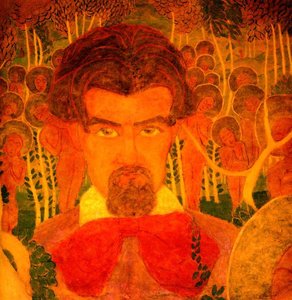 Self-Portrait - Kazimir Malevich
A quiet intensity radiates from Kazimir Malevich’s 1907 “Self-Portrait,” a work that feels less like a likeness and more like a glimpse into the soul of an artist on the cusp of revolution. This painting, rightfully among the top 25 artworks by Malevich, offers a rare window into his formative years—a bridge between Symbolism and the radical abstraction he would soon pioneer.
Bold colors – reds, greens, yellows, and blues – swirl around a figure marked by determination and a touch of unrest. Imagine this artwork adorning a study or living space—its expressive energy adding depth and intrigue to any room. The textured surface and gestural brushwork invite contemplation, reminding us that art is not merely about what is seen but how it is *felt*.
At Most-Famous-Paintings, we believe in bringing the power of artistic expression into your home. “Self-Portrait” embodies this philosophy—a timeless piece that transcends eras and speaks to the enduring human desire for self-discovery and creative freedom.
Peasant woman - Kazimir Malevich
 Peasant woman - Kazimir Malevich
Before the stark geometries of Suprematism, there was a deep connection to the earth—a reverence for the Ukrainian countryside that pulsed within Kazimir Malevich’s work. “Peasant Woman” (1912), rightfully among his top 25 artworks, is not simply a portrait; it's a powerful distillation of form and a harbinger of the revolution to come.
The woman, rendered in fractured planes and earthy tones—ochres, browns, and deep greens—feels both grounded and ethereal. Imagine this artwork gracing a modern living room—its dynamic composition adding depth and intrigue while subtly evoking a sense of history and tradition.
At Most-Famous-Paintings, we believe art should resonate with the soul. “Peasant Woman” embodies that belief—a timeless piece that reminds us of our connection to the land and the enduring power of human spirit, transforming any space into a sanctuary of contemplation.
Lady in a Tram - Kazimir Malevich
 Lady in a Tram - Kazimir Malevich
A fleeting moment—the jostle of bodies, the clatter of a tram—captured with an intensity that transcends mere observation. Kazimir Malevich’s “Lady in a Tram” (c. 1913) is more than just a scene from urban life; it's a pivotal work securing its place among his top 25 artworks, revealing the seeds of Suprematism taking root.
Fractured forms and dynamic energy convey the *feeling* of being swept along in the current of modernity. Imagine this artwork adorning a contemporary living space—its bold composition adding intellectual depth and a sense of movement to any room. The interplay of shapes and colors hints at the chaos and excitement of a rapidly changing world.
At Most-Famous-Paintings, we believe art should reflect our times while transcending them. “Lady in a Tram” embodies this philosophy—a timeless piece that reminds us of the beauty found within everyday life and the enduring power of artistic innovation.
Four Squares - Kazimir Malevich
 Four Squares - Kazimir Malevich
A quiet revolution unfolds within the deceptively simple frame of Kazimir Malevich’s *Four Squares* (1915). This pivotal work, rightfully among his top 25 artworks, isn't about what is depicted—it’s about what is *felt*. A declaration of pure abstraction, it dismantles centuries of artistic tradition with a boldness that continues to resonate today.
Imagine this artwork gracing a minimalist living space—its dynamic tension and limited palette creating an atmosphere of calm contemplation. The interplay of black, white, red, and yellow isn’t merely aesthetic; it's a journey towards the ‘zero degree’ of painting, where art exists solely as sensation.
At Most-Famous-Paintings, we believe in bringing transformative art into your home. *Four Squares* embodies this philosophy—a timeless piece that reminds us of the power of simplicity and the enduring beauty of pure form.
Taking in the Rye - Kazimir Malevich
 Taking in the Rye - Kazimir Malevich
Feel the rhythm of the harvest, the collective energy of a community bound to the land—Kazimir Malevich’s “Taking in the Rye” (1912) is more than just a depiction of rural life; it's an awakening. This vibrant canvas secures its place among his top 25 artworks as a pivotal moment in the artist’s journey towards abstraction.
At Most-Famous-Paintings, we meticulously recreate this masterpiece through hand-painted oil reproductions, capturing the dynamic interplay of color and form that defines Malevich's unique style. Imagine this artwork adorning your living space—its bold hues and energetic composition infusing any room with a sense of vitality.
“Taking in the Rye” embodies our philosophy: bringing transformative art into your home, allowing you to experience the power of artistic innovation firsthand. It’s a timeless piece that reminds us of the beauty found within everyday life and the enduring spirit of human connection.
Stroyuschiysya dom [House under construction] - Kazimir Malevich
![Stroyuschiysya dom [House under construction]](/media/artworks/images/thumbnails/b4/ce/b4ce5fe6293f433c86e0a4cb029aa5bd.jpg) Stroyuschiysya dom [House under construction] - Kazimir Malevich
Stroyuschiysya dom [House under construction] - Kazimir MalevichUnveiling a rare glimpse into the genesis of an artistic revolution—Kazimir Malevich’s “Stroyuschiysya dom [House under Construction]” (1915) is more than just a painting; it's a foundational statement. This early example of Suprematism rightfully earns its place among his top 25 artworks, marking the birth of a new visual language.
Imagine this artwork gracing a sophisticated living space—its bold geometric forms and vibrant colors adding an intellectual depth and timeless elegance to any room. The deconstruction of architectural elements foreshadows Malevich’s later explorations of pure abstraction, inviting contemplation on form, color, and the very nature of reality.
At Most-Famous-Paintings, we believe in bringing transformative art into your home. “Stroyuschiysya dom” embodies this philosophy—a testament to the power of artistic innovation and a reminder that true beauty lies in simplicity and pure feeling.
Portrait of Matiushin - Kazimir Malevich
 Portrait of Matiushin - Kazimir Malevich
A captivating enigma—Kazimir Malevich’s “Portrait of Matiushin” is more than just a likeness; it's an exploration of the human spirit rendered in geometric form. This pivotal work, rightfully among his top 25 artworks, showcases Malevich’s transition towards abstraction and his groundbreaking use of color.
Imagine this artwork adorning a modern living space—its bold reds and yellows infusing any room with energy and intellectual depth. The fragmented forms and dynamic composition challenge conventional notions of portraiture, inviting contemplation on the very nature of perception.
At Most-Famous-Paintings, we believe in bringing transformative art into your home. “Portrait of Matiushin” embodies this philosophy—a testament to the power of artistic innovation and a reminder that true beauty lies in simplicity and pure feeling. It’s a timeless piece that resonates with today's design sensibilities, adding a touch of sophistication and intrigue to any collection.
Sketch for fresco - Kazimir Malevich
 Sketch for fresco - Kazimir Malevich
A serene whisper from a pivotal moment—Kazimir Malevich’s “Sketch for Fresco” (1907) isn't merely an artwork; it's a reflection on the human condition, rendered with delicate tempera and profound symbolism. This piece rightfully claims its place among his top 25 artworks as a testament to his early explorations of spirituality and form.
Imagine this artwork gracing a quiet study—its tranquil composition inviting contemplation and introspection. The nude figures, poised amidst the field, evoke a sense of vulnerability and connection with nature, reminding us of our shared humanity.
At Most-Famous-Paintings, we believe in bringing transformative art into your home. “Sketch for Fresco” embodies this philosophy—a timeless piece that resonates with today's desire for authenticity and meaning. It’s a subtle yet powerful addition to any collection, sparking conversation and inspiring a deeper appreciation for the beauty of the human spirit.
Mystic - Kazimir Malevich
 Mystic - Kazimir Malevich
A haunting echo of spiritual yearning—Kazimir Malevich’s “Mystic” is more than a sketch; it's an invitation to contemplate the unseen forces that shape our world. This work, rightfully among his top 25 artworks, reveals Malevich’s early explorations into abstraction as a means of expressing profound emotion and belief.
Imagine this artwork gracing a minimalist living space—its stark lines and geometric forms adding an intellectual depth and contemplative energy to any room. The enigmatic figures flanking the central symbol evoke a sense of mystery, inviting viewers to connect with their own inner spirituality.
At Most-Famous-Paintings, we believe in bringing transformative art into your home. “Mystic” embodies this philosophy—a timeless piece that resonates with today's desire for authenticity and meaning. It’s a subtle yet powerful addition to any collection, sparking conversation and inspiring a deeper appreciation for the beauty of the human spirit.
Prayer - Kazimir Malevich
 Prayer - Kazimir Malevich
A quiet intensity emanates from Kazimir Malevich’s “Prayer” (1913)—a study not of faith depicted, but of the very *act* of seeking. This monochrome exploration, rightfully among his top 25 artworks, reveals the nascent power of Suprematism—his revolutionary movement that sought to unlock pure feeling through geometric abstraction.
Imagine this artwork adorning a minimalist sanctuary—its stark lines and dynamic composition inviting contemplation and introspection. The fragmented forms evoke a sense of spiritual unrest, mirroring the complexities of inner life.
At Most-Famous-Paintings, we believe in bringing transformative art into your home. “Prayer” embodies this philosophy—a timeless piece that resonates with today's desire for authenticity and meaning. It’s a subtle yet powerful addition to any collection, sparking conversation and inspiring a deeper appreciation for the beauty of the human spirit.
Green and black - Kazimir Malevich
 Green and black - Kazimir Malevich
Kazimir Malevich’s “Green and Black” (1913) isn't a still life; it’s a frozen moment of revelation—a glimpse into the birth of Suprematism. This deceptively simple composition, featuring a guitar and figures rendered in stark monochrome, represents a pivotal shift away from representation towards pure feeling.
Imagine this artwork gracing a modern living space—its dynamic lines and geometric forms adding an intellectual edge to any room. The interplay of light and shadow creates a sense of depth and intrigue, inviting contemplation and conversation.
At Most-Famous-Paintings, we believe in bringing transformative art into your home. “Green and Black” embodies this philosophy—a timeless piece that resonates with today's desire for authenticity and meaning. It’s a subtle yet powerful addition to any collection, sparking conversation and inspiring a deeper appreciation for the beauty of the human spirit.
Stage Design, Act 1, Scene 3 - Kazimir Malevich
 Stage Design, Act 1, Scene 3 - Kazimir Malevich
Kazimir Malevich’s “Stage Design, Act 1, Scene 3” (1915) isn't a blueprint for performance—it *is* the performance. This watercolor on paper captures a moment of pure form, suspended between chaos and order, embodying the revolutionary spirit of Suprematism.
Imagine this artwork adorning a minimalist living space—its dynamic lines and geometric forms adding an intellectual edge to any room. The interplay of light and shadow creates a sense of depth and intrigue, inviting contemplation and conversation.
At Most-Famous-Paintings, we believe in bringing transformative art into your home. “Stage Design, Act 1, Scene 3” embodies this philosophy—a timeless piece that resonates with today's desire for authenticity and meaning. It’s a subtle yet powerful addition to any collection, sparking conversation and inspiring a deeper appreciation for the beauty of the human spirit.
Futurist Strongman - Kazimir Malevich
 Futurist Strongman - Kazimir Malevich
Before you stands “Futurist Strongman” by Kazimir Malevich—a distillation of power, not as flesh and muscle, but as pure geometric force. Imagine a world shedding its skin, discarding the weight of tradition in favor of raw energy and unadorned form.
This artwork, created during the dawn of Suprematism, isn’t about depicting a physical athlete; it's about embodying an ideal—strength reduced to its essential lines and angles. The limited palette of grays and whites amplifies this sense of austerity, forcing us to confront the structure itself.
At Most-Famous-Paintings, we believe in bringing transformative art into your home. “Futurist Strongman” embodies this philosophy—a timeless piece that resonates with today's desire for authenticity and meaning. It’s a subtle yet powerful addition to any collection, sparking conversation and inspiring a deeper appreciation for the beauty of the human spirit.
Man. Illogical figures of men and women - Kazimir Malevich
 Man. Illogical figures of men and women - Kazimir Malevich
Consider a moment of unsettling recognition—a figure vaguely familiar yet profoundly distorted, as if glimpsed through a fractured lens. This is the essence of Kazimir Malevich’s “Man. Illogical Figures of Men and Women” (1916). It's not about capturing likeness; it’s about dismantling it.
Born from the revolutionary fervor of Suprematism, this artwork embodies a rejection of traditional representation in favor of pure geometric abstraction. The loose lines and fragmented forms evoke a sense of unease, questioning our perceptions of reality and challenging conventional notions of beauty. It's a bold statement—a visual echo of a world shedding its skin.
At Most-Famous-Paintings, we believe in bringing transformative art into your home. “Man. Illogical Figures of Men and Women” embodies this philosophy—a timeless piece that resonates with today's desire for authenticity and meaning. It’s a subtle yet powerful addition to any collection, sparking conversation and inspiring a deeper appreciation for the beauty of the human spirit.
A letter to Kazimir M. from Dmitry K. - Kazimir Malevich
 A letter to Kazimir M. from Dmitry K. - Kazimir Malevich
Imagine a quiet room bathed in soft blue light—a space where thoughts drift and forms dissolve into pure feeling. This is the atmosphere evoked by Kazimir Malevich’s “A Letter to Kazimir M. from Dmitry K.” (1900). It's not a narrative painting, but an invitation to contemplate the very essence of perception.
This early work, a cornerstone of Suprematism, showcases Malevich’s radical departure from representational art. The stark white triangle within a darker square isn’t about depicting objects; it’s about exploring the dynamic tension between opposing forces—intellect and emotion, form and void. The subtle layering of paint creates an ethereal quality, inviting us to lose ourselves in its simplicity.
At Most-Famous-Paintings, we believe in bringing transformative art into your home. “A Letter to Kazimir M. from Dmitry K.” embodies this philosophy—a timeless piece that resonates with today's desire for authenticity and meaning. It’s a subtle yet powerful addition to any collection, sparking conversation and inspiring a deeper appreciation for the beauty of the human spirit.
Death of the Calvary General - Kazimir Malevich
 Death of the Calvary General - Kazimir Malevich
Imagine a moment suspended—a fractured echo of conflict, rendered not in vivid detail but in stark monochrome. This is the haunting power of Kazimir Malevich’s “Death of the Calvary General” (1914). It's not about glorifying battle; it’s about dissecting its chaos and revealing the underlying geometry of suffering.
This early work, a pivotal piece bridging Cubism and Suprematism, showcases Malevich’s radical rejection of traditional representation. The angular forms and fragmented composition aren’t meant to depict reality but to capture the *feeling* of it—the disorientation, instability, and raw emotion inherent in violence. It's a bold statement that paved the way for non-objective art.
At Most-Famous-Paintings, we believe in bringing transformative art into your home. “Death of the Calvary General” embodies this philosophy—a timeless piece that resonates with today's desire for authenticity and meaning. It’s a subtle yet powerful addition to any collection, sparking conversation and inspiring a deeper appreciation for the beauty of the human spirit.
Conclusion
As we conclude our journey through the world of Kazimir Malevich, it’s clear that these 25 paintings are more than just historical treasures—they are living echoes of a revolutionary spirit. Each canvas, from the stark simplicity of “Black Square” to the fragmented energy of “Death of the Calvary General,” invites us into a dialogue with pure feeling and geometric abstraction.
Malevich’s legacy isn't confined to museums or art history books; it resides in the spaces we inhabit—the subtle power of form and color to shape our emotions, inspire creativity, and elevate everyday life. A single brushstroke can transform a room, a carefully chosen hue can evoke serenity, and an abstract composition can spark endless contemplation.
At Most-Famous-Paintings, we are honored to bring these masterpieces closer to you—faithful reproductions crafted with the same passion and dedication as the originals. We believe that art should be accessible, inviting, and deeply personal. Explore our full collection and discover the timeless beauty of Malevich’s vision for yourself. May these paintings continue to move your heart, shape your interiors, and inspire a deeper connection with the world around you.