x


 Acrylic On CanvasWallArtSymbolism
 1907Modern
 69.0 x 70.0 cm
Hand-painted oil on canvas in your size and frame, made to order by our artists.





























Pick from our preset sizes that match the artwork's original proportions.

You may enter your own dimensions to fit a specific frame or space. If your selected size does not match the original image's proportions, we will either crop the artwork or extend the painting with additional hand-painted elements. A digital mockup will be sent for your approval before production begins.
Please note that the on-screen preview does not reflect the actual cropping or extension. Only the mockup will accurately show the final composition.
While custom sizes are available, we recommend selecting a dimension from the predefined list to preserve the original proportions.
Worldwide Delivery () in 3/4 weeks instead of standard 5 weeks. (18 July). No compromise on quality.


Self-Portrait
Reproduction Size
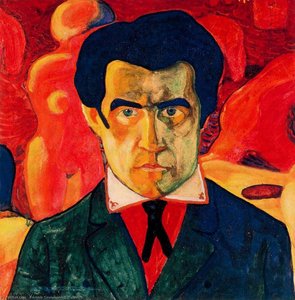
Kazimir Severinovich Malevich’s "Self-Portrait," painted in 1907, offers a fascinating glimpse into the artist's formative years and his evolving artistic style. This work, created before his groundbreaking Suprematist period, showcases a blend of Symbolist and early Cubist influences, providing valuable insight into the development of one of modern art’s most revolutionary figures.
The "Self-Portrait" exemplifies Malevich's transition away from traditional representational art. While still recognizable as a portrait, the painting deviates significantly from realistic depiction. The style leans towards Expressionism, characterized by distorted features and heightened emotionality. Malevich utilizes bold colors—primarily reds, greens, yellows, and blues—to create a vibrant yet unsettling atmosphere. The application of tempera on cardboard results in a textured surface with visible brushstrokes, contributing to the painting's dynamic energy. Lines are loose and gestural, further enhancing this sense of movement and unrest. The flattened perspective draws attention directly to the central figure, minimizing background details.
The composition is dominated by Malevich himself, depicted with a stern expression and a distinctive red tie that serves as a focal point. His black hair and mustache add to his striking appearance. The surrounding figures in the background are less defined, suggesting a sense of isolation or perhaps representing elements of Malevich's inner world or societal connections. The overall effect is one of intense introspection, with the subject’s gaze conveying a complex mix of determination and anxiety.
Beyond its aesthetic qualities, "Self-Portrait" carries symbolic weight. The red tie can be interpreted as a symbol of passion, creativity, or even revolutionary fervor—a common theme in early 20th-century Russian art. The stern expression likely reflects Malevich’s dedication to his artistic pursuits and his unwavering commitment to pushing the boundaries of art. Created during a period of significant social and political upheaval in Russia, the painting can also be seen as reflecting the anxieties and uncertainties of the time. This work was created before Malevich's development of Suprematism, which sought to move even further away from representational art towards pure geometric abstraction.
“Self-Portrait” evokes a powerful emotional response in viewers. The unsettling combination of bold colors, distorted features, and the subject’s intense gaze creates an atmosphere of psychological intensity. It is a compelling testament to Malevich's artistic journey—a bridge between traditional portraiture and his later groundbreaking abstract works. The painting serves as a valuable historical document, offering insight into the mind of one of the most influential artists of the 20th century.

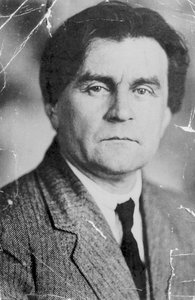
1878 - 1935 , Ukraine
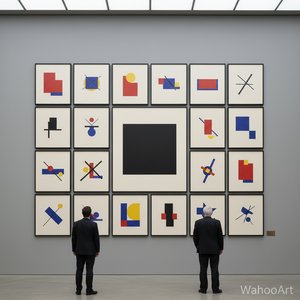
Explore 25 iconic artworks by Kazimir Malevich, pioneer of Suprematism & abstract art. Discover the stories behind 'Black Square' and more! Find museum-quality prints & elevate your home decor with Most-Famous-Paintings.com.

Journey through 25 iconic artworks at the Metropolitan Museum of Art! Explore Van Gogh, Monet, Rembrandt & more. Discover art history, inspiring stories, and museum-quality reproductions to elevate your home decor. Explore the full collection on Most-Famous-Paintings.com.

Explore 10 iconic portrait paintings – from Mona Lisa to Van Gogh’s self-portraits. Discover the stories behind these masterpieces, artistic techniques & find museum-quality art reproductions for your home at Most-Famous-Paintings.com.
Journey through 25 iconic James Abbott McNeill Whistler paintings! Explore his masterpieces of Aestheticism, from 'Nocturne in Black and Gold' to captivating portraits. Find museum-quality art reproductions & elevate your home decor with Most-Famous-Paintings.com. Discover the full collection online.

Journey through 25 iconic artworks at the Detroit Institute of Arts! Explore Van Gogh, Monet, Rembrandt & more. Discover art history, stunning techniques & find museum-quality reproductions to elevate your home decor on Most-Famous-Paintings.com.


Stay updated with the latest art news, exclusive offers, and decoration ideas.
Tell us about your project and our art experts will provide you with 3 personalized art suggestions.
Let Us Curate 3 Options Just for You - Free!


 Buy print
 Send
Send Share
Share
 Details

 Download
 Similars
 X-Ray
X-Ray Diaporama
 Read More







 Glass option is only available in size under 110 CM