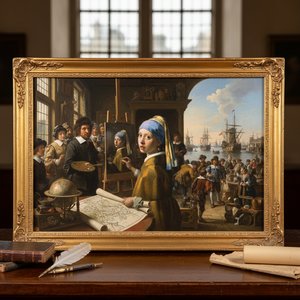
Anthonie Palamedesz.: The Quiet Dignity of Delft
Anthonie Palamedesz (1601-1673) stands as a cornerstone of Dutch Golden Age portraiture, particularly renowned for his masterful depictions of guardrooms and intimate interiors—scenes that capture the essence of aristocratic life in Delft during its zenith.
Born in Leith, Scotland, to Palamedes Willemsz. Stevens and Marie Arsene, Palamedesz’s early life was marked by upheaval as his family fled persecution from Spain following the Eighty Years' War. This formative experience instilled a profound appreciation for resilience and subtly informed his artistic sensibilities.
He received an exceptional education under the tutelage of Hans Jordaens and Michiel Jansz. van Mierevelt, absorbing techniques that would become hallmarks of Delft Baroque painting. These masters championed realism and dramatic lighting—principles Palamedesz diligently embraced throughout his prolific career.
His artistic journey began with meticulous observation of human anatomy and psychological nuance. Unlike many contemporaries who favored grand narratives or idealized figures, Palamedesz focused on portraying individuals with quiet dignity and understated elegance. His guardroom scenes are particularly striking, capturing the solemn atmosphere of military duty with remarkable detail—soldiers posed in formal stances, bathed in chiaroscuro light.
However, it was his interiors that cemented Palamedesz’s legacy. He meticulously rendered rooms filled with furniture, fabrics, and subtle gestures of daily life, conveying a sense of domestic tranquility and intellectual engagement. These paintings are not merely representations of spaces; they are windows into the souls of their subjects—a testament to Palamedesz's ability to distill complex emotions into visual form.
Among his most celebrated works is “LES CINQ SENS,” a genre scene depicting a peasant and chicken, showcasing his commitment to portraying ordinary life with extraordinary sensitivity. This piece exemplifies the Delft School’s fascination with capturing fleeting moments of human experience—a characteristic that distinguishes Palamedesz from other artists of his time.
Furthermore, he collaborated on monumental frescoes within the Minorite Church in Eger, Hungary, alongside Hans Jordaens and Jacobsz. Vermeulen, demonstrating his versatility as a painter and cementing his reputation as one of Delft’s foremost artistic figures. His contribution to this ambitious project underscores the importance of collaborative artistry and reflects the broader cultural landscape of the Baroque era.
Palamedesz's influence extended beyond his own lifetime, shaping the aesthetic sensibilities of subsequent generations of Dutch painters. He remains an enduring symbol of Delft’s artistic heritage—a painter who prioritized psychological realism and understated elegance to create images that continue to captivate audiences today.