Pieter Feddes van Harlingen (1586–1623): A Dutch Master of Genre Scenes and Portraiture
Pieter Feddes van Harlingen (c. 1586 – ca. 1634) stands as a relatively obscure yet significant figure within the Dutch Golden Age artistic landscape. Despite limited surviving documentation, scholars like Houbraken attest to his skill as an etcher and painter, primarily active in Leeuwarden and Fraeneker during his lifetime.
Early Life and Artistic Training
Information regarding Feddes’s formative years remains scarce. However, he was born in Harlingen, Netherlands—a town known for its maritime trade and artistic patronage—around 1586. While precise details of his formal training are elusive, it is believed that he honed his craft under the tutelage of Jacob Adriaensz Backer, a prominent Haarlem painter who championed etching as a medium.
Technique and Style: Etching's Delicate Embrace
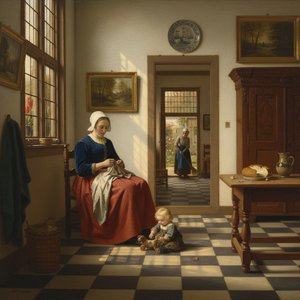
Feddes distinguished himself from many of his contemporaries by specializing in etching—a technique that allowed for remarkable detail and tonal subtlety. Unlike engraving, which relies on hardened metal punches to create lines, etching involves covering a copper plate with wax resist, acid etching away unwanted areas, and then removing the resist to reveal the etched image. This process yielded prints characterized by soft gradations of tone and intricate textures—particularly evident in his depictions of domestic interiors like “Kitchen Scene,” showcased at the Hoorn Westfries Museum.
Notable Works: Portraits and Mythological Visions
Feddes’s oeuvre comprises a collection of portraits, primarily depicting noble families and individuals of distinction. His “Portrait of a Lady” exemplifies the refined aesthetic sensibilities of the period, capturing an aristocratic subject with meticulous attention to drapery and facial expression. Beyond portraiture, Feddes explored mythological themes—particularly in his etchings inspired by classical narratives—demonstrating a broader artistic ambition.
Influence and Legacy
Though overshadowed by larger names like Rembrandt and Vermeer, Pieter Feddes van Harlingen’s contribution to Dutch printmaking is undeniable. His innovative use of etching established him as one of the foremost practitioners of this technique during his era and influenced subsequent generations of artists. Furthermore, his work serves as a valuable window into the social and cultural milieu of the Dutch Golden Age—a period marked by intellectual ferment and artistic innovation.
- Houbraken’s Account: Primarily based on Houbraken's recollections, Feddes’s reputation rested largely on Backer’s endorsement of his etching prowess.
- Etching Technique: Feddes skillfully utilized the etching process to achieve nuanced tonal variations and textural richness in his prints.
- Key Paintings: Notable works include “Kitchen Scene” (Hoorn) and “Portrait of a Lady,” reflecting the stylistic conventions of the Golden Age.
Further research into Feddes’s life and artistic output continues to illuminate his place within Dutch art history.