A Victorian Vision Realized: The Enduring Legacy of Alexandra Palace
Rising majestically from the crest of Muswell Hill in North London, Alexandra Palace stands as much more than a mere architectural landmark; it is a potent, breathing symbol of Victorian ambition and the fervent belief in progress. Conceived as “The People’s Palace,” this grand structure embodies an era that sought to democratize culture, bringing art, science, and entertainment to the masses. The architecture itself is a masterful dialogue between styles, where the stately elegance of Italianate design meets the dramatic flourishes of Gothic Revival. As one approaches the façade, the eye is immediately drawn to the towering Corinthian columns and intricate carvings that lend the building an air of monumental permanence. Though a devastating fire swept through much of the original structure shortly after its 1873 debut, the swift and determined reconstruction serves as a testament to the unwavering spirit of its creators, Kelk and Lucas, ensuring that this bastion of public joy would endure for generations.
Stepping within the palace walls is akin to entering a sanctuary where history and technological revolution converge. The Great Hall remains a breathtaking focal point, its vast dimensions matched only by the splendor of its stained-glass windows. These luminous works, depicting scenes from Greek mythology, reflect the Victorian fascination with classical ideals and the desire to elevate public spaces through high artistry. Yet, the palace is equally celebrated for its role in the birth of the modern age. In 1936, these very halls became the cradle of British television, as BBC engineers established their first studios here. To wander near Studios A and B is to feel the electric energy of those pioneering days, a time when the challenges of nascent technology were met with the bold dream of bringing the world into the domestic sphere through the magic of the moving image.
A Tapestry of Artistic Expression and Natural Serenity
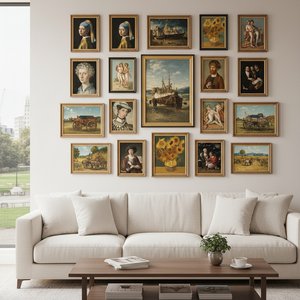
The collection housed within Alexandra Palace offers a captivating journey through diverse artistic movements, making it a destination of profound interest for collectors and connoisseurs alike. While the palace preserves notable Victorian portraits that capture the formal dignity of a bygone age, it is perhaps its embrace of modernism that provides its most striking contrast. The inclusion of Margaret Alexandra Luke’s abstract paintings introduces a vibrant, contemporary pulse to the halls. As a member of the prestigious Painters Eleven, Luke brought an evocative energy to Canadian modernism, utilizing bold color palettes and experimental landscapes that challenge and delight the viewer. This seamless dialogue between historical portraiture and mid-century abstraction creates a dynamic atmosphere, where the weight of tradition meets the freedom of the avant-garde.
Beyond the curated galleries and the historic theatre—a Grade II listed marvel with its complex stage machinery—the experience of the palace extends into the lush embrace of Alexandra Park. This local nature reserve acts as a verdant oasis, offering a tranquil escape from London's urban rhythm and providing a serene backdrop for contemplation. For the interior designer or art lover seeking inspiration, the palace offers a rare duality: the structured, ornamental grandeur of 19th-century craftsmanship paired with the organic beauty of its surrounding landscapes. It is a place where history, nature, and culture do not merely coexist but actively intertwine, offering an unforgettable immersion into a community that continues to celebrate the enduring power of human creativity.