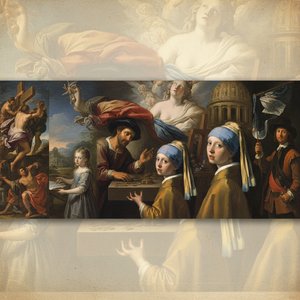
A Hidden Baroque Jewel: Exploring the Chiesa di SS. Vittore e Carlo
Nestled within the labyrinthine streets of Genoa’s historic center, the Chiesa di SS. Vittore e Carlo stands as a testament to the city's rich artistic heritage and a captivating example of 17th-century Italian Baroque design. Often overlooked by tourists rushing through the bustling Via Balbi, this church offers an intimate and profoundly rewarding experience – a chance to step back in time and witness the fervent religious expression and exquisite craftsmanship that defined its era. More than just a place of worship, it’s a carefully constructed narrative of faith, patronage, and artistic mastery, revealing layers of history within its remarkably preserved walls.
The church's construction began in 1629 under the auspices of the Carmelite order, initially dedicated solely to Saint Charles. However, a significant expansion and transformation occurred in 1743, spearheaded by Eugenio Durazzo, who dramatically reshaped the façade with its elegant loggia and intricate marble detailing. This later addition provides a fascinating juxtaposition against the earlier Baroque elements, showcasing the evolving tastes of the period. The building’s unique shape – a Latin Cross – reflects not only religious symbolism but also an ingenious response to the challenging topography of the site, requiring a raised platform to overcome the steep hillside.
Sculptural Masterpieces and Dramatic Paintings
Within the Chiesa di SS. Vittore e Carlo reside a remarkable collection of artworks that illuminate the artistic landscape of Genoa during the 17th and 18th centuries. The church’s most celebrated treasures are undoubtedly the sculptures by Alessandro Algardi, particularly his poignant “Madonna of the Carmine” and the dynamic “Angels and Saints.” Algardi's ability to imbue marble with a sense of life and emotion is strikingly evident in these pieces, capturing the spiritual intensity of religious scenes. Equally impressive are the paintings by Andrea Carlone, whose dramatic depictions of biblical figures – notably his "Saint Teresa" – command attention with their theatrical lighting and expressive gestures. The works of Filippo Parodi also contribute significantly to the church’s artistic richness, offering a glimpse into the local artistic traditions.
A History Rooted in Carmelite Devotion
The Chiesa di SS. Vittore e Carlo's story is inextricably linked to the Carmelite order. Initially established as their primary place of worship, the church quickly evolved into a vital center for religious life and artistic patronage within Genoa. The period of construction coincided with a time of considerable economic prosperity for the city, fueling an ambitious program of architectural embellishment and artistic commissions. This patronage wasn’t merely about outward display; it reflected a deep-seated faith and a desire to create a space that would inspire devotion and reflect the glory of God. The church's history is further enriched by the legacy of Domenico Parodi, whose “Decapitation of Sant’Agostino” adds another layer of narrative depth.
An Intimate Sanctuary and Unique Architectural Features
Unlike many of Genoa’s grander landmarks, the Chiesa di SS. Vittore e Carlo offers a remarkably intimate experience. Its relatively modest size allows visitors to fully appreciate the intricate details of its artwork and architecture without feeling overwhelmed. The church's interior is characterized by soaring vaulted ceilings, elaborate stucco work, and a harmonious blend of Baroque and Carrara marble. Notably, the building’s design cleverly addresses the challenging hillside location, incorporating a distinctive stepped entrance that provides access to the main level. The presence of the original, destroyed San Domenico chapel altar further adds to the church's historical significance.
Discovering Genoa’s Artistic Heritage
A visit to the Chiesa di SS. Vittore e Carlo is more than just a sightseeing excursion; it’s an immersion into the artistic and religious heart of 17th-century Genoa. The church serves as a microcosm of the city's vibrant cultural scene, showcasing the talents of renowned artists and reflecting the spiritual beliefs of its inhabitants. For art enthusiasts, collectors, and those seeking a deeper understanding of Italian Baroque artistry, this hidden gem offers an unforgettable experience – a chance to connect with the past and appreciate the enduring beauty of human creativity.