x

Óleo sobre lienzo pintado a mano en el tamaño y marco de su elección, realizado por encargo por nuestros artistas. ( Pedir impresión Comprar descarga)
Elija entre nuestros tamaños predefinidos que respetan las proporciones originales de la obra.

Puede ingresar sus propias dimensiones para adaptarse a un marco o espacio específico. Si el tamaño seleccionado no coincide con las proporciones de la imagen original, recortaremos la obra o extenderemos la pintura con elementos adicionales pintados a mano. Se le enviará una maqueta digital para su aprobación antes de comenzar la producción.
Tenga en cuenta que la vista previa en pantalla no refleja el recorte o la extensión reales. Solo la maqueta mostrará con precisión la composición final.
Si bien existen tamaños personalizados, recomendamos seleccionar una dimensión de la lista predefinida para preservar las proporciones originales.
Envío a todo el mundo () en 3-4 semanas en lugar de las 5 semanas estándar. (15 agosto). Sin comprometer la calidad.


Blessing Savior
Tamaño de la reproducción
In the quiet, disciplined world of Northern Renaissance printmaking, few works command the same reverent attention as Albrecht Dürer’s Blessing Savior. This exquisite black and white engraving serves as a profound window into a period where the precision of the engraver's burin met the deep spiritual yearning of the age. At first glance, the viewer is met with a figure of immense gravity—a male subject, likely a scholar or a divine messenger, whose presence anchors the composition with an almost tactile reality. The artwork does not merely depict a person; it captures a moment of profound stillness, where the weight of knowledge and the grace of divinity intersect through the masterful application of ink on paper.
The technical brilliance of this piece lies in Dürer’s unparalleled command over hatching and cross-hatching. Without the luxury of color, the artist breathes life into the subject through a complex architecture of lines. Every fold of the voluminous, dramatic robe is sculpted by light and shadow, creating a sense of three-dimensional volume that seems to push outward from the dark, undefined background. The texture of the heavy fabric contrasts beautifully with the delicate, organic rendering of the figure's hands and face. This meticulous attention to detail ensures that even in a monochromatic medium, the viewer can feel the coarseness of the cloth and the softness of skin, making the piece an essential study for anyone captivated by the mastery of Renaissance craftsmanship.
Beyond its technical virtuosity, Blessing Savior is a rich tapestry of symbolic meaning, designed to provoke contemplation in the viewer. The figure holds an open book, a universal emblem of divine wisdom, scripture, or human learning, while his other hand rests upon a scroll, suggesting authority and the enduring nature of recorded truth. These objects transform the portrait from a mere likeness into a meditation on the pursuit of enlightenment. In the context of the German Renaissance, such imagery resonated deeply with a society undergoing profound intellectual and religious shifts, where the written word was becoming a bridge between the earthly and the divine.
For the discerning collector or interior designer, this artwork offers more than just aesthetic beauty; it provides an emotional anchor. The stark contrast between the luminous highlights on the figure and the deep, shadowy void of the background creates a dramatic tension that is both haunting and peaceful. It is a piece that demands a quiet space—a study, a library, or a sophisticated gallery wall—where its intricate details can be discovered slowly over time. As a high-quality reproduction, it brings the monumental legacy of Nuremberg’s greatest master into the modern home, offering a timeless connection to the era of humanism and the enduring power of the printed line.

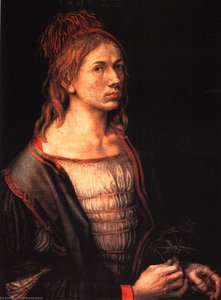
Albrecht Dürer, una figura imponente del Renacimiento alemán, nació el 21 de mayo de 1471 en Núremberg, Alemania. Su padre, Albrecht Dürer el Viejo, era un exitoso joyero, y fue dentro de este ambiente artístico donde la inclinación de joven Albrecht hacia el arte comenzó a florecer. A los trece años, comenzó su aprendizaje con Michael Wolgemut, un destacado artista en Núremberg, adquiriendo habilidades fundamentales en pintura, dibujo y técnicas de grabado. Un autorretrato creado en 1484, que se exhibe en la Albertina de Viena, proporciona evidencia notable de su talento precoz.
Para sus veinte años, Dürer se había establecido como un maestro grabador, logrando reconocimiento en toda Europa. Emprendió viajes a Italia, donde conoció las obras de maestros del Renacimiento como Rafael, Giovanni Bellini y Leonardo da Vinci. Estas interacciones influyeron profundamente en su estilo artístico, llevándolo a integrar motivos y técnicas clásicas en su estética europea del norte.
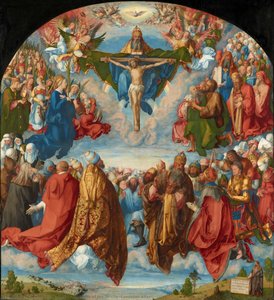
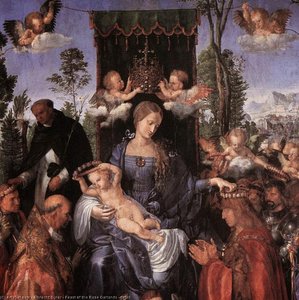
El *oeuvre* de Dürer abarca una amplia gama de medios, incluyendo pinturas, grabados, grabados en madera y escritos teóricos. Algunas de sus obras más celebradas incluyen:
El estilo de Dürer se caracteriza por el realismo meticuloso, el dibujo preciso y una profunda comprensión de la anatomía y la perspectiva. También fue pionero en el uso del color aguafuerte como medio independiente.
Más allá de su práctica artística, Dürer hizo contribuciones significativas a la teoría del arte. Escribió varios tratados sobre geometría, proporción y anatomía humana, incluyendo Cuatro Libros de Proporción Humana (1528). Estos escritos demuestran su creencia en las bases matemáticas del arte y su compromiso con establecer un enfoque científico para la creación artística.
El impacto de Albrecht Dürer en el mundo del arte es innegable. Puenteó la brecha entre las tradiciones europeas del norte y los ideales del Renacimiento italiano, introduciendo motivos clásicos en el arte del norte mientras mantenía su carácter distintivo. Sus tratados teóricos ayudaron a elevar el estatus de los artistas y establecieron un nuevo marco intelectual para la práctica artística. Sigue siendo una figura fundamental en la historia del arte, inspirando a generaciones de artistas con sus habilidades técnicas, espíritu innovador y visión profunda.

1471 - 1528 , Italy

Explore the life & art of Albrecht Dürer, a pivotal German Renaissance master. Discover his groundbreaking printmaking techniques, iconic self-portraits, and lasting influence on Western art history. A deep dive into innovation & symbolism.

Descubre los 10 grabados legendarios de Dürer, Rembrandt y Goya que revolucionaron el arte. Explora la historia, técnicas y belleza atemporal de estas obras maestras. Reproducciones de alta calidad en Most-Famous-Paintings.com para decorar tu hogar con arte clásico.

Descubre 10 obras maestras del Renacimiento Nórdico: Jan van Eyck, Durero y más. Explora la historia, el simbolismo y las técnicas de estos icónicos pintores. Encuentra reproducciones de arte exclusivas en .
Descubre los 25 tesoros del Museo Británico: desde la Piedra Rosetta hasta obras de Rembrandt y Van Gogh. Explora su historia, técnica y significado. Reproducciones de arte exclusivas en Most-Famous-Paintings.com para decorar tu hogar con elegancia.

Explore the captivating world of monochrome art! Discover its rich history, influential artists like Malevich & Klein, and profound emotional impact. Expert insights for collectors & design enthusiasts.


Manténgase al día con las últimas noticias de arte, ofertas exclusivas e ideas de decoración.
Cuéntanos sobre tu proyecto y nuestros expertos en arte te ofrecerán 3 sugerencias de obras personalizadas.
Dejamos que nosotros seleccionemos 3 opciones exclusivas para ti – ¡Gratis!


 Vista previa
 Compartir
 Compartir
 Ver detalles

 Descargar
 Ver similares
 Radiografía
 Presentación de diapositivas

 Leer más




































 La opción de vidrio solo está disponible en tamaños inferiores a 110 cm.