x

Impresiones giclée o en lienzo de calidad de museo con producción rápida y opciones de acabado flexibles. ( Encargar reproducción pintada a mano Comprar descarga)
Elija entre nuestros tamaños predefinidos que respetan las proporciones originales de la obra.

Puede introducir sus propias dimensiones para adaptarse a un marco o espacio específico. Si el tamaño seleccionado no coincide con las proporciones de la imagen original, recortaremos la obra de arte o extenderemos la imagen con un borde con efecto espejo o de color sólido. Se enviará una maqueta digital para su aprobación antes de que comience la producción.
Tenga en cuenta que la vista previa en pantalla no refleja el recorte o la extensión real. Solo la maqueta mostrará con precisión la composición final.
Aunque existen tamaños personalizados, recomendamos seleccionar una dimensión de la lista predefinida para preservar las proporciones originales.
Envío a todo el mundo () en 2 semanas en lugar de las 4/5 semanas estándar. (17 agosto)


St. Christopher facing right
Tamaño de la reproducción
In the quiet, profound depths of Albrecht Dürer’s 1521 engraving, St. Christopher facing right, we encounter a moment of divine weight and earthly struggle. This monochrome marvel is not merely an illustration but a visceral experience of texture and tension. As the viewer's eye meets the turbulent waters in the foreground, one is immediately drawn into the rhythmic dance of ripples and reflections, rendered with the surgical precision that defined the Northern Renaissance. The composition pulls us upward, following the monumental figure of the saint as he waded through the currents, his strength tested by both the physical elements and the spiritual burden he carries upon his shoulders.
The technique employed here is a testament to Dürer’s unparalleled mastery of the burin. Through an intricate web of hatching and cross-hatching, the artist breathes life into paper, creating a spectrum of tonal values that range from the deepest, velvety shadows to the brilliant, ethereal highlights. This meticulous line work does more than define form; it builds atmosphere. The way light seems to emanate from an unseen celestial source above, catching the edges of the saint's musculature and the crest of the waves, creates a dramatic chiaroscuro effect that predates the more famous Italian developments of the era. For the collector, this piece offers a window into a time when every stroke of the engraver's tool was an act of profound devotion.
At the heart of this work lies a powerful narrative of protection and transcendence. The figure of St. Christopher, often depicted as a giant navigating treacherous waters, serves as a timeless symbol of the strength required to carry the burdens of faith. As he moves through the landscape, the presence of the small child—representing the Christ Child—adds a layer of spiritual gravity to the scene. There is a palpable sense of duty and divine intervention; the physical struggle against the river is a metaphor for the soul's journey through the trials of life. The background, featuring a distant village and a solitary figure with a candle, grounds this epic legend in a recognizable, human reality, suggesting that the divine is always present within the mundane.
For interior designers and curators of fine art reproductions, this piece serves as a sophisticated focal point that commands attention through its intellectual and emotional depth. It is an artwork that invites contemplation, making it an ideal addition to spaces dedicated to study, reflection, or classical elegance. The monochromatic palette ensures a seamless integration into diverse decor styles, from the moody, dark aesthetics of a traditional library to the clean, minimalist lines of a modern gallery. To possess a reproduction of such a work is to bring a piece of the German Renaissance into the contemporary home, offering a permanent connection to the themes of resilience, light, and the enduring power of the human spirit.

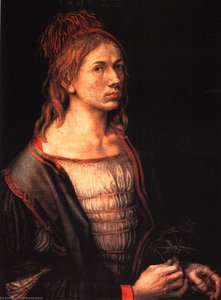
Albrecht Dürer, una figura imponente del Renacimiento alemán, nació el 21 de mayo de 1471 en Núremberg, Alemania. Su padre, Albrecht Dürer el Viejo, era un exitoso joyero, y fue dentro de este ambiente artístico donde la inclinación de joven Albrecht hacia el arte comenzó a florecer. A los trece años, comenzó su aprendizaje con Michael Wolgemut, un destacado artista en Núremberg, adquiriendo habilidades fundamentales en pintura, dibujo y técnicas de grabado. Un autorretrato creado en 1484, que se exhibe en la Albertina de Viena, proporciona evidencia notable de su talento precoz.
Para sus veinte años, Dürer se había establecido como un maestro grabador, logrando reconocimiento en toda Europa. Emprendió viajes a Italia, donde conoció las obras de maestros del Renacimiento como Rafael, Giovanni Bellini y Leonardo da Vinci. Estas interacciones influyeron profundamente en su estilo artístico, llevándolo a integrar motivos y técnicas clásicas en su estética europea del norte.
El *oeuvre* de Dürer abarca una amplia gama de medios, incluyendo pinturas, grabados, grabados en madera y escritos teóricos. Algunas de sus obras más celebradas incluyen:
El estilo de Dürer se caracteriza por el realismo meticuloso, el dibujo preciso y una profunda comprensión de la anatomía y la perspectiva. También fue pionero en el uso del color aguafuerte como medio independiente.
Más allá de su práctica artística, Dürer hizo contribuciones significativas a la teoría del arte. Escribió varios tratados sobre geometría, proporción y anatomía humana, incluyendo Cuatro Libros de Proporción Humana (1528). Estos escritos demuestran su creencia en las bases matemáticas del arte y su compromiso con establecer un enfoque científico para la creación artística.
El impacto de Albrecht Dürer en el mundo del arte es innegable. Puenteó la brecha entre las tradiciones europeas del norte y los ideales del Renacimiento italiano, introduciendo motivos clásicos en el arte del norte mientras mantenía su carácter distintivo. Sus tratados teóricos ayudaron a elevar el estatus de los artistas y establecieron un nuevo marco intelectual para la práctica artística. Sigue siendo una figura fundamental en la historia del arte, inspirando a generaciones de artistas con sus habilidades técnicas, espíritu innovador y visión profunda.

1471 - 1528 , Italy

Explore the profound history and technical mastery of woodcut relief printing. From ancient origins to German Expressionism, discover how artists use the subtractive process to create iconic works. A definitive guide for art students, collectors, and historians.

Discover the technical mastery behind Most-Famous-Paintings.com's premium Giclée canvas prints. Our guide for elite collectors explores archival pigment inks, museum-grade substrates, and the science of high-fidelity reproduction to ensure lasting beauty and historical accuracy.


Manténgase al día con las últimas noticias de arte, ofertas exclusivas e ideas de decoración.
Cuéntanos sobre tu proyecto y nuestros expertos en arte te ofrecerán 3 sugerencias de obras personalizadas.
Dejamos que nosotros seleccionemos 3 opciones exclusivas para ti – ¡Gratis!


 Vista previa
 Compartir
 Compartir
 Ver detalles

 Descargar
 Ver similares
 Radiografía
 Presentación de diapositivas

 Leer más




































 La opción de vidrio solo está disponible en tamaños inferiores a 110 cm.