x

Adquiera una imagen digital de alta resolución y optimizada, muy superior a la vista previa en línea.
Cada archivo es preparado meticulosamente por nuestros especialistas internos mediante el uso de herramientas avanzadas y un experto retoque manual. Nos aseguramos de que cada imagen posea una claridad excepcional, una precisión cromática impecable y un detalle minucioso.
El archivo final se entrega por correo electrónico en un plazo de 72 horas, optimizado para su uso inmediato en entornos profesionales, editoriales y de impresión. Esta es la misma calidad en la que confían los estudios de diseño, las editoriales y las galerías de primer nivel.
Descarga un archivo de alta resolución para exhibición personal, impresión y proyectos creativos. ( Pedir impresión Encargar reproducción pintada a mano)
Al elegir Most-Famous-Paintings.com, no solo está adquiriendo una imagen; está recibiendo una obra de arte digital mejorada profesionalmente, elaborada con precisión y respaldada por una garantía de satisfacción. Esto es todo lo que incluye su pedido, automáticamente:

Recibirá su archivo de imagen digital en alta resolución por correo electrónico en un plazo de 72 horas tras realizar su pedido, listo para su uso inmediato.

Su obra de arte se optimiza profesionalmente mediante herramientas avanzadas de IA y edición manual, garantizando el máximo detalle, claridad y precisión cromática.

¿Has borrado o perdido tu archivo por error? No te preocupes: te lo volveremos a enviar en cualquier momento, sin coste adicional.

Disfrute de su obra de arte al instante sin aduanas, aranceles ni gastos de envío; las descargas digitales siempre están libres de impuestos.

Garantizamos que su imagen digital refleje los colores originales con la mayor fidelidad posible, mediante el uso de herramientas profesionales y gestión del color.

Si no está satisfecho con su imagen digital, la revisaremos o le reembolsaremos el 100% en un plazo de 60 días, sin preguntas.

¿No está satisfecho? Obtenga un reembolso completo dentro de los 60 días posteriores a la recepción de su archivo digital, sin necesidad de explicaciones.

Compra 3 imágenes, ahorra 10% - Compra 5, ahorra 15% - Compra 10+, ahorra 20%. Ideal para proyectos creativos, galerías y agencias.
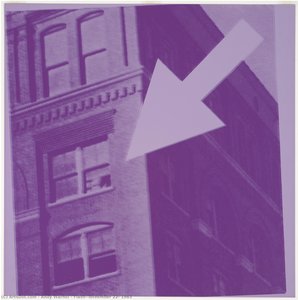
Andy Warhol’s ‘Flash—November 22, 1963’ isn't a painting that offers comfort. It doesn’t attempt to memorialize with grace or sentimentality. Instead, it presents a chillingly detached response to one of the most traumatic events in American history: the assassination of President John F. Kennedy. Created in 1968, five years after the tragedy, this silkscreen print isn’t about the event itself, but rather about *how* we consumed that event – through the relentless, often numbing, lens of mass media. The work exists as a stark meditation on grief, spectacle, and the unsettling power of repetition.
Warhol’s choice of silkscreen printing is crucial to understanding the artwork’s impact. This technique, borrowed from commercial advertising, allowed for mechanical reproduction – mirroring the way news images were disseminated across newspapers and television screens in 1963. The image itself is a ghostly layering of presidential seals, rendered almost entirely in grayscale. These aren’t pristine emblems of power; they are fractured, multiplied, and slightly blurred, as if seen through a veil of static or fading memory. The absence of vibrant color contributes to the sense of emotional distance, creating a visual equivalent of shock and disbelief. The geometric precision of the seals contrasts sharply with the chaotic arrangement, hinting at an underlying order disrupted by sudden violence. It’s a deliberately flat image, devoid of traditional depth or perspective, further emphasizing its status as a reproduction – a copy of a copy, removed from the immediacy of lived experience.
The repeated presidential seal is profoundly symbolic. It represents not just Kennedy himself, but the very idea of American leadership, authority, and stability—all shattered by the assassination. The layering suggests an overwhelming influx of information, a constant bombardment of images and reports that ultimately desensitized the public. Warhol wasn’t interested in creating a heroic portrait or a poignant elegy; he was documenting the *process* of mourning as mediated by mass communication. The work emerged during a period of significant social and political upheaval — the Vietnam War, the Civil Rights Movement — and reflects a growing skepticism towards authority and traditional narratives. Warhol's earlier career in commercial illustration gave him unique insight into how images are constructed and consumed, and ‘Flash—November 22, 1963’ is a powerful critique of that system.
‘Flash—November 22, 1963’ doesn't offer easy answers or emotional catharsis. It leaves the viewer feeling strangely detached, confronted with the unsettling realization that tragedy can become spectacle. Warhol himself acknowledged his own ambivalence towards Kennedy’s death, stating he was more disturbed by the media’s manufactured grief than by the event itself. This sense of alienation is palpable in the artwork. The print serves as a potent reminder of the power of images to shape our perceptions and influence our emotions — and the dangers of allowing those images to replace genuine feeling. It’s a work that continues to resonate today, in an age saturated with information and increasingly reliant on media for our understanding of the world.
The image depicts a monochromatic reproduction of Andy Warhol’s ‘Flash’ print from November 23, 1963. It is a stark, almost ghostly rendition in grayscale, dominated by shades of grey and white. The composition centers around multiple presidential seals – the Great Seal of the United States – layered over one another, creating a dense and slightly chaotic arrangement. The lines are primarily defined by the sharp edges of the seals themselves, with subtle variations in tone suggesting texture and detail within those shapes. Shapes are predominantly geometric: circles (the seals) and rectangular blocks of text at the top and bottom. There is no discernible lighting source; the image appears uniformly illuminated, contributing to its flat, two-dimensional quality. Perspective is nonexistent due to the lack of depth cues and the flattened representation. The depth is minimal, primarily defined by the overlapping layers of the seals.
The overall impression is unsettling and evokes a sense of detachment and repetition, reflecting Warhol’s exploration of consumer culture and its impact on perception.

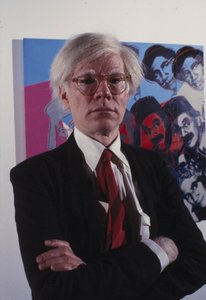
1928 - 1987 , Estados Unidos de América


Manténgase al día con las últimas noticias de arte, ofertas exclusivas e ideas de decoración.
Cuéntanos sobre tu proyecto y nuestros expertos en arte te ofrecerán 3 sugerencias de obras personalizadas.
Dejamos que nosotros seleccionemos 3 opciones exclusivas para ti – ¡Gratis!


 Vista previa
 Compartir
 Compartir
 Ver detalles

 Descargar
 Ver similares
 Radiografía
 Presentación de diapositivas

 Leer más