x

Impresiones giclée o en lienzo de calidad de museo con producción rápida y opciones de acabado flexibles. ( Encargar reproducción pintada a mano Comprar descarga)





























Elija entre nuestros tamaños predefinidos que respetan las proporciones originales de la obra.

Puede introducir sus propias dimensiones para adaptarse a un marco o espacio específico. Si el tamaño seleccionado no coincide con las proporciones de la imagen original, recortaremos la obra de arte o extenderemos la imagen con un borde con efecto espejo o de color sólido. Se enviará una maqueta digital para su aprobación antes de que comience la producción.
Tenga en cuenta que la vista previa en pantalla no refleja el recorte o la extensión real. Solo la maqueta mostrará con precisión la composición final.
Aunque existen tamaños personalizados, recomendamos seleccionar una dimensión de la lista predefinida para preservar las proporciones originales.
Envío a todo el mundo () en 2 semanas en lugar de las 4/5 semanas estándar. (18 agosto)


Skull
Tamaño de la reproducción
In the vast landscape of twentieth-century art, few images possess the immediate, visceral impact of Andy Warhol’s “Skull.” Created in 1965, this masterpiece serves as a profound meditation on the intersection of mortality and mass media. At first glance, the viewer is met with an arresting, high-contrast composition: a stark, vibrant yellow background that radiates with an almost artificial intensity, framing a skull rendered in muted, ghostly greens. This deliberate use of color does not merely decorate the canvas; it creates a psychological tension, pulling the eye toward the central, hollowed form. The presence of a concentric yellow circle enveloping the skull acts as a visual halo, transforming a grim symbol of death into a piece of modern iconography that feels both sacred and commercial.
The brilliance of this work lies in its ability to bridge the gap between the macabre and the mundane. Warhol, a master of the Pop Art movement, utilized the silkscreen printing technique to strip away the traditional layers of painterly depth, opting instead for a deliberate flatness. This mechanical approach was revolutionary, as it mimicked the aesthetics of mass production and advertising. By utilizing stencils to achieve consistent color saturation, Warhol challenged the very notion of the "unique" art object, suggesting that even our most profound fears—such as death—are subject to the repetitive, glossy consumption of popular culture. For the collector or interior designer, this technique offers a graphic clarity that allows the artwork to command attention in any modern setting, acting as a bold focal point that balances heavy symbolism with clean, contemporary lines.
To understand “Skull,” one must look beyond the pigment to the turbulent atmosphere of mid-sixties America. The piece emerged from a period defined by profound social anxiety, marked by the shadows of the Vietnam War and the intense struggles of the civil rights movement. In this climate, the skull became more than just a biological remnant; it was a universal emblem of the pervasive fear of mortality that gripped the collective psyche. Warhol’s genius was in his ability to take this heavy, existential dread and recontextualize it through the lens of celebrity and repetition. He transformed the memento mori—the traditional artistic reminder of death—into something that feels as ubiquitous and inescapable as a magazine advertisement.
For those seeking to integrate such a piece into a curated space, “Skull” offers an unparalleled emotional depth. It is a work that invites contemplation, prompting the viewer to reflect on the fleeting nature of life amidst the noise of modern existence. Whether placed in a minimalist gallery-style living room or a sophisticated studio, the painting provides a sophisticated dialogue between color and concept. It does not merely decorate a wall; it anchors a room with its historical weight and striking visual rhythm, making it an essential acquisition for anyone captivated by the enduring legacy of Andy Warhol and the transformative power of Pop Art.

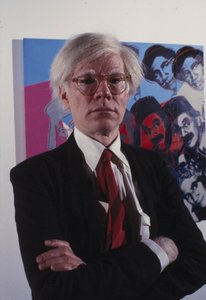
1928 - 1987 , Estados Unidos de América

Explore the provocative world of Aggressive Pop Art. Discover how confrontational imagery, bold saturated hues, and mass media deconstruction redefined modern aesthetics through an expert art-historical lens.


Manténgase al día con las últimas noticias de arte, ofertas exclusivas e ideas de decoración.
Cuéntanos sobre tu proyecto y nuestros expertos en arte te ofrecerán 3 sugerencias de obras personalizadas.
Dejamos que nosotros seleccionemos 3 opciones exclusivas para ti – ¡Gratis!


 Vista previa
 Compartir
 Compartir
 Ver detalles

 Descargar
 Ver similares
 Radiografía
 Presentación de diapositivas

 Leer más







 La opción de vidrio solo está disponible en tamaños inferiores a 110 cm.