x

Adquiera una imagen digital de alta resolución y optimizada, muy superior a la vista previa en línea.
Cada archivo es preparado meticulosamente por nuestros especialistas internos mediante el uso de herramientas avanzadas y un experto retoque manual. Nos aseguramos de que cada imagen posea una claridad excepcional, una precisión cromática impecable y un detalle minucioso.
El archivo final se entrega por correo electrónico en un plazo de 72 horas, optimizado para su uso inmediato en entornos profesionales, editoriales y de impresión. Esta es la misma calidad en la que confían los estudios de diseño, las editoriales y las galerías de primer nivel.
Descarga un archivo de alta resolución para exhibición personal, impresión y proyectos creativos. ( Pedir impresión Encargar reproducción pintada a mano)
Al elegir Most-Famous-Paintings.com, no solo está adquiriendo una imagen; está recibiendo una obra de arte digital mejorada profesionalmente, elaborada con precisión y respaldada por una garantía de satisfacción. Esto es todo lo que incluye su pedido, automáticamente:

Recibirá su archivo de imagen digital en alta resolución por correo electrónico en un plazo de 72 horas tras realizar su pedido, listo para su uso inmediato.

Su obra de arte se optimiza profesionalmente mediante herramientas avanzadas de IA y edición manual, garantizando el máximo detalle, claridad y precisión cromática.

¿Has borrado o perdido tu archivo por error? No te preocupes: te lo volveremos a enviar en cualquier momento, sin coste adicional.

Disfrute de su obra de arte al instante sin aduanas, aranceles ni gastos de envío; las descargas digitales siempre están libres de impuestos.

Garantizamos que su imagen digital refleje los colores originales con la mayor fidelidad posible, mediante el uso de herramientas profesionales y gestión del color.

Si no está satisfecho con su imagen digital, la revisaremos o le reembolsaremos el 100% en un plazo de 60 días, sin preguntas.

¿No está satisfecho? Obtenga un reembolso completo dentro de los 60 días posteriores a la recepción de su archivo digital, sin necesidad de explicaciones.

Compra 3 imágenes, ahorra 10% - Compra 5, ahorra 15% - Compra 10+, ahorra 20%. Ideal para proyectos creativos, galerías y agencias.

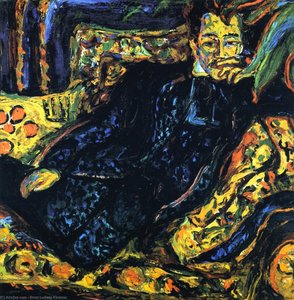
Béla Czóbel (1883-1976) stands as a pivotal figure in the development of 20th-century art, particularly within Hungary. More than simply a painter, he was a key instigator of artistic innovation, bridging the gap between traditional European styles and the burgeoning avant-garde movements of his time. His work, characterized by intense emotion, dramatic lighting, and a haunting atmosphere, reflects both personal turmoil and a profound engagement with the changing social landscape of early 20th-century Europe. Czóbel’s legacy lies not only in his distinctive artistic style but also in his role as a catalyst for artistic experimentation within Hungary, shaping the course of modern Hungarian art.
Born in Budapest to a Jewish-Hungarian family, Béla Czóbel’s early life was marked by an appreciation for the arts fostered by his grandfather, a decorative painter. This familial influence ignited a passion within him, leading him to pursue formal artistic training. He initially studied at the Nagybánya Free School of Painting in Romania (now Baia Mare), under Béla Iványi Grünwald, where he was exposed to the principles of naturalism and the burgeoning Hungarian art scene. This early environment emphasized a direct observation of reality, a foundation that would later be dramatically transformed by his encounters with European avant-garde movements.
A pivotal moment in Czóbel’s artistic development occurred when he traveled to Munich in 1902. There, he immersed himself in the vibrant art world of the German Empire, studying at the Academy of Fine Arts and forging connections with fellow artists like Jules Pascin, Rudolf Lévy, and Walter Bondy. These encounters proved crucial, exposing him to new ideas and techniques – particularly the influence of Fauvism – that would fundamentally alter his artistic approach.
Czóbel’s exposure to Fauvism in Paris during 1905 proved transformative. The bold, non-naturalistic use of color, championed by Matisse and Derain, resonated deeply with his artistic sensibilities. He began incorporating these vibrant hues into his work, moving away from the muted tones of naturalism towards a more expressive and emotionally charged palette. This shift was not merely stylistic; it represented a deliberate rejection of academic conventions and an embrace of subjective experience.
In 1909, Czóbel became a founding member of “The Eight” (Nyolcak), a group of Hungarian artists who sought to break free from the established artistic traditions of Hungary. This collective, comprised of figures like Károly Kernstok and Róbert Berény, aimed to introduce new ideas and styles – including Fauvism, Cubism, and Expressionism – into the Hungarian art world. “The Eight” staged their first exhibition in 1911, marking a significant moment in the history of modern Hungarian art.
Following World War I, Czóbel’s artistic style continued to evolve, incorporating elements of German Expressionism while retaining his distinctive use of color and dramatic lighting. His paintings often depict scenes of urban life, interiors, and portraits, but they are imbued with a sense of unease and psychological intensity. He frequently explored themes of isolation, alienation, and the darker aspects of human experience. His work is characterized by a palpable atmosphere—a feeling of melancholy, mystery, and even dread.
During his time in Paris (1925-1939), Czóbel produced some of his most celebrated works, including *Kislány ágy előtt* (“Little Girl in Front of a Bed”) and *Ülő akt* (“Sitting Nude”). These paintings exemplify his mastery of color, composition, and psychological expression. His later work often featured stark contrasts between light and shadow, creating a dramatic and unsettling effect.
Béla Czóbel’s impact on Hungarian art is undeniable. He played a crucial role in introducing modern European movements – particularly Fauvism and Expressionism – to Hungary, challenging the established artistic norms of the time. His work paved the way for subsequent generations of Hungarian artists, influencing their approach to color, composition, and subject matter. Despite facing challenges during World War II and the subsequent communist era, Czóbel’s legacy endures as a testament to his artistic vision and his contribution to the development of modern art.
He was awarded the Kossuth Prize in 1948, recognizing his significant contributions to Hungarian culture. Today, his works are exhibited in museums throughout Hungary and beyond, ensuring that his unique artistic voice continues to resonate with audiences worldwide.

1883 - 1976 , Hungary


Manténgase al día con las últimas noticias de arte, ofertas exclusivas e ideas de decoración.
Cuéntanos sobre tu proyecto y nuestros expertos en arte te ofrecerán 3 sugerencias de obras personalizadas.
Dejamos que nosotros seleccionemos 3 opciones exclusivas para ti – ¡Gratis!


 Vista previa
 Compartir
 Compartir
 Ver detalles

 Descargar
 Ver similares
 Radiografía
 Presentación de diapositivas
 Leer más