


x

Impresión giclée o en lienzo de calidad de museo con producción rápida y opciones de acabado flexibles. ( Switch to hand made Painting Switch to Image)
Elija entre nuestros tamaños predefinidos que respetan las proporciones originales de la obra.

Puede introducir sus propias dimensiones para adaptarse a un marco o espacio específico. Si el tamaño seleccionado no coincide con las proporciones de la imagen original, recortaremos la obra de arte o extenderemos la imagen con un borde con efecto espejo o de color sólido. Se enviará una maqueta digital para su aprobación antes de que comience la producción.
Tenga en cuenta que la vista previa en pantalla no refleja el recorte o la extensión real. Solo la maqueta mostrará con precisión la composición final.
Aunque existen tamaños personalizados, recomendamos seleccionar una dimensión de la lista predefinida para preservar las proporciones originales.
Entrega mundial () en 2 semanas en lugar de las 4/5 semanas estándar. (28 julio)


Minerva
Tamaño de la reproducción
Benvenuto Cellini's "Minerva," crafted in 1545 during the twilight of the High Renaissance, isn't merely a bronze sculpture; it’s a meticulously constructed embodiment of Roman virtue and strategic intellect. This imposing figure, standing nearly nine feet tall and housed within the hallowed halls of Florence’s Bargello Museum, commands attention not just through its scale but through the profound depth of its symbolism and the sheer virtuosity of Cellini's hand.
Cellini, a polymath renowned as a goldsmith, sculptor, and celebrated author of his own captivating autobiography, infused this work with the spirit of his era – a blend of Mannerist drama, classical ideals, and an undeniable flair for the theatrical. He wasn’t simply replicating a goddess; he was channeling her essence, imbuing the bronze with a palpable sense of power, wisdom, and strategic command. The sculpture represents Minerva, the Roman deity associated with intelligence, justice, and victory in battle – qualities that Cellini himself embodied throughout his extraordinary life.
The creation of "Minerva" is a testament to Cellini’s unparalleled skill as a sculptor. The piece exemplifies the lost-wax casting method, a technique demanding immense patience and precision. First, a wax model was meticulously crafted, capturing every nuance of Minerva's pose – her right arm raised in a gesture of authority, her left hand holding drapery that flows with dynamic grace. This delicate wax form was then encased in layers of clay, creating a robust mold. Once the clay hardened, it was carefully removed, revealing the wax model beneath. Finally, molten bronze was poured into the mold, filling every crevice and contour. Upon cooling, the mold was broken away, leaving behind the solid bronze sculpture.
Crucially, Cellini didn’t rely solely on the inherent beauty of the metal; he masterfully manipulated its surface to create a rich, complex patina – a layer of color achieved through controlled oxidation and polishing. The deep browns, ochres, and hints of reddish-browns aren't merely decorative; they enhance the sculpture’s three-dimensionality, highlighting the textures of the drapery, the musculature of Minerva’s body, and the subtle sheen of the bronze itself. This careful attention to surface detail elevates the work beyond a simple representation, transforming it into a truly immersive experience for the viewer.
Beyond its technical brilliance, "Minerva" is laden with symbolic meaning. The goddess’s posture – her raised arm and commanding gaze – immediately conveys authority and strategic thinking. Her attire, a flowing robe adorned with intricate folds, speaks to both dignity and grace. But it's the details that truly reveal Cellini’s intent. Minerva holds a shield, not of war, but one reflecting the image of the sea, symbolizing her dominion over both land and water – representing wisdom and strategy. The inclusion of marine creatures—horses, fish, and shells—further reinforces this connection to the ocean's depths, suggesting an understanding of hidden knowledge and strategic foresight.
The sculpture’s placement within the Loggia dei Lanzi in Florence is also significant. This open-air gallery, a showcase for Renaissance art, served as a public forum for artistic expression and intellectual debate. By placing "Minerva" here, Cellini sought to engage viewers in a contemplation of virtue, intellect, and the complexities of leadership – qualities that resonated deeply with the Florentine elite of his time.
“Minerva” stands as a pivotal work in Benvenuto Cellini’s oeuvre and a landmark achievement in Renaissance sculpture. It exemplifies the artist's mastery of technique, his profound understanding of symbolism, and his ability to capture the essence of classical ideals within a distinctly Mannerist style. More than just a beautiful object, it is a window into the mind of a remarkable artist – a testament to the enduring power of art to inspire, provoke thought, and transcend time.
Benvenuto Cellini fue una figura notable del Renacimiento italiano, reconocido como un consumado orfebre, escultor, dibujante, soldado, músico y escritor. Sus múltiples talentos y su personalidad flamígera se capturan vívidamente en su celebrada autobiografía, considerada una obra literaria significativa junto con sus logros artísticos. Encarna el espíritu del manierismo, un período posterior al Alto Renacimiento caracterizado por un dramatismo y una complejidad estilística.
Nacido en una familia con inclinaciones musicales – su padre era músico y fabricante de instrumentos – Cellini inicialmente mostró promesas en la música. Sin embargo, a los quince años, persiguió apasionadamente una carrera como orfebre, convenciendo a su reacio padre para que lo hiciera aprendiz de Antonio di Sandro (conocido como Marcone). Esto marcó el comienzo de su formación artística formal. Sus primeros años no estuvieron exentos de incidentes; a los dieciséis años, se vio envuelto en una reyerta con compañeros, lo que llevó a su destierro de Florencia y un período trabajando en Siena bajo el orfebre Fracastoro.
El estilo de Cellini se caracteriza por su dinamismo, realismo y atención al detalle. Se inspiró en la antigüedad clásica y las figuras poderosas de Miguel Ángel, pero infundió su trabajo con una sensibilidad manierista distintiva: formas alargadas, poses exageradas y un sentido de teatralidad.
La vida de Cellini se extendió mucho más allá del taller. Sirvió como soldado durante los asedios, afirmando haber desempeñado un papel crucial en la defensa de Roma contra las fuerzas imperiales. También fue un músico consumado, tocando el cornetín y la flauta en la corte papal. Sin embargo, es su autobiografía lo que verdaderamente lo distingue.
Su autobiografía no es meramente un relato de eventos; es un autorretrato cuidadosamente construido diseñado para mostrar sus talentos y justificar sus acciones. Si bien a veces es poco fiable debido a los propios sesgos de Cellini, sigue siendo una fuente primaria esencial para comprender la vida del Renacimiento.
Benvenuto Cellini murió en Florencia en 1571, dejando atrás un legado como uno de los artistas más importantes del manierismo. Su habilidad técnica, innovación artística y cautivadora autobiografía continúan inspirando a artistas y entusiastas del arte por igual. Representa el ideal renacentista quintessential: un polímata hábil en múltiples disciplinas, impulsado por la ambición y sin miedo a expresar su individualidad. Sus obras son celebradas por su belleza, artesanía y poder dramático, lo que consolida su lugar como una figura clave en la historia del arte occidental.

1500 - 1571 , Italia

Explore the life & art of Benvenuto Cellini, Renaissance goldsmith & sculptor. Discover his iconic 'Perseus,' masterful techniques, and enduring legacy – a collector's essential guide.
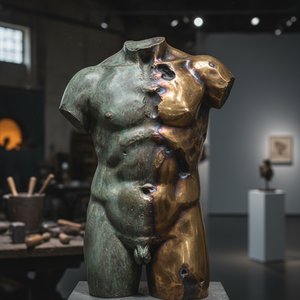
Descubra la historia, las técnicas y el valor de la escultura en bronce. Guía experta para coleccionistas e inversores. Explore obras maestras y aprenda sobre fundición a la cera perdida.

Explore the rich history & enduring appeal of bronze sculpture with expert insights for collectors at Most-Famous-Paintings. Learn about casting techniques, iconic artists, and collecting tips to build a discerning art collection.

Descubre las 10 esculturas de bronce más influyentes de la historia del arte. Explora obras maestras de Rodin, Degas y otros genios. Encuentra reproducciones de arte de calidad museo en Most-Famous-Paintings.com.

Descubre las 10 esculturas de bronce más legendarias que revolucionaron el arte. Explora la historia de Rodin, Degas y otros maestros del bronce. Encuentra reproducciones de alta calidad e inspiración para tu hogar en Most-Famous-Paintings.com.


Manténgase al día con las últimas noticias de arte, ofertas exclusivas e ideas de decoración.
Cuéntanos sobre tu proyecto y nuestros expertos en arte te ofrecerán 3 sugerencias de obras personalizadas.
Permítenos seleccionar 3 opciones solo para ti – ¡Gratis!


 Enviar
 Compartir
 Detalles

 Descargar
 Similares
 Presentación de diapositivas


 Ver más




































 La opción de vidrio solo está disponible en tamaños inferiores a 110 cm.


