


x
 BronzeSculptureNew Sculpture
 1877
1877 98.0 x 174.0 cm
 Tate Britain
Impresiones giclée o en lienzo de calidad de museo con producción rápida y opciones de acabado flexibles. ( Encargar reproducción pintada a mano Comprar descarga)
Elija entre nuestros tamaños predefinidos que respetan las proporciones originales de la obra.

Puede introducir sus propias dimensiones para adaptarse a un marco o espacio específico. Si el tamaño seleccionado no coincide con las proporciones de la imagen original, recortaremos la obra de arte o extenderemos la imagen con un borde con efecto espejo o de color sólido. Se enviará una maqueta digital para su aprobación antes de que comience la producción.
Tenga en cuenta que la vista previa en pantalla no refleja el recorte o la extensión real. Solo la maqueta mostrará con precisión la composición final.
Aunque existen tamaños personalizados, recomendamos seleccionar una dimensión de la lista predefinida para preservar las proporciones originales.
Envío a todo el mundo () en 2 semanas en lugar de las 4/5 semanas estándar. (18 agosto)


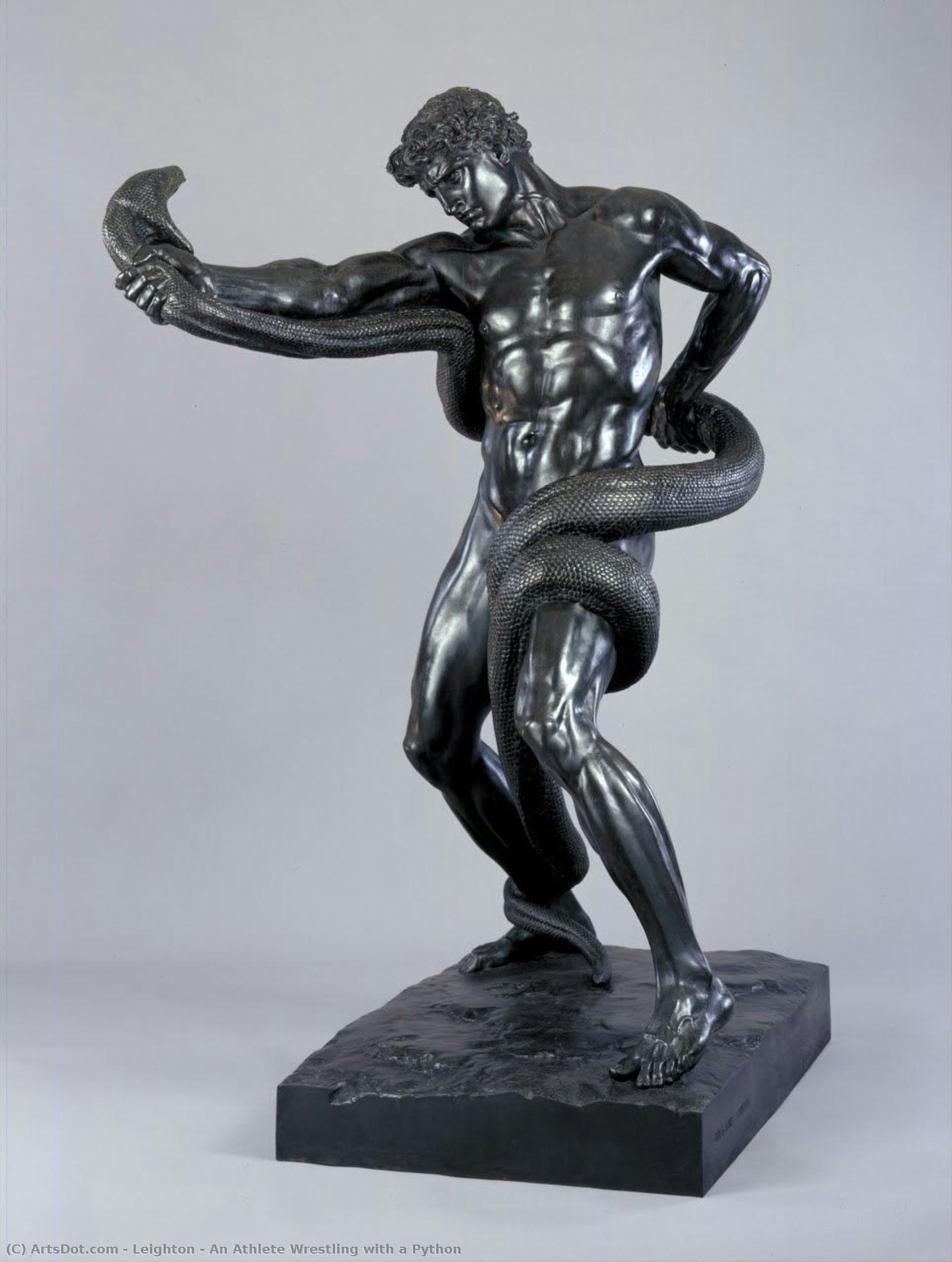
An Athlete Wrestling with a Python
Tamaño de la reproducción
Frederic Leighton's “An Athlete Wrestling with a Python,” completed in 1877, isn’t merely a depiction of physical combat; it’s a profound meditation on the human condition, a dialogue between strength and vulnerability, and a pivotal moment in the evolution of British sculpture. Leighton, deeply influenced by the grandeur of Italian Renaissance art – particularly the meticulous realism and dramatic narratives found in works by Michelangelo – sought to bridge the gap between the idealized forms of classical antiquity and the burgeoning currents of modern artistic expression. This ambitious undertaking marked a deliberate departure from the prevailing academic style, signaling a shift towards a more emotionally resonant and psychologically complex approach to sculpture.
The painting’s subject matter is rooted in both mythology and allegory. The athlete, powerfully rendered with an almost brutal physicality, embodies human determination and resilience. He's not a heroic figure of triumphant conquest, but rather one locked in a desperate struggle – a wrestling match against a serpentine embodiment of primal instinct, temptation, or perhaps even the very forces of nature itself. The python’s coils, meticulously detailed, evoke both danger and a strange, unsettling beauty, hinting at the seductive allure of chaos and the potential for destruction that lies within seemingly harmless forms.
Leighton's decision to cast “An Athlete Wrestling with a Python” in bronze was revolutionary. Prior to this, monumental sculptures were predominantly executed in marble, offering a cool, enduring permanence that often prioritized formal perfection over emotional depth. Bronze, however, possessed a remarkable capacity for capturing texture and nuance – the glistening scales of the snake, the strained muscles of the athlete, the rough-hewn surface of the base. The artist skillfully employed lost-wax casting, a complex process allowing for intricate detail and a sense of weight and solidity rarely achieved with marble.
The sculpture’s scale – measuring nearly two meters in height – further amplified its impact. It was designed to be viewed in the round, encouraging viewers to contemplate the scene from multiple perspectives and immersing themselves fully within the drama unfolding before them. Leighton's attention to anatomical accuracy, combined with his masterful use of light and shadow, created a remarkably lifelike representation of human form and animal movement – a testament to his rigorous training and artistic vision.
Beyond its literal depiction of a wrestling match, “An Athlete Wrestling with a Python” is laden with symbolic meaning. The struggle can be interpreted as a metaphor for the challenges inherent in life—the constant battles we face against our own weaknesses, external obstacles, or even our darker impulses. The athlete’s determined expression conveys not just physical strength but also an underlying sense of vulnerability and resolve. The coiled python, often associated with wisdom and healing in ancient traditions, here represents a force that threatens to overwhelm the individual, demanding courage and perseverance to overcome.
Furthermore, the sculpture's placement on a rectangular base adorned with carved details resembling waves or rocks subtly reinforces this theme of struggle against nature. It’s a visual reminder of humanity’s ongoing interaction with the wild, untamed forces that shape our world. The work’s emotional impact is profound—a captivating blend of tension, drama, and ultimately, a celebration of human spirit.
The sculpture was created by Clare Leighton, who was the daughter of Robert Leighton (author) and Marie Connor Leighton (author). She studied at Brighton College of Art and later trained at the Slade School of Fine Art and Central School of Arts and Crafts. Her artistic career spanned decades, during which she produced a wealth of wood engravings depicting rural life and social themes. Leighton’s work is characterized by its meticulous detail, evocative storytelling, and profound empathy for her subjects. “An Athlete Wrestling with a Python” stands as a testament to her exceptional talent and her ability to capture the essence of human experience through art.


1898 - 1989 , Reino Unido

Discover the enduring elegance of bronze sculpture. Our expert guide explores lost-wax casting, patina mastery, and professional tips for collecting and commissioning museum-quality bronze art to create a lasting legacy in your private collection.
Elevate your collection with our expert guide to bronze sculpture. Discover the mastery of lost-wax casting, the artistry of patination, and professional insights for acquiring timeless metal masterpieces that define sophisticated interiors.


Manténgase al día con las últimas noticias de arte, ofertas exclusivas e ideas de decoración.
Cuéntanos sobre tu proyecto y nuestros expertos en arte te ofrecerán 3 sugerencias de obras personalizadas.
Dejamos que nosotros seleccionemos 3 opciones exclusivas para ti – ¡Gratis!


 Compartir
 Compartir
 Ver detalles

 Descargar
 Ver similares
 Presentación de diapositivas
 Leer más




































 La opción de vidrio solo está disponible en tamaños inferiores a 110 cm.


