


x

Adquiera una imagen digital de alta resolución y optimizada, muy superior a la vista previa en línea.
Cada archivo es preparado meticulosamente por nuestros especialistas internos mediante el uso de herramientas avanzadas y un experto retoque manual. Nos aseguramos de que cada imagen posea una claridad excepcional, una precisión cromática impecable y un detalle minucioso.
El archivo final se entrega por correo electrónico en un plazo de 72 horas, optimizado para su uso inmediato en entornos profesionales, editoriales y de impresión. Esta es la misma calidad en la que confían los estudios de diseño, las editoriales y las galerías de primer nivel.
Descarga un archivo de alta resolución para exhibición personal, impresión y proyectos creativos. ( Pedir impresión Encargar reproducción pintada a mano)
Al elegir Most-Famous-Paintings.com, no solo está adquiriendo una imagen; está recibiendo una obra de arte digital mejorada profesionalmente, elaborada con precisión y respaldada por una garantía de satisfacción. Esto es todo lo que incluye su pedido, automáticamente:

Recibirá su archivo de imagen digital en alta resolución por correo electrónico en un plazo de 72 horas tras realizar su pedido, listo para su uso inmediato.

Su obra de arte se optimiza profesionalmente mediante herramientas avanzadas de IA y edición manual, garantizando el máximo detalle, claridad y precisión cromática.

¿Has borrado o perdido tu archivo por error? No te preocupes: te lo volveremos a enviar en cualquier momento, sin coste adicional.

Disfrute de su obra de arte al instante sin aduanas, aranceles ni gastos de envío; las descargas digitales siempre están libres de impuestos.

Garantizamos que su imagen digital refleje los colores originales con la mayor fidelidad posible, mediante el uso de herramientas profesionales y gestión del color.

Si no está satisfecho con su imagen digital, la revisaremos o le reembolsaremos el 100% en un plazo de 60 días, sin preguntas.

¿No está satisfecho? Obtenga un reembolso completo dentro de los 60 días posteriores a la recepción de su archivo digital, sin necesidad de explicaciones.

Compra 3 imágenes, ahorra 10% - Compra 5, ahorra 15% - Compra 10+, ahorra 20%. Ideal para proyectos creativos, galerías y agencias.
Egon Schiele’s “Fighter,” painted in 1913, is not merely a depiction of a man throwing a punch; it’s a visceral exploration of the human condition rendered with the unflinching intensity characteristic of Schiele's expressionist style. This work, created during a period of immense personal and artistic turmoil for the artist, embodies his fascination with vulnerability, mortality, and the struggle for control – themes that would become central to his oeuvre. The painting’s power resides in its brutal honesty, a quality amplified by Schiele’s signature technique: bold, gestural brushstrokes applied with a furious energy that seems to vibrate off the canvas. The distorted musculature of the figure, the strained posture, and the almost violent extension of the arm all contribute to an overwhelming sense of impending impact, capturing a moment suspended between preparation and release.
Schiele's approach to depicting the human form was revolutionary for his time. Rejecting the idealized representations favored by many of his contemporaries, he embraced a deliberately unsettling realism, often exaggerating anatomical features to heighten emotional effect. In “Fighter,” this is evident in the elongated limbs and the almost skeletal quality of the figure’s body. The use of muted earth tones – browns, ochres, and greys – further emphasizes the painting's somber mood, creating a sense of claustrophobia and impending doom. His technique involved layering thin washes of paint, building up texture through repeated applications of brushstrokes, resulting in a surface that is both rough and intensely expressive. This deliberate roughness mirrors the emotional intensity he sought to convey.
"Fighter" was created at a pivotal moment in European history – 1913, a year marked by rising political tensions and anxieties surrounding World War I. Schiele’s personal life mirrored this instability; plagued by illness, loss, and the looming threat of conflict, he channeled his fears and uncertainties into his art. The painting can be interpreted as a reflection of these broader societal concerns – a visual representation of the fragility of human existence in the face of overwhelming forces. Schiele's work aligns with the Expressionist movement’s rejection of objective reality in favor of subjective emotional experience, anticipating many of the key tenets that would define the movement.
The inclusion of the cup held by the figure adds another layer of complexity to the painting's symbolism. It could represent a fleeting moment of solace or perhaps an attempt to control the chaos within, mirroring the inherent human desire for order amidst turmoil. The act of throwing the punch itself is not simply a physical gesture; it’s a symbolic confrontation with one's own demons, a desperate assertion of agency in a world that increasingly felt beyond one's control. The overall effect is profoundly unsettling and deeply moving, inviting viewers to confront uncomfortable truths about human nature.

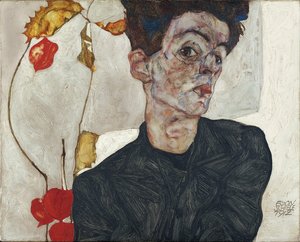
1890 - 1918 , Croacia


Manténgase al día con las últimas noticias de arte, ofertas exclusivas e ideas de decoración.
Cuéntanos sobre tu proyecto y nuestros expertos en arte te ofrecerán 3 sugerencias de obras personalizadas.
Dejamos que nosotros seleccionemos 3 opciones exclusivas para ti – ¡Gratis!


 Vista previa
 Compartir
 Compartir
 Ver detalles

 Descargar
 Ver similares
 Radiografía
 Presentación de diapositivas

 Leer más


