x

Impresiones giclée o en lienzo de calidad de museo con producción rápida y opciones de acabado flexibles. ( Encargar reproducción pintada a mano Comprar descarga)





























Elija entre nuestros tamaños predefinidos que respetan las proporciones originales de la obra.

Puede introducir sus propias dimensiones para adaptarse a un marco o espacio específico. Si el tamaño seleccionado no coincide con las proporciones de la imagen original, recortaremos la obra de arte o extenderemos la imagen con un borde con efecto espejo o de color sólido. Se enviará una maqueta digital para su aprobación antes de que comience la producción.
Tenga en cuenta que la vista previa en pantalla no refleja el recorte o la extensión real. Solo la maqueta mostrará con precisión la composición final.
Aunque existen tamaños personalizados, recomendamos seleccionar una dimensión de la lista predefinida para preservar las proporciones originales.
Envío a todo el mundo () en 2 semanas en lugar de las 4/5 semanas estándar. (18 agosto)


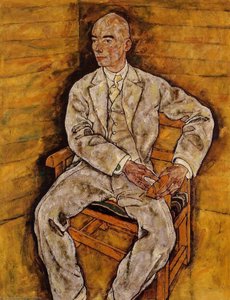
untitled (3781)
Tamaño de la reproducción
Egon Schiele's "untitled (3781)," a remarkably intimate and unsettling portrait, offers a profound glimpse into the artist’s tormented psyche. Painted during a period marked by personal tragedy and artistic experimentation, this work transcends mere representation to become a raw expression of vulnerability, mortality, and the complex interplay between life and death. The image depicts a woman with strikingly vibrant green hair, enveloped in a protective embrace by another figure – a man holding her close. Set against a stark white background, the figures command attention, their forms rendered with Schiele’s signature elongated lines and intense gaze. The scene feels both intensely private and universally resonant, inviting viewers to contemplate themes of love, loss, and the inescapable shadow of existence.
To fully appreciate “untitled (3781),” it’s crucial to understand the artist's tumultuous life. Born in 1890 in Tulln an der Donau, Austria, Schiele’s early years were profoundly shaped by illness and loss – his father succumbed to syphilis when he was just fourteen, a devastating event that permeated much of his work. Raised under the watchful eye of his uncle, Leopold Czihaczek, and grappling with the premature deaths of his sister and mother, Schiele developed an acute awareness of fragility and mortality. This biographical backdrop informs every brushstroke, imbuing the painting with a palpable sense of melancholy and urgency. His artistic training at the Vienna Academy of Fine Arts, particularly under the influence of Gustav Klimt, provided him with technical skills but ultimately left him feeling stifled by convention – a desire to break free from established norms fueled his intensely personal and often unsettling style.
Schiele’s technique is immediately arresting. He employs elongated, sinuous lines that seem to writhe with emotion, capturing the physicality of the figures in a way that is both sensual and unsettling. The woman's green hair, an unusual choice for the period, could symbolize vitality, youth, or perhaps even a hint of otherworldly beauty – a defiant assertion against the encroaching darkness. The man’s embrace isn’t one of comfort; rather, it feels possessive, almost desperate. Notice how he dominates the space around her, his body pressing close, suggesting an attempt to shield her from some unseen threat. The stark white background serves to amplify the figures' presence, drawing focus entirely onto their emotional state. The use of a limited color palette – primarily black and white with the vibrant green – further emphasizes the painting’s dramatic intensity. Schiele frequently utilized a technique called “pointillé,” applying tiny dots of paint to create texture and depth, adding to the overall sense of movement and unease.
"untitled (3781)" is not simply a portrait; it’s a psychological exploration. It speaks to the fundamental human need for connection in the face of mortality, but also reveals the anxieties and insecurities that can accompany intimacy. The painting evokes a sense of vulnerability and longing—a silent plea for protection amidst an uncertain world. Schiele's work consistently grappled with themes of sexuality, death, and the human condition, often portraying figures in states of heightened emotion or psychological distress. This particular piece resonates deeply because it captures a moment of intense connection, shadowed by an underlying awareness of fragility. It’s a reminder that even within moments of apparent comfort, the specter of loss always lingers. Reproductions of this powerful work offer a unique opportunity to experience Schiele's vision and contemplate these profound themes.
For high-quality reproductions and to delve deeper into Egon Schiele’s artistic legacy, please visit Most-Famous-Paintings.com.

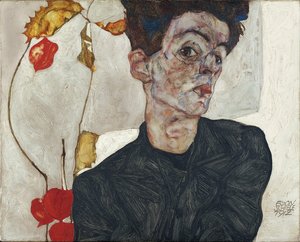
1890 - 1918 , Croacia
Descubre las 25 obras maestras de Egon Schiele, el expresionismo austriaco en su máxima expresión. Explora la historia, técnica y emociones detrás de cada pintura. Reproducciones de arte exclusivas en Most-Famous-Paintings.com. ¡Explora la colección completa online!

Explore the rich history & symbolism of green in art! Discover iconic paintings, techniques, and how to bring verdant harmony into your home with Most-Famous-Paintings's expert guide.

Explore the emotionally charged world of Egon Schiele (1890-1918). Discover his Expressionist masterpieces, psychological themes, and lasting impact on modern art. A comprehensive guide for collectors & enthusiasts.
Descubre las 10 obras maestras del Expresionismo que marcaron un hito en la historia del arte. Explora a Munch, Kirchner y Kandinsky en . Reproducciones de arte de museo para transformar tu hogar.

Descubre las 10 pinturas más impactantes dominadas por el negro. Explora obras maestras de Rembrandt, Goya y Rothko, su historia y significado. Encuentra reproducciones de arte exclusivas para transformar tu hogar en .


Manténgase al día con las últimas noticias de arte, ofertas exclusivas e ideas de decoración.
Cuéntanos sobre tu proyecto y nuestros expertos en arte te ofrecerán 3 sugerencias de obras personalizadas.
Dejamos que nosotros seleccionemos 3 opciones exclusivas para ti – ¡Gratis!


 Vista previa
 Compartir
 Compartir
 Ver detalles

 Descargar
 Ver similares
 Radiografía
 Presentación de diapositivas
 Leer más







 La opción de vidrio solo está disponible en tamaños inferiores a 110 cm.