


x

 Mixed MaterialsSculptureSurrealism
 1952Modern
 63.0 x 35.0 cm
Óleo sobre lienzo pintado a mano en el tamaño y marco de su elección, realizado por encargo por nuestros artistas. ( Pedir impresión Comprar descarga)
Elija entre nuestros tamaños predefinidos que respetan las proporciones originales de la obra.

Puede ingresar sus propias dimensiones para adaptarse a un marco o espacio específico. Si el tamaño seleccionado no coincide con las proporciones de la imagen original, recortaremos la obra o extenderemos la pintura con elementos adicionales pintados a mano. Se le enviará una maqueta digital para su aprobación antes de comenzar la producción.
Tenga en cuenta que la vista previa en pantalla no refleja el recorte o la extensión reales. Solo la maqueta mostrará con precisión la composición final.
Si bien existen tamaños personalizados, recomendamos seleccionar una dimensión de la lista predefinida para preservar las proporciones originales.
Envío a todo el mundo () en 3-4 semanas en lugar de las 5 semanas estándar. (20 agosto). Sin comprometer la calidad.


Branch
Tamaño de la reproducción
In the mid-century landscape of 1952, Fernand Léger unveiled a work that would forever challenge the boundaries between the natural world and the burgeoning machine age. His sculpture, "Branch," famously known as "Rockefeller Branch," serves as a profound Surrealist echo of industrial progress. At first glance, the piece presents a striking juxtaposition; it is an arresting embodiment of the tension between the organic and the inorganic. Léger, a master who had already established himself through the rigorous geometric abstraction of his earlier compositions, embarked on this daring experiment to reconcile the soft, unpredictable rhythms of nature with the hard-edged, orthogonal precision of modern technology.
The sculpture is not merely a visual object but a deliberate provocation. It was presented during the inaugural exhibition at Rockefeller Center, a moment when New York City was asserting itself as a global cultural and industrial titan. Through this work, Léger captures the very essence of mid-century America—a period defined by an unyielding optimism toward technological advancement, yet shadowed by a Surrealist critique of how such progress might reshape the human experience. The piece invites viewers to contemplate a world where the mechanical and the biological are no longer separate entities but are instead woven into a single, complex tapestry.
Léger’s technical execution in "Branch" is nothing short of masterful, utilizing a calculated approach to texture and form. Eschewing the dreamlike, ethereal fantasies often associated with Surrealism, Léger instead employs a technique of calculated juxtaposition. The sculpture utilizes simplified, powerful forms—primarily angular blocks and stylized, skeletal branches—constructed from a sophisticated blend of polished bronze and textured wood.
This deliberate choice of materials creates a compelling sensory interplay. The cold, reflective surface of the bronze speaks to the rigidity and efficiency of industrial manufacturing, while the warmth and grain of the wood evoke the fluid, unpredictable growth of the natural world. This duality allows the sculpture to breathe, creating a visual tension that mirrors the friction between urban expansion and environmental preservation. For the discerning collector or interior designer, this interplay of textures offers a sophisticated focal point, capable of adding both structural strength and organic warmth to a contemporary space.
Beyond its physical presence, "Branch" carries a profound emotional weight. The central motif of the branch serves as a potent symbol of resilience and renewal. In an era where the rapid encroachment of machinery seemed to threaten the vestiges of the natural world, Léger positioned his stylized branches against a backdrop of geometric, man-made forms. This suggests a powerful message: even within the dominant influence of the machine, the spirit of organic life persists, adapting and enduring.
The emotional impact of the piece lies in this very dissonance. It evokes a sense of wonder at the possibility of coexistence, prompting a reflection on our own relationship with progress. To possess a reproduction of such a significant work is to bring into one's environment a piece of art history that celebrates the strength found in complexity. Whether placed in a minimalist gallery setting or an elegantly appointed study, "Branch" acts as a conversation starter, embodying the enduring struggle and ultimate harmony between the world we build and the world we inhabit.

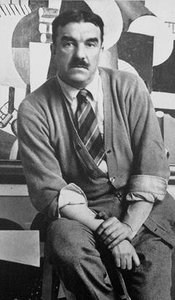
1881 - 1955 , Francia

Explore the profound depths of Surrealism. From Dalí’s dreamscapes to Magritte’s enigmas, master the history of the subconscious mind through our expert art guide and discover museum-quality oil reproductions of the world's most iconic surrealist masterpieces.


Manténgase al día con las últimas noticias de arte, ofertas exclusivas e ideas de decoración.
Cuéntanos sobre tu proyecto y nuestros expertos en arte te ofrecerán 3 sugerencias de obras personalizadas.
Dejamos que nosotros seleccionemos 3 opciones exclusivas para ti – ¡Gratis!


 Compartir
 Compartir
 Ver detalles

 Descargar
 Ver similares
 Presentación de diapositivas
 Leer más




































 La opción de vidrio solo está disponible en tamaños inferiores a 110 cm.


