


x

Óleo sobre lienzo pintado a mano en el tamaño y marco de su elección, realizado por encargo por nuestros artistas. ( Cambiar a impresión Cambiar a imagen)





























Elija entre nuestros tamaños predefinidos que respetan las proporciones originales de la obra.

Puede ingresar sus propias dimensiones para adaptarse a un marco o espacio específico. Si el tamaño seleccionado no coincide con las proporciones de la imagen original, recortaremos la obra o extenderemos la pintura con elementos adicionales pintados a mano. Se le enviará una maqueta digital para su aprobación antes de comenzar la producción.
Tenga en cuenta que la vista previa en pantalla no refleja el recorte o la extensión reales. Solo la maqueta mostrará con precisión la composición final.
Si bien existen tamaños personalizados, recomendamos seleccionar una dimensión de la lista predefinida para preservar las proporciones originales.
Envío a todo el mundo () en 3-4 semanas en lugar de las 5 semanas estándar. (10 agosto). Sin comprometer la calidad.


Street
Tamaño de la reproducción
Fernand Léger's "Street" offers a captivating glimpse into the burgeoning dynamism of early 20th-century urban life, rendered with a distinctive naive style that simultaneously evokes a sense of primitive authenticity and sophisticated abstraction. Painted by one of the most influential figures of the Cubist movement, this artwork isn’t merely a depiction of a street scene; it's an exploration of how modernity – specifically the impact of industrialization and the machine age – was perceived and translated onto canvas. Léger, born Joseph Fernand Henri Léger in 1881 in Argentan, Normandy, brought a unique perspective to art, shaped by his upbringing amidst the rural landscapes that contrasted sharply with the burgeoning mechanical world he sought to capture.
Léger's artistic journey was profoundly influenced by the technological advancements of his time. He saw in the machine age not just a source of pollution or disruption, but also a new aesthetic – one characterized by clean lines, geometric shapes, and a sense of powerful movement. “Street” embodies this fascination, presenting figures and objects as fragmented yet recognizable forms, echoing the mechanical structures that were transforming urban landscapes. The bicycle, a symbol of personal mobility in an increasingly mechanized world, is rendered with particular attention to its angularity and solidity, reflecting Léger’s interest in the formal qualities of industrial design.
This approach was revolutionary for its time. While many artists retreated into pure abstraction, Léger sought to bridge the gap between the tangible world and the realm of artistic expression. He wasn't simply depicting a street; he was constructing a visual vocabulary that spoke directly to the anxieties and aspirations of a society undergoing rapid transformation.
Beyond its formal qualities, “Street” carries a subtle emotional weight. The figures, though rendered in a simplified style, convey a sense of everyday activity – people going about their business, interacting with one another. This focus on the ordinary elevates the scene to something more profound, suggesting that even the most mundane aspects of urban life could be imbued with artistic significance. Léger’s use of color and composition creates a dynamic tension, capturing both the energy and the potential alienation of modern city life.
The painting's naive style invites viewers to engage with it on an intuitive level, bypassing intellectual analysis and tapping into a primal sense of recognition. It is a testament to Léger’s belief that art should be accessible to all, regardless of their formal training or cultural background.
Fernand Léger's “Street” stands as a pivotal work in the history of modern art, demonstrating his unique ability to synthesize Cubist principles with a distinctly personal vision. His influence extended beyond painting, impacting sculpture, design, and architecture. Today, reproductions of this captivating artwork offer an opportunity to experience firsthand the innovative spirit of one of the 20th century’s most important artists – a reminder that even in the midst of technological change, the human element remains at the heart of artistic expression.

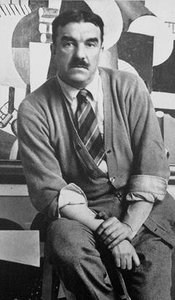
1881 - 1955 , Francia

Descubre las 10 obras maestras del arte moderno que revolucionaron el mundo. Explora la historia de Picasso, Van Gogh y Dalí, sus técnicas y paletas únicas. Encuentra lienzos decorativos y reproduce tus favoritos en Most-Famous-Paintings.com.

Descubre 10 obras maestras que capturan la esencia del arte industrial. Explora la historia de Van Gogh, Hopper y Klimt, sus técnicas y paletas. Encuentra lienzos perfectos para un hogar con carácter en Most-Famous-Paintings.com.
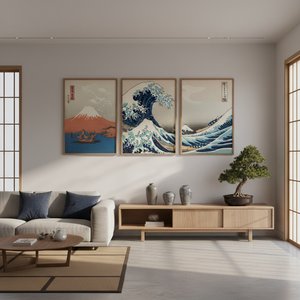
Descubre las 25 obras maestras de Katsushika Hokusai, el genio del ukiyo-e. Explora 'La Gran Ola', paisajes japoneses y su impacto en el arte moderno. Reproducciones de alta calidad para tu hogar en Most-Famous-Paintings.com.

Explore the captivating world of realism in art history! Discover iconic street scenes & genre paintings from masters like Courbet & Brown. Expert analysis & museum-quality reproductions at Most-Famous-Paintings.

Descubre las 25 obras maestras del MoMA: Van Gogh, Picasso, Warhol y más. Explora la historia, el arte moderno y encuentra inspiración para decorar tu hogar con reproducciones de museos en Most-Famous-Paintings.com.


Manténgase al día con las últimas noticias de arte, ofertas exclusivas e ideas de decoración.
Cuéntanos sobre tu proyecto y nuestros expertos en arte te ofrecerán 3 sugerencias de obras personalizadas.
Dejamos que nosotros seleccionemos 3 opciones exclusivas para ti – ¡Gratis!


 Vista previa
 Compartir
 Compartir
 Ver detalles

 Descargar
 Ver similares
 Radiografía
 Presentación de diapositivas

 Leer más







 La opción de vidrio solo está disponible en tamaños inferiores a 110 cm.


