


x

Óleo sobre lienzo pintado a mano en el tamaño y marco de su elección, realizado por encargo por nuestros artistas. ( Cambiar a impresión Cambiar a imagen)





























Elija entre nuestros tamaños predefinidos que respetan las proporciones originales de la obra.

Puede ingresar sus propias dimensiones para adaptarse a un marco o espacio específico. Si el tamaño seleccionado no coincide con las proporciones de la imagen original, recortaremos la obra o extenderemos la pintura con elementos adicionales pintados a mano. Se le enviará una maqueta digital para su aprobación antes de comenzar la producción.
Tenga en cuenta que la vista previa en pantalla no refleja el recorte o la extensión reales. Solo la maqueta mostrará con precisión la composición final.
Si bien existen tamaños personalizados, recomendamos seleccionar una dimensión de la lista predefinida para preservar las proporciones originales.
Envío a todo el mundo () en 3-4 semanas en lugar de las 5 semanas estándar. (11 agosto). Sin comprometer la calidad.


The field trip
Tamaño de la reproducción
Fernand Léger’s “The Field Trip,” completed in 1925, stands as an emblem of Surrealist innovation and a profound reflection on the anxieties and aspirations of the interwar period. More than just a depiction of schoolchildren embarking on a journey to observe a locomotive, Léger's canvas embodies a radical reimagining of artistic representation—a deliberate rejection of illusionism in favor of a visual language that prioritizes geometric abstraction and conveys an overwhelming sense of movement.
“The Field Trip” emerged during a period of intense social and technological upheaval. The rapid industrialization of Europe—fueled by advancements in steam power, metallurgy, and transportation—was reshaping urban landscapes and altering the rhythms of daily life. Artists responded to these changes with diverse strategies, ranging from outright rejection of modernity to attempts to synthesize its principles with traditional forms. Léger’s Surrealist approach distinguishes itself through a calculated embrace of abstraction—a deliberate distortion of reality intended not merely to shock but also to provoke contemplation about the nature of perception and representation.
Beyond its literal depiction of schoolchildren and locomotives, “The Field Trip” is laden with symbolic significance. Léger’s use of repetitive geometric shapes—particularly rectangles—represents the relentless march of industrial progress, mirroring the rhythmic pulsations of the locomotive engine. The flattened picture plane symbolizes a rejection of illusionism and an insistence on confronting viewers with the raw materiality of the artwork. Furthermore, Léger subtly transforms recognizable elements—faces, bodies—into stylized abstractions, suggesting that artistic representation transcends mere imitation of nature.
"The Field Trip" evokes a complex emotional response in the viewer. The painting’s assertive color palette and dynamic brushstrokes convey an underlying sense of anxiety—a reflection of the uncertainties surrounding the future. Yet, simultaneously, Léger imbues his artwork with moments of wonder—captured in the expressive faces of the children and the luminous glow emanating from the locomotive. Ultimately, Léger's masterpiece compels us to reconsider our relationship with both the physical world and artistic expression—challenging us to embrace abstraction as a tool for conveying profound truths about human experience.

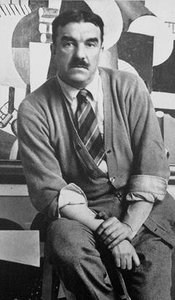
1881 - 1955 , Francia


Manténgase al día con las últimas noticias de arte, ofertas exclusivas e ideas de decoración.
Cuéntanos sobre tu proyecto y nuestros expertos en arte te ofrecerán 3 sugerencias de obras personalizadas.
Dejamos que nosotros seleccionemos 3 opciones exclusivas para ti – ¡Gratis!


 Vista previa
 Compartir
 Compartir
 Ver detalles

 Descargar
 Ver similares
 Radiografía
 Presentación de diapositivas
 Leer más







 La opción de vidrio solo está disponible en tamaños inferiores a 110 cm.


