


x


 Preview
 Encargar reproducción Comprar imagen en alta resolución
 Enviar
 Detalles
 Añadir a favoritos
 Descargar
 Similares
 Radiografía
 Presentación de diapositivas
Impresión giclée o en lienzo de calidad de museo con producción rápida y opciones de acabado flexibles.





























Elija entre nuestros tamaños predefinidos que respetan las proporciones originales de la obra.

Puede introducir sus propias dimensiones para adaptarse a un marco o espacio específico. Si el tamaño seleccionado no coincide con las proporciones de la imagen original, recortaremos la obra de arte o extenderemos la imagen con un borde con efecto espejo o de color sólido. Se enviará una maqueta digital para su aprobación antes de que comience la producción.
Tenga en cuenta que la vista previa en pantalla no refleja el recorte o la extensión real. Solo la maqueta mostrará con precisión la composición final.
Aunque existen tamaños personalizados, recomendamos seleccionar una dimensión de la lista predefinida para preservar las proporciones originales.
Entrega mundial () en 2 semanas en lugar de las 4/5 semanas estándar. (26 julio)


The green tree
Tamaño de la reproducción
Fernand Léger’s “The Green Tree,” painted in 1932, stands as a cornerstone of Tubism—a radical departure from Cubism that solidified Léger's position as one of the foremost champions of machine age aesthetics. More than just a depiction of foliage, this artwork embodies Léger’s profound conviction that art could capture not merely what is seen but also what *feels* like – the pulsating energy and geometric precision inherent in industrial processes.
Léger initially honed his skills in architecture before gravitating towards painting around 1900, immersing himself in Parisian artistic circles. Unlike many of his contemporaries who sought refuge in abstraction as a reaction to representational art, Léger actively embraced it as a tool for conveying the dynamism and structural logic of the burgeoning industrial landscape. This fascination stemmed from his formative years spent laboring on farms in Normandy—a stark contrast that fueled his desire to translate the physicality of rural life into visual terms.
Tubism, developed alongside Picasso, represents Léger’s most distinctive contribution to Cubist innovation. Rejecting the fragmentation characteristic of traditional Cubism, Tubism prioritized simplified geometric forms – circles, squares, and triangles – arranged in overlapping planes that suggested movement and vibration. Léger famously declared that he wished to “paint like a machine,” aiming to distill the essence of industrial production into an aesthetically compelling visual language.
“The Green Tree” exemplifies this Tubist ethos with remarkable clarity. The dominant green hue isn’t merely descriptive; it pulsates with implied energy, mirroring the rhythmic repetition of leaf shapes and branches. The central yellow circle acts as a focal point, disrupting the geometric grid and injecting warmth into the composition—a subtle nod to the incandescent glow of factory lamps.
Beyond its formal brilliance, “The Green Tree” carries symbolic weight. Léger’s deliberate simplification of natural forms speaks to his belief that art could transcend mere imitation, capturing underlying principles of order and rhythm. The tree itself symbolizes resilience and growth—themes resonant with the optimistic spirit of the era, as humanity navigated the transformative challenges posed by industrial expansion.
The painting resides in the Kunstmuseum Den Haag’s collection (Object Number: 0335238), a testament to Léger's enduring influence on artistic thought. Its vibrant colors and striking geometric forms continue to inspire interior designers and collectors alike, securing its place as an iconic masterpiece of modern art.
Further research can be found at AKG Images and Gandalf’s Gallery.
Kunstmuseum Den Haag – Long Term Loan Private Collection offers detailed information about the artwork's provenance and artistic significance.

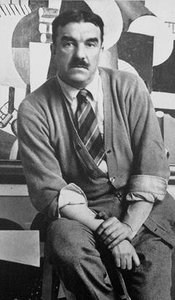
1881 - 1955 , Francia

Descubre el Orfismo, un movimiento artístico revolucionario del siglo XX liderado por Robert y Sonia Delaunay. Explora su teoría del color, características clave e influencia en la abstracción con Most-Famous-Paintings.
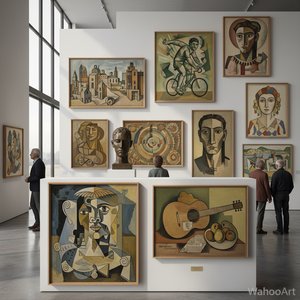
Descubre los 10 lienzos cubistas que revolucionaron el arte moderno. Explora la historia de Picasso, Braque y otros maestros del cubismo en . Reproducciones de alta calidad para tu hogar.

Descubre cómo integrar la innovadora estética cubista en el diseño de villas modernas. Guía experta con consejos prácticos, consideraciones legales y ejemplos inspiradores para crear espacios únicos y sofisticados.

Explore the evolution of geometric abstraction from Cubism to contemporary art. Discover key artists like Malevich & Mondrian, investment insights, and expert collecting advice at Most-Famous-Paintings.
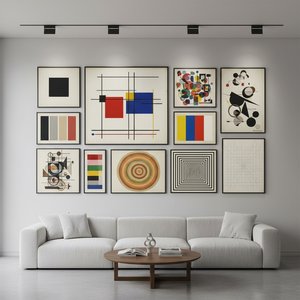
Descubre las 10 obras maestras de la abstracción geométrica que revolucionaron el arte moderno. Explora a Mondrian, Malevich y Kandinsky en Most-Famous-Paintings.com. Reproducciones de alta calidad para tu hogar.


Manténgase al día con las últimas noticias de arte, ofertas exclusivas e ideas de decoración.
Cuéntanos sobre tu proyecto y nuestros expertos en arte te ofrecerán 3 sugerencias de obras personalizadas.
Permítenos seleccionar 3 opciones solo para ti – ¡Gratis!


 Compartir


 Ver más







 La opción de vidrio solo está disponible en tamaños inferiores a 110 cm.


