


x

Óleo sobre lienzo pintado a mano en el tamaño y marco de su elección, realizado por encargo por nuestros artistas. ( Pedir impresión Comprar descarga)





























Elija entre nuestros tamaños predefinidos que respetan las proporciones originales de la obra.

Puede ingresar sus propias dimensiones para adaptarse a un marco o espacio específico. Si el tamaño seleccionado no coincide con las proporciones de la imagen original, recortaremos la obra o extenderemos la pintura con elementos adicionales pintados a mano. Se le enviará una maqueta digital para su aprobación antes de comenzar la producción.
Tenga en cuenta que la vista previa en pantalla no refleja el recorte o la extensión reales. Solo la maqueta mostrará con precisión la composición final.
Si bien existen tamaños personalizados, recomendamos seleccionar una dimensión de la lista predefinida para preservar las proporciones originales.
Envío a todo el mundo () en 3-4 semanas en lugar de las 5 semanas estándar. (20 agosto). Sin comprometer la calidad.


The Lunch
Tamaño de la reproducción
Fernand Léger's "The Lunch" is far more than a mere depiction of a midday meal; it is a bold declaration of artistic intent, a masterful synthesis of abstraction and observation that encapsulates the anxieties and aspirations of the early 20th century. Painted in 1916, during the tumultuous years of World War I, this artwork transcends its immediate subject matter to become a profound meditation on humanity's relationship with technology and the shifting contours of modern life. Léger, deeply influenced by Cubism’s fragmentation of perspective and Picasso’s exploration of geometric shapes, sought to liberate painting from representational constraints—to convey not simply what is seen, but the very essence of how it feels to perceive a world in flux.
At first glance, the composition appears strikingly austere, dominated by a palette of muted reds, yellows, and blues punctuated by stark white accents. However, beneath this deceptively simple surface lies an intricate network of geometric forms—circles, squares, and triangles—that relentlessly dissect the scene into its constituent parts. Léger meticulously renders these shapes with precise lines and planes, mirroring the mechanized precision of the industrial landscape that surrounded him. Yet, despite this rigid formalism, the painting pulsative with a subtle organic rhythm. The woman’s posture, the tender positioning of the baby in her arms, and even the scattered objects on the table contribute to an illusion of movement, suggesting that these forms are not merely static representations but active participants in the unfolding drama of existence.
The technical brilliance of "The Lunch" lies in Léger's ability to marry the mechanical with the maternal. The artist achieved a textured, vibrant surface through sophisticated layering techniques, applying thin washes of color over thicker undercoats to create a visual depth that enhances the geometric clarity. This technique allows the viewer to experience a sense of weight and presence within the flattened plane. In the scene, we find a woman seated with her legs crossed, cradling a child—a moment of domestic intimacy set against a backdrop of structured, almost architectural elements. A dining table sits in the background, surrounded by chairs and scattered with the simple joys of life: a bowl, a vase, an apple, and a banana.
For the discerning collector or interior designer, this piece offers a unique opportunity to introduce a sense of dynamic equilibrium into a space. The artwork functions as a bridge between the classical and the contemporary; it possesses the structural integrity required for sophisticated modern interiors while providing a soulful, human connection through its subject matter. The interplay of bold colors and intricate details creates a lively atmosphere that can serve as a commanding focal point in any room, inspiring conversation and reflection.
To understand "The Lunch," one must consider the historical crucible from which it emerged. Léger’s early life, steeped in the physicality of agricultural labor in Normandy, provided a grounding contrast to the industrialized future he would so passionately depict. As the world moved toward an era of unprecedented technological advancement, Léger sought to integrate this new dynamism—its mechanical forms and its very essence—into a new visual language. This painting stands as a testament to that pursuit, capturing a moment where the organic warmth of human connection meets the sharp, unyielding edges of progress.
Owning a high-quality reproduction of this masterpiece allows one to invite the spirit of the avant-garde into the home. It is an invitation to contemplate the beauty found in structure and the resilience of the human spirit amidst change. Whether placed in a minimalist gallery-style setting or a richly textured study, "The Lunch" remains a timeless exploration of how we find harmony within the fragmented pieces of our modern world.

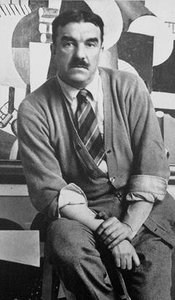
1881 - 1955 , Francia
Explore the profound emotional depth of Lyrical Abstraction. Discover how masters like Raymond Parker used color and form to bridge Impressionism and Abstract Expressionism. Learn about this pivotal movement through our expert-led art history guide.

Explore the profound emotional depth of Color Field painting. Discover the history of mid-century abstraction, from Rothko to Newman, and learn how pure color transforms the viewer's experience through our expert art history guide.

Discover the profound emotional depth and investment potential of contemporary abstraction. Our expert guide explores how texture, movement, and form create timeless value for discerning art collectors and sophisticated interiors.


Manténgase al día con las últimas noticias de arte, ofertas exclusivas e ideas de decoración.
Cuéntanos sobre tu proyecto y nuestros expertos en arte te ofrecerán 3 sugerencias de obras personalizadas.
Dejamos que nosotros seleccionemos 3 opciones exclusivas para ti – ¡Gratis!


 Vista previa
 Compartir
 Compartir
 Ver detalles

 Descargar
 Ver similares
 Radiografía
 Presentación de diapositivas

 Leer más







 La opción de vidrio solo está disponible en tamaños inferiores a 110 cm.


