


x

Adquiera una imagen digital de alta resolución y optimizada, muy superior a la vista previa en línea.
Cada archivo es preparado meticulosamente por nuestros especialistas internos mediante el uso de herramientas avanzadas y un experto retoque manual. Nos aseguramos de que cada imagen posea una claridad excepcional, una precisión cromática impecable y un detalle minucioso.
El archivo final se entrega por correo electrónico en un plazo de 72 horas, optimizado para su uso inmediato en entornos profesionales, editoriales y de impresión. Esta es la misma calidad en la que confían los estudios de diseño, las editoriales y las galerías de primer nivel.
Descarga un archivo de alta resolución para exhibición personal, impresión y proyectos creativos. ( Comprar impresión Comprar pintura hecha a mano)
Al elegir Most-Famous-Paintings.com, no solo está adquiriendo una imagen; está recibiendo una obra de arte digital mejorada profesionalmente, elaborada con precisión y respaldada por una garantía de satisfacción. Esto es todo lo que incluye su pedido, automáticamente:

Recibirá su archivo de imagen digital en alta resolución por correo electrónico en un plazo de 72 horas tras realizar su pedido, listo para su uso inmediato.

Su obra de arte se optimiza profesionalmente mediante herramientas avanzadas de IA y edición manual, garantizando el máximo detalle, claridad y precisión cromática.

¿Has borrado o perdido tu archivo por error? No te preocupes: te lo volveremos a enviar en cualquier momento, sin coste adicional.

Disfrute de su obra de arte al instante sin aduanas, aranceles ni gastos de envío; las descargas digitales siempre están libres de impuestos.

Garantizamos que su imagen digital refleje los colores originales con la mayor fidelidad posible, mediante el uso de herramientas profesionales y gestión del color.

Si no está satisfecho con su imagen digital, la revisaremos o le reembolsaremos el 100% en un plazo de 60 días, sin preguntas.

¿No está satisfecho? Obtenga un reembolso completo dentro de los 60 días posteriores a la recepción de su archivo digital, sin necesidad de explicaciones.

Compra 3 imágenes, ahorra 10% - Compra 5, ahorra 15% - Compra 10+, ahorra 20%. Ideal para proyectos creativos, galerías y agencias.
Fernand Léger's "Two Women" is more than just a depiction of a mother and child; it’s a bold declaration of the burgeoning modern world. Painted in the style that would define his career, this work embodies Léger’s unique approach to Cubism – one that sought not to reject reality but to dissect and reassemble it according to the rhythms of industrial life. The canvas pulsates with a restrained energy, a quiet dynamism born from the careful arrangement of geometric forms. The muted palette of whites, greys, blacks, yellows, greens, and blues contributes to an atmosphere of contemplative observation, inviting the viewer to consider the implications of this fragmented representation.
Created during a period of rapid industrialization and technological advancement, “Two Women” reflects Léger's fascination with the machine age. He wasn’t simply depicting objects; he was capturing their essence – their power, their movement, and their impact on human life. The geometric forms within the painting can be interpreted as echoes of the mechanical structures that were reshaping society at the time. This engagement with modernity distinguishes Léger from many of his contemporaries who favored purely abstract explorations. Instead, he sought to integrate the visible world—particularly its industrial manifestations—into a new artistic language.
Léger’s masterful use of line and color contributes significantly to the painting's impact. The sharply defined angular lines create a sense of dynamism and movement, while the carefully chosen palette evokes a feeling of quiet contemplation. The flattened perspective – a hallmark of Cubism – further emphasizes the two-dimensionality of the canvas, drawing attention to the formal qualities of the composition. The deliberate simplification of the background, consisting of abstract shapes and color blocks, serves not as a mere backdrop but as an active element within the overall design, framing and highlighting the central figures.
A hand-painted reproduction of “Two Women” offers a unique opportunity to bring this seminal work of modern art into your home or office. Most-Famous-Paintings.com provides meticulously crafted reproductions that capture the essence of Léger's artistic vision, allowing you to appreciate the power and beauty of his fragmented perspective. This piece is not just decoration; it’s an investment in a significant moment in art history – a testament to Fernand Léger’s groundbreaking approach to Cubism and his enduring fascination with the modern world.

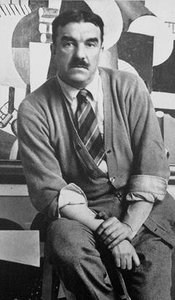
1881 - 1955 , Francia


Manténgase al día con las últimas noticias de arte, ofertas exclusivas e ideas de decoración.
Cuéntanos sobre tu proyecto y nuestros expertos en arte te ofrecerán 3 sugerencias de obras personalizadas.
Permítenos seleccionar 3 opciones exclusivas para ti – ¡Gratis!


 Ver en contexto
 Enviar
 Compartir
 Detalles

 Descargar
 Similares
 Radiografía
 Presentación de diapositivas

 Ver más


