x

Impresiones giclée o en lienzo de calidad de museo con producción rápida y opciones de acabado flexibles. ( Encargar reproducción pintada a mano Comprar descarga)





























Elija entre nuestros tamaños predefinidos que respetan las proporciones originales de la obra.

Puede introducir sus propias dimensiones para adaptarse a un marco o espacio específico. Si el tamaño seleccionado no coincide con las proporciones de la imagen original, recortaremos la obra de arte o extenderemos la imagen con un borde con efecto espejo o de color sólido. Se enviará una maqueta digital para su aprobación antes de que comience la producción.
Tenga en cuenta que la vista previa en pantalla no refleja el recorte o la extensión real. Solo la maqueta mostrará con precisión la composición final.
Aunque existen tamaños personalizados, recomendamos seleccionar una dimensión de la lista predefinida para preservar las proporciones originales.
Envío a todo el mundo () en 2 semanas en lugar de las 4/5 semanas estándar. (14 agosto)


man with dog
Tamaño de la reproducción
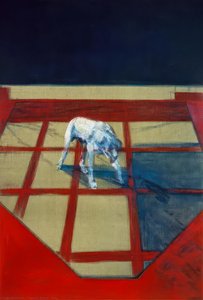
Francis Bacon’s “Man with Dog,” completed in 1953, stands as one of the most unsettling and iconic images produced by the British Surrealist painter. More than just a depiction of a man and his canine companion, it embodies a profound exploration of human vulnerability and the inescapable confrontation with mortality – themes central to Bacon’s artistic vision throughout his prolific career.
The painting presents a starkly simple scene: a man standing on what appears to be a metal grate or railing, clutching a dog firmly in his arms. Alongside him is another dog, positioned slightly off-center, gazing towards the viewer with an expression of palpable apprehension. Bacon deliberately eschewed elaborate narrative elements, prioritizing instead the raw physicality of the figures and their relationship.
“Man with Dog” firmly establishes Bacon’s signature style – a blend of Surrealism and Expressionism that rejects traditional representational conventions. He employed a technique characterized by thick impasto, applying paint directly onto the canvas in layers of textured pigment. This method creates a palpable sense of physicality, mirroring the psychological turmoil depicted within the artwork. The monochrome palette—primarily black and white—intensifies the emotional impact, stripping away any distractions from the core subject matter.
Painted in the immediate aftermath of World War II, “Man with Dog” reflects the pervasive anxieties of the era. Bacon’s artistic explorations coincided with the burgeoning philosophical movement of existentialism, championed by thinkers like Jean-Paul Sartre and Albert Camus. These philosophers questioned traditional notions of morality and purpose, emphasizing individual responsibility and confronting the absurdity of existence – concepts that profoundly resonated with Bacon’s own worldview.
The symbolism within “Man with Dog” is multilayered and deliberately ambiguous. The man's posture—rigid yet vulnerable—suggests a struggle against overwhelming forces. The dog’s gaze directs attention outwards, conveying fear of the unknown and highlighting the precariousness of human existence. Furthermore, the grate or railing symbolizes confinement and separation, reinforcing the painting’s overarching theme of isolation – a recurring motif in Bacon's oeuvre.
"Man with Dog" doesn't offer comfort; it compels viewers to confront uncomfortable truths about human fragility. The painting’s unsettling stillness amplifies its emotional resonance, forcing contemplation on the inevitability of death and decay. Bacon’s masterful manipulation of texture and monochrome color contributes to an atmosphere of profound melancholy and psychological unease—a testament to his ability to translate inner turmoil into visual form.
This arresting artwork continues to captivate audiences today, serving as a powerful reminder of the enduring relevance of existentialist thought and Bacon’s unparalleled capacity for conveying the darkest recesses of human emotion. Its haunting beauty resides precisely in its refusal to shy away from confronting the fundamental questions of life and death.

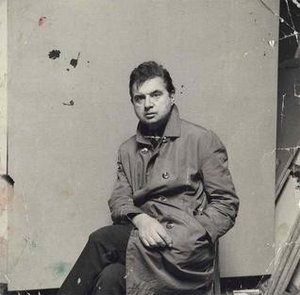
1909 - 1992 , irlanda

Explore the profound depths of Surrealism. From Dalí’s dreamscapes to Magritte’s enigmas, master the history of the subconscious mind through our expert art guide and discover museum-quality oil reproductions of the world's most iconic surrealist masterpieces.


Manténgase al día con las últimas noticias de arte, ofertas exclusivas e ideas de decoración.
Cuéntanos sobre tu proyecto y nuestros expertos en arte te ofrecerán 3 sugerencias de obras personalizadas.
Dejamos que nosotros seleccionemos 3 opciones exclusivas para ti – ¡Gratis!


 Vista previa
 Compartir
 Compartir
 Ver detalles

 Descargar
 Ver similares
 Radiografía
 Presentación de diapositivas

 Leer más







 La opción de vidrio solo está disponible en tamaños inferiores a 110 cm.