x


 Preview
 Encargar reproducción Comprar imagen en alta resolución
 Enviar
 Detalles
 Añadir a favoritos
 Descargar
 Similares
 Radiografía
 Presentación de diapositivas
Impresión giclée o en lienzo de calidad de museo con producción rápida y opciones de acabado flexibles.





























Elija entre nuestros tamaños predefinidos que respetan las proporciones originales de la obra.

Puede introducir sus propias dimensiones para adaptarse a un marco o espacio específico. Si el tamaño seleccionado no coincide con las proporciones de la imagen original, recortaremos la obra de arte o extenderemos la imagen con un borde con efecto espejo o de color sólido. Se enviará una maqueta digital para su aprobación antes de que comience la producción.
Tenga en cuenta que la vista previa en pantalla no refleja el recorte o la extensión real. Solo la maqueta mostrará con precisión la composición final.
Aunque existen tamaños personalizados, recomendamos seleccionar una dimensión de la lista predefinida para preservar las proporciones originales.
Entrega mundial () en 2 semanas en lugar de las 4/5 semanas estándar. (25 julio)


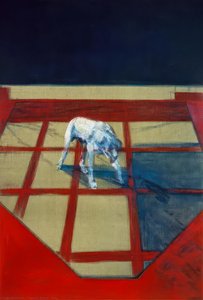
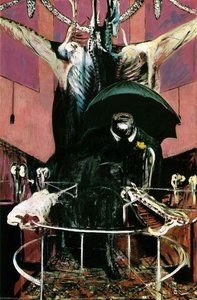
Triptych, left
Tamaño de la reproducción
To stand before a work by Francis Bacon is not merely to observe paint on canvas; it is to confront the raw, untamed core of human experience. This triptych panel, capturing a moment from 1979, invites us into a chamber of profound psychological discomfort. Here, a solitary figure is seated upon a simple bench, his posture—legs crossed in an unmistakable tableau of agony or deep introspection—becomes the central pillar of existential inquiry. Bacon does not offer comfort; he offers unflinching clarity, presenting what feels less like a portrait and more like an archaeological excavation of the soul.
Bacon’s mastery lay in his deliberate rejection of polished academic finish. His signature technique, which often incorporated encaustic painting alongside rich oils, was perfectly suited to capturing the grotesque beauty of suffering. This layering process—the building up and scraping away of wax and pigment—lends the surface a remarkable textural depth, making the emotion itself feel palpable beneath your fingertips. The paint seems to writhe, mirroring the internal turmoil of the subject. Notice how the muted backdrop, featuring the distant couch and the stark geometry of the clock on the wall, serves not as mere setting, but as an oppressive stage against which this private drama unfolds.
For Bacon, art was a means of stripping away illusion to reveal what he termed “the human animal.” This figure embodies that concept. The slumped weight, the implied gaze directed inward or past the viewer, speaks volumes about mortality and the inescapable burden of consciousness. The bench itself acts as an altar for contemplation, while the surrounding elements—the empty chairs, the ticking clock—function as silent witnesses to a private reckoning with time and vulnerability. It is a meditation on dread, rendered with brutal elegance.
Understanding Bacon requires acknowledging the shadow of the mid-20th century. His work pulses with the residue of global trauma—the aftermath of war and the subsequent questioning of established certainties. This piece carries that weight; it is a reflection on man grappling with an uncertain, often frightening, modern existence. Owning a reproduction of this panel allows one to integrate such potent historical resonance into a contemporary space, transforming a room from mere decoration into a site of profound thought.
This triptych fragment is more than just art; it is an emotional anchor. For the discerning collector or designer seeking pieces with narrative weight, Bacon offers unparalleled depth. It demands attention and rewards prolonged viewing. Whether placed in a gallery setting to provoke dialogue or within a sophisticated interior where intellectual gravitas is desired, this work ensures that conversation will always circle back to the enduring, complex nature of being human.

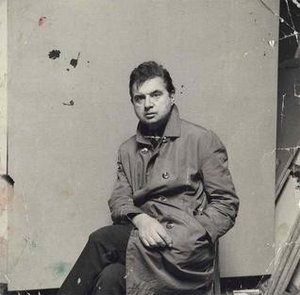
1909 - 1992 , irlanda

Explore the captivating world of Francis Sartorius II (1734-1804), a leading British painter renowned for his exquisite equestrian portraits and hunting scenes. Discover his life, techniques & enduring legacy.

Explore the life & art of Frida Kahlo – a journey through surrealism, identity, pain, and resilience. Discover her autobiographical masterpieces & lasting feminist legacy with Most-Famous-Paintings.

Descubre el expresionismo y surrealismo en profundidad. Análisis de artistas clave, obras maestras y su impacto en el arte moderno. Explora la angustia, el inconsciente y la revolución artística del siglo XX con Most-Famous-Paintings.
Explora la intensidad emocional del Expresionismo Figurado alemán. Descubre sus orígenes, artistas clave como Munch y Kirchner, y su legado en el arte moderno. Análisis experto y profundo.

Explore the powerful world of Ernst Ludwig Kirchner and German Expressionism. Discover his iconic paintings, Die Brücke group, and the movement's exploration of urban anxiety & modern identity. Expert analysis for collectors & enthusiasts.


Manténgase al día con las últimas noticias de arte, ofertas exclusivas e ideas de decoración.
Cuéntanos sobre tu proyecto y nuestros expertos en arte te ofrecerán 3 sugerencias de obras personalizadas.
Permítenos seleccionar 3 opciones solo para ti – ¡Gratis!


 Compartir


 Ver más







 La opción de vidrio solo está disponible en tamaños inferiores a 110 cm.