x

Impresiones giclée o en lienzo de calidad de museo con producción rápida y opciones de acabado flexibles. ( Encargar reproducción pintada a mano Comprar descarga)





























Elija entre nuestros tamaños predefinidos que respetan las proporciones originales de la obra.

Puede introducir sus propias dimensiones para adaptarse a un marco o espacio específico. Si el tamaño seleccionado no coincide con las proporciones de la imagen original, recortaremos la obra de arte o extenderemos la imagen con un borde con efecto espejo o de color sólido. Se enviará una maqueta digital para su aprobación antes de que comience la producción.
Tenga en cuenta que la vista previa en pantalla no refleja el recorte o la extensión real. Solo la maqueta mostrará con precisión la composición final.
Aunque existen tamaños personalizados, recomendamos seleccionar una dimensión de la lista predefinida para preservar las proporciones originales.
Envío a todo el mundo () en 2 semanas en lugar de las 4/5 semanas estándar. (13 agosto)


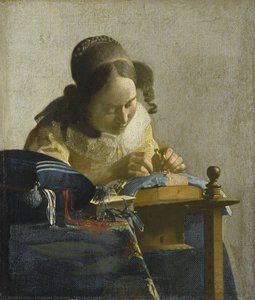
The Lacemaker
Tamaño de la reproducción
Johannes Vermeer’s “The Lacemaker,” completed around 1669–1670, stands as one of the most iconic images of Delft during the Dutch Golden Age—a testament to meticulous observation and a profound understanding of human emotion. Held in the Louvre Museum, Paris, this diminutive painting (approximately 24.5 cm × 21 cm) transcends its modest dimensions to deliver an experience of serene beauty that continues to captivate audiences centuries later.
A Window into Delft Society
Delft, Vermeer’s hometown, was a thriving center for textile production and skilled craftsmanship. “The Lacemaker” captures this atmosphere perfectly, portraying a young woman diligently engaged in the painstaking art of bobbin lace making—a craft considered both respectable and intellectually stimulating for women during the period. The scene unfolds within a modestly furnished room dominated by a table draped with a richly patterned cloth – crimson and black – providing a vibrant counterpoint to the pale hues of the woman’s attire.
Technical Brilliance: Vermeer's Signature Style
Vermeer’s mastery lies in his masterful use of light—a technique he termed “luminosity.” The soft, diffused illumination emanating from a window on the right casts gentle shadows across the table and illuminates the woman’s face with an ethereal glow. This subtle manipulation of light is characteristic of Vermeer's distinctive style, which prioritizes realism achieved through careful attention to detail and atmospheric perspective. He employed glazing—thin layers of translucent paint—to create depth and luminosity, capturing the textures of fabric and porcelain with remarkable accuracy.
Symbolism and Emotion: Beyond Mere Representation
More than just a depiction of domestic activity, “The Lacemaker” speaks to themes of quiet contemplation and feminine virtue. The woman’s posture exudes composure and grace as she focuses intently on her task—a gesture that symbolizes diligence and perseverance. The inclusion of a mirror reflects her image back at the viewer, fostering a sense of intimacy and inviting us into this private moment. Vermeer skillfully conveys emotion through subtle expressions and gestures, elevating the painting beyond mere visual representation.
A Legacy of Artistic Perfection
"The Lacemaker" exemplifies the pinnacle of Dutch Baroque art—a genre that sought to portray human experience with psychological depth and artistic finesse. Its enduring appeal stems from its ability to evoke feelings of tranquility, beauty, and understated elegance. It remains a celebrated masterpiece, admired by artists and connoisseurs alike for its technical brilliance and profound emotional resonance.

Frans van Mieris el Viejo fue un destacado pintor de género neerlandés del Siglo de Oro conocido por su meticuloso detalle y estilo refinado. Nacido en Leiden, hijo de Jan Bastiaensz van Mieris, un orfebre, Frans inicialmente demostró aptitud para el dibujo en lugar de seguir los pasos de su padre. La formación temprana bajo Abraham Toorenvliet, seguida de la instrucción por Gerrit Dou, moldearon sus bases artísticas.

1635 - 1681 , Países Bajos

Descubre los 10 imprescindibles del Siglo de Oro Holandés: Rembrandt, Vermeer y más. Explora la historia, técnica y belleza de estos lienzos clásicos. Encuentra reproducciones de arte exclusivas para decorar tu hogar en .
Descubra la riqueza y el detalle de la pintura barroca holandesa del Siglo de Oro. Explore las obras maestras de Rembrandt, Vermeer y otros artistas clave. Análisis experto e historia cultural.

Descubre los 10 cuadros más impactantes dominados por el negro marfil. Explora la historia de Rembrandt, Van Gogh y otros maestros del arte clásico y moderno. Encuentra reproducciones de alta calidad para tu hogar en

Descubre las 10 pinturas más impactantes dominadas por el negro. Explora obras maestras de Rembrandt, Goya y Rothko, su historia y significado. Encuentra reproducciones de arte exclusivas para transformar tu hogar en .
Descubre las 10 pinturas más famosas dominadas por el negro marsella. Explora la historia, técnica y simbolismo de obras maestras del expresionismo alemán, gótico y arte moderno. Reproducciones de museos en .


Manténgase al día con las últimas noticias de arte, ofertas exclusivas e ideas de decoración.
Cuéntanos sobre tu proyecto y nuestros expertos en arte te ofrecerán 3 sugerencias de obras personalizadas.
Dejamos que nosotros seleccionemos 3 opciones exclusivas para ti – ¡Gratis!


 Vista previa
 Compartir
 Compartir
 Ver detalles

 Descargar
 Ver similares
 Radiografía
 Presentación de diapositivas


 Leer más







 La opción de vidrio solo está disponible en tamaños inferiores a 110 cm.