x


 Preview
 Encargar reproducción Comprar imagen en alta resolución
 Enviar
 Detalles
 Añadir a favoritos
 Descargar
 Similares
 Radiografía
 Presentación de diapositivas
 Graphite PencilBauhaus
 1955Modern
 50.0 x 58.0 cm
 Bauhaus Dessau Foundation
Impresión giclée o en lienzo de calidad de museo con producción rápida y opciones de acabado flexibles.





























Elija entre nuestros tamaños predefinidos que respetan las proporciones originales de la obra.

Puede introducir sus propias dimensiones para adaptarse a un marco o espacio específico. Si el tamaño seleccionado no coincide con las proporciones de la imagen original, recortaremos la obra de arte o extenderemos la imagen con un borde con efecto espejo o de color sólido. Se enviará una maqueta digital para su aprobación antes de que comience la producción.
Tenga en cuenta que la vista previa en pantalla no refleja el recorte o la extensión real. Solo la maqueta mostrará con precisión la composición final.
Aunque existen tamaños personalizados, recomendamos seleccionar una dimensión de la lista predefinida para preservar las proporciones originales.
Entrega mundial () en 2 semanas en lugar de las 4/5 semanas estándar. (26 julio)


TABLE AND UPHOLSTERED BENCH
Tamaño de la reproducción
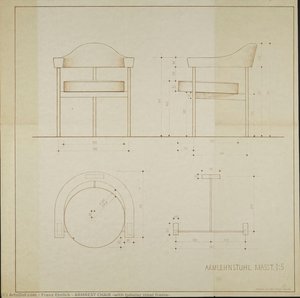
In the quiet precision of Franz Ehrlich’s 1955 drawing, Table and Upholstered Bench, we encounter a profound dialogue between structural integrity and domestic comfort. This graphite pencil work on paper serves as more than a mere technical blueprint; it is an intimate window into the mid-century design ethos. The composition captures a wooden table paired with a meticulously rendered upholstered bench, presenting a scene where the rigidity of metal frames meets the soft, inviting textures of fabric. Through delicate yet decisive strokes, Ehrlich breathes life into inanimate objects, transforming a functional furniture study into a captivating exploration of space and weight.
The technique employed by Ehrlich is one of masterful restraint. Using graphite, he achieves a spectrum of tones that define the interplay of light and shadow across the surfaces. The fine lines delineate the sharp edges of the table's frame, while subtle gradations of grey suggest the plushness of the bench’s upholstery. This meticulous attention to detail allows the viewer to almost feel the grain of the wood and the tension of the fabric, creating a tactile experience that transcends the two-dimensional medium. It is this level of precision that makes such a piece an invaluable reference for those who appreciate the intersection of architectural rigor and artistic grace.
To understand the soul of this work, one must look toward the historical currents that shaped Ehrlich’s hand. As a product of the legendary Bauhaus Dessau, Ehrlich carried the DNA of modernism within his creative practice. This drawing reflects the core tenets of that movement: the pursuit of clarity, the elimination of unnecessary ornament, and the belief that good design should be accessible and functional. Even decades after his formative years at the Bauhaus, the influence of this avant-garde tradition remains palpable in the disciplined geometry of the furniture depicted.
There is a poignant historical weight to Ehrlich’s work, shaped by a life marked by both political upheaval and artistic resilience. Having navigated the complexities of the Nazi regime and his subsequent imprisonment, Ehrlich’s later works often possess a focused, essentialist quality. In Table and Upholstered Bench, there is no room for chaos; instead, there is a serene order that speaks to a search for stability through design. For the collector or interior designer, this piece offers a sense of timelessness—a sophisticated anchor that brings a scholarly, mid-century elegance to any curated space.
For those seeking to infuse their environments with intellectual depth and understated luxury, this artwork serves as an exquisite inspiration. The composition’s neutral palette and emphasis on structural harmony make it a versatile masterpiece for contemporary decor. It pairs beautifully with minimalist settings, where its fine lines can act as a subtle focal point, or within more eclectic collections where it provides a moment of calm, structured reflection.
Owning a high-quality reproduction of this work allows one to celebrate the enduring spirit of German modernism. It is an invitation to appreciate the beauty found in the essential, reminding us that even the most functional objects can be elevated to the realm of fine art through careful observation and masterful execution. Whether displayed in a professional studio or a private residence, Ehrlich’s vision continues to resonate, offering a timeless aesthetic that honors the past while remaining profoundly relevant to the modern eye.


1907 - 1984 , Alemania

Explore the captivating world of graphite drawing! Discover its rich history, master essential techniques like chiaroscuro, and learn how artists evoke emotion through this timeless medium. Expert insights for art enthusiasts.

Explore the profound artistry of graphite drawing. Discover professional techniques for mastering depth, texture, and detail through a lens of art history, from classical sketches to modern masterpieces. Elevate your understanding of the pencil medium with our expert guide.

Explore the enduring impact of Massimo Vignelli's modernist design philosophy. Discover his iconic works, key principles, and lasting legacy in graphic design & corporate identity. Learn from a true master.

Explore the profound artistic significance of sketches throughout history. From Renaissance masters to modern innovators like Van Gogh & Guston, discover how these foundational works reveal technique, emotion, and vision. Learn more at Most-Famous-Paintings.

Elevate your artistic practice with this expert guide to mastering the line. Discover advanced techniques in graphite, charcoal, and contour drawing designed for art students seeking technical precision and expressive depth in their fine art studies.


Manténgase al día con las últimas noticias de arte, ofertas exclusivas e ideas de decoración.
Cuéntanos sobre tu proyecto y nuestros expertos en arte te ofrecerán 3 sugerencias de obras personalizadas.
Permítenos seleccionar 3 opciones solo para ti – ¡Gratis!


 Compartir

 Ver más







 La opción de vidrio solo está disponible en tamaños inferiores a 110 cm.