


x

Óleo sobre lienzo pintado a mano en el tamaño y marco de su elección, realizado por encargo por nuestros artistas. ( Cambiar a impresión Cambiar a imagen)





























Elija entre nuestros tamaños predefinidos que respetan las proporciones originales de la obra.

Puede ingresar sus propias dimensiones para adaptarse a un marco o espacio específico. Si el tamaño seleccionado no coincide con las proporciones de la imagen original, recortaremos la obra o extenderemos la pintura con elementos adicionales pintados a mano. Se le enviará una maqueta digital para su aprobación antes de comenzar la producción.
Tenga en cuenta que la vista previa en pantalla no refleja el recorte o la extensión reales. Solo la maqueta mostrará con precisión la composición final.
Si bien existen tamaños personalizados, recomendamos seleccionar una dimensión de la lista predefinida para preservar las proporciones originales.
Envío a todo el mundo () en 3-4 semanas en lugar de las 5 semanas estándar. (11 agosto). Sin comprometer la calidad.


Black chariot
Tamaño de la reproducción
Georges Braque’s “Black Chariot,” painted in 1958, isn't merely a depiction of horses and riders; it’s a potent distillation of primal energy and the enduring allure of myth. Born in Argenteuil, France, in 1882, Braque’s artistic journey was deeply rooted in the practicalities of his family’s trade – house painting and decoration – an experience that instilled within him a profound understanding of form, structure, and material. This foundation, combined with rigorous academic training at the École des Beaux-Arts, provided him with a unique perspective, allowing him to deconstruct traditional artistic conventions and rebuild them into something entirely new.
The painting’s genesis lies within the fertile ground of Cubism, a movement Braque co-founded alongside Pablo Picasso. This revolutionary style sought to represent objects from multiple viewpoints simultaneously, fracturing reality into geometric fragments and reassembling them on the canvas in a dynamic interplay of planes and perspectives. “Black Chariot” exemplifies this approach perfectly – it’s not a straightforward representation of a chariot race, but rather an exploration of movement, power, and the very essence of the scene through its fragmented composition.
Braque’s masterful use of color and texture is central to the painting’s impact. The predominantly monochrome palette – dominated by shades of black, grey, and cream – creates a sense of dramatic intensity, emphasizing the forms and planes within the composition. He employs a technique known as “collage,” incorporating elements that suggest layering and depth, mimicking the way our eyes perceive objects from different angles. Notice how the horses are not rendered with smooth curves but rather broken down into sharp, angular shapes, conveying their speed and force. The figures surrounding the chariot are similarly fragmented, contributing to the overall sense of dynamism and disorientation.
“Black Chariot” resonates with ancient symbolism, evoking images of power, speed, and ritualistic procession. The chariot itself is a potent symbol throughout history – representing authority, conquest, and divine transport. Braque’s choice to render it in monochrome further elevates its symbolic weight, suggesting a timeless quality beyond the specific historical context. The fragmented figures surrounding the chariot could be interpreted as representations of the participants in this ancient ritual, caught in a whirlwind of action and emotion. The lack of clearly defined faces adds to the painting's enigmatic quality, inviting viewers to project their own interpretations onto the scene.
Georges Braque’s “Black Chariot” stands as a testament to his pioneering spirit and his profound influence on 20th-century art. It exemplifies the core principles of Cubism – fragmentation, multiple perspectives, and an exploration of form and space – while simultaneously conveying a powerful sense of movement, drama, and mythic resonance. Reproductions of this iconic work offer a unique opportunity to experience Braque’s revolutionary vision firsthand, bringing a touch of artistic history into any interior space.

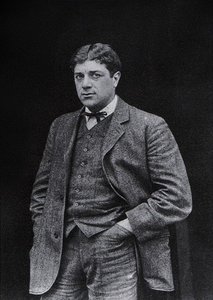
1882 - 1963 , Francia

Descubra el revolucionario impacto del Cubismo en el arte del siglo XX. Análisis profundo de Picasso, Braque y su legado. Guía para coleccionistas apasionados e inversores.
Descubre los 10 lienzos cubistas que revolucionaron el arte moderno. Explora las obras maestras de Picasso, Braque y Gris en Most-Famous-Paintings.com. Reproducciones de alta calidad para tu hogar.
Descubre los 10 lienzos cubistas que revolucionaron el arte moderno. Explora la historia de Picasso, Braque y otros maestros del cubismo en . Reproducciones de alta calidad para tu hogar.

Explore the revolutionary art of Georges Braque, a pioneer of Cubism alongside Picasso. Discover his artistic evolution, key works, and lasting impact on modern art. A guide for discerning collectors.

Descubre los 10 cuadros más impactantes dominados por el negro marfil. Explora la historia de Rembrandt, Van Gogh y otros maestros del arte clásico y moderno. Encuentra reproducciones de alta calidad para tu hogar en


Manténgase al día con las últimas noticias de arte, ofertas exclusivas e ideas de decoración.
Cuéntanos sobre tu proyecto y nuestros expertos en arte te ofrecerán 3 sugerencias de obras personalizadas.
Dejamos que nosotros seleccionemos 3 opciones exclusivas para ti – ¡Gratis!


 Vista previa
 Compartir
 Compartir
 Ver detalles

 Descargar
 Ver similares
 Radiografía
 Presentación de diapositivas
 Leer más







 La opción de vidrio solo está disponible en tamaños inferiores a 110 cm.


