


x

 Acrylic On CanvasWallArtAnalytical Cubism
 1911Modern
 116.0 x 81.0 cm
Impresiones giclée o en lienzo de calidad de museo con producción rápida y opciones de acabado flexibles. ( Encargar reproducción pintada a mano Comprar descarga)





























Elija entre nuestros tamaños predefinidos que respetan las proporciones originales de la obra.

Puede introducir sus propias dimensiones para adaptarse a un marco o espacio específico. Si el tamaño seleccionado no coincide con las proporciones de la imagen original, recortaremos la obra de arte o extenderemos la imagen con un borde con efecto espejo o de color sólido. Se enviará una maqueta digital para su aprobación antes de que comience la producción.
Tenga en cuenta que la vista previa en pantalla no refleja el recorte o la extensión real. Solo la maqueta mostrará con precisión la composición final.
Aunque existen tamaños personalizados, recomendamos seleccionar una dimensión de la lista predefinida para preservar las proporciones originales.
Envío a todo el mundo () en 2 semanas en lugar de las 4/5 semanas estándar. (14 agosto)


Pedestal Table
Tamaño de la reproducción
Georges Braque's “Pedestal Table,” painted in 1911, is not merely a depiction of an object; it’s a carefully constructed puzzle for the viewer, a window into the nascent world of Analytical Cubism. This work, housed within the Kunstmuseum Basel, immediately captivates with its fragmented forms and deliberate ambiguity, inviting us to actively participate in reconstructing the scene before us. The painting presents a man seated at a table, a horse statue looming in the background, and a sense of contained chaos—a visual embodiment of the era’s shifting perceptions of reality.
Braque's choice of subject matter – a simple pedestal table – is itself significant. Pedestals, as our research reveals (linked here: Wikipedia Search), traditionally elevate and support objects, providing stability and grounding. However, in Braque’s painting, the pedestal becomes a fractured element, dissected and reassembled into geometric planes. This disruption of traditional spatial relationships is a hallmark of Cubism, reflecting a desire to move beyond single viewpoints and represent an object from multiple perspectives simultaneously. The table itself isn't rendered as a solid, unified form; instead, it’s broken down into interlocking facets, suggesting its inherent instability and the subjective nature of observation.
Painted during the period of Analytical Cubism – roughly 1908-1912 – “Pedestal Table” exemplifies the movement's core principles. This phase, developed in close collaboration with Pablo Picasso, focused on reducing objects to their fundamental geometric components. Braque’s palette is deliberately muted, dominated by browns, ochres, and grays, creating a sense of somberness and introspection. The artist employs a meticulous technique, applying paint in thin, overlapping layers – a characteristic of Analytical Cubism – to build up the complex network of planes and angles that define each element. The use of monochromatic tones further emphasizes the deconstruction of form, stripping away any illusion of depth or three-dimensionality.
Further insight into Braque’s approach can be found in articles like Georges Braque: Pioneering Cubism & the Evolution of Modern Form, which details his experimentation with color and form during this pivotal period. The artist’s meticulous attention to detail, combined with a radical departure from traditional representation, established Analytical Cubism as a groundbreaking movement that profoundly influenced the course of 20th-century art.
Beyond its formal innovations, “Pedestal Table” invites speculation about its symbolic meaning. The presence of the horse statue, a recurring motif in Braque’s work (linked here: Wikipedia Search), could represent power, strength, or even vulnerability – themes often explored within the context of the era's social and political landscape. The guitar held by the seated figure might symbolize creativity, contemplation, or perhaps a moment of quiet reflection amidst the intellectual ferment of Parisian artistic circles. The inclusion of books and letters suggests an engagement with knowledge, ideas, and communication—elements central to the burgeoning modern world.
Despite its fragmented composition, “Pedestal Table” evokes a sense of contained energy and subtle drama. The interplay of light and shadow, combined with the carefully arranged planes, creates a visual rhythm that draws the eye across the canvas. It’s a painting that rewards careful observation, inviting us to decipher its complex layers of meaning and appreciate Braque's masterful manipulation of form and space. Reproductions of this work, like our high-quality hand-painted versions (viewable here: Pedestal Table, Kunstmuseum Basel and Pedestal Table 1), offer a unique opportunity to experience the power and beauty of this seminal Cubist masterpiece in your own home.
Georges Braque (1882-1963) remains one of the most influential figures in modern art. His contributions to Cubism, alongside Picasso, fundamentally altered our understanding of representation and paved the way for subsequent artistic movements. Exploring his oeuvre – from iconic works like “Houses at L’Estaque” (Georges Braque) – reveals a sustained commitment to experimentation, innovation, and a profound engagement with the complexities of the modern world. Investing in a reproduction of "Pedestal Table" is not simply acquiring an image; it’s connecting with a pivotal moment in art history and celebrating the genius of a true visionary.

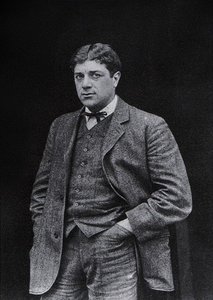
1882 - 1963 , Francia

Explore the revolutionary world of Cubism. Discover how Pablo Picasso and Georges Braque dismantled perspective to redefine modern art through geometric innovation and analytical mastery. An essential guide for art students, collectors, and history enthusiasts.

Explore the revolutionary world of Cubism. Discover how masters Pablo Picasso and Georges Braque dismantled reality through geometric abstraction to redefine modern art history.

Master the complexities of Cubism with our expert guide. Explore how Picasso and Braque revolutionized modern art through fragmentation, multiple perspectives, and geometric innovation. Perfect for art students and collectors seeking deep historical insight.

Explore the revolutionary world of Cubism. From Picasso's analytical deconstruction to Braque's geometric forms, master the history of fragmentation and modern art through this expert guide for students and collectors.


Manténgase al día con las últimas noticias de arte, ofertas exclusivas e ideas de decoración.
Cuéntanos sobre tu proyecto y nuestros expertos en arte te ofrecerán 3 sugerencias de obras personalizadas.
Dejamos que nosotros seleccionemos 3 opciones exclusivas para ti – ¡Gratis!


 Vista previa
 Compartir
 Compartir
 Ver detalles

 Descargar
 Ver similares
 Radiografía
 Presentación de diapositivas
 Leer más







 La opción de vidrio solo está disponible en tamaños inferiores a 110 cm.


