


x

Adquiera una imagen digital de alta resolución y optimizada, muy superior a la vista previa en línea.
Cada archivo es preparado meticulosamente por nuestros especialistas internos mediante el uso de herramientas avanzadas y un experto retoque manual. Nos aseguramos de que cada imagen posea una claridad excepcional, una precisión cromática impecable y un detalle minucioso.
El archivo final se entrega por correo electrónico en un plazo de 72 horas, optimizado para su uso inmediato en entornos profesionales, editoriales y de impresión. Esta es la misma calidad en la que confían los estudios de diseño, las editoriales y las galerías de primer nivel.
Descarga un archivo de alta resolución para exhibición personal, impresión y proyectos creativos. ( Comprar impresión Comprar pintura hecha a mano)
Al elegir Most-Famous-Paintings.com, no solo está adquiriendo una imagen; está recibiendo una obra de arte digital mejorada profesionalmente, elaborada con precisión y respaldada por una garantía de satisfacción. Esto es todo lo que incluye su pedido, automáticamente:

Recibirá su archivo de imagen digital en alta resolución por correo electrónico en un plazo de 72 horas tras realizar su pedido, listo para su uso inmediato.

Su obra de arte se optimiza profesionalmente mediante herramientas avanzadas de IA y edición manual, garantizando el máximo detalle, claridad y precisión cromática.

¿Has borrado o perdido tu archivo por error? No te preocupes: te lo volveremos a enviar en cualquier momento, sin coste adicional.

Disfrute de su obra de arte al instante sin aduanas, aranceles ni gastos de envío; las descargas digitales siempre están libres de impuestos.

Garantizamos que su imagen digital refleje los colores originales con la mayor fidelidad posible, mediante el uso de herramientas profesionales y gestión del color.

Si no está satisfecho con su imagen digital, la revisaremos o le reembolsaremos el 100% en un plazo de 60 días, sin preguntas.

¿No está satisfecho? Obtenga un reembolso completo dentro de los 60 días posteriores a la recepción de su archivo digital, sin necesidad de explicaciones.

Compra 3 imágenes, ahorra 10% - Compra 5, ahorra 15% - Compra 10+, ahorra 20%. Ideal para proyectos creativos, galerías y agencias.
Georges Braque's “The Billiard Table,” painted in 1944, isn’t merely a depiction of an everyday scene; it’s a carefully constructed meditation on perception, memory, and the inherent instability of reality. This work, now housed at the Metropolitan Museum of Art, exemplifies the culmination of Braque's pioneering explorations within Cubism – specifically, Synthetic Cubism – offering a glimpse into his intensely personal approach to representing space and form. The painting immediately draws the viewer in with its muted palette dominated by deep greens, browns, and ochres, creating an atmosphere of quiet contemplation tinged with a subtle melancholy. It’s a world rendered not as it appears, but as it is *remembered*, or perhaps, as it feels.
Braque masterfully employs the core tenets of Synthetic Cubism to achieve this effect. The billiard table itself isn’t presented with photographic accuracy; instead, it's fractured into a series of interlocking planes and geometric shapes, mirroring the fragmented nature of experience. The surrounding objects – a vase, a chair, a clarinet, and various smaller items – are similarly deconstructed, their forms overlapping and intersecting in a way that defies traditional perspective. This deliberate distortion creates an unsettling yet compelling sense of spatial ambiguity; the table seems to float within a shallow space, while the objects around it appear to press in from multiple directions simultaneously. The artist’s visible brushstrokes, layered with thin washes of paint, contribute significantly to the painting's textural richness and add a tactile quality to the seemingly abstract forms.
Beyond its formal innovations, “The Billiard Table” is rich in symbolic potential. The billiard table itself has long been associated with games of chance, strategy, and the relentless passage of time – each shot a fleeting moment, each game an attempt to control an unpredictable outcome. The fragmented arrangement of objects suggests a collection of memories, each piece representing a specific experience or association. The clarinet, for instance, evokes musicality and perhaps a sense of nostalgia, while the vase hints at domestic tranquility disrupted by the chaotic composition. Some art historians have interpreted the painting as a reflection on the artist’s own struggles with creative block during World War II, suggesting that the fragmented forms represent the shattered state of his artistic vision.
Further research confirms Braque's deliberate approach to this work. As documented by Tate’s online collection page, he began creating a series of seven billiard tables in 1944, alongside eight related paintings. This project was undertaken during a period of intense personal and artistic reflection for the artist. The use of sand mixed with oil paint – as noted in WikiArt's analysis – adds an intriguing textural element to the surface, further enhancing the painting’s tactile quality. The Met Museum’s description highlights Braque’s meticulous process of relating the room’s space to the canvas, a testament to his dedication to capturing not just visual reality but also the subjective experience of perception.
Ultimately, “The Billiard Table” is more than just a still life; it's a profound exploration of the complexities of memory, time, and the nature of representation itself. Its evocative atmosphere and masterful execution make it a compelling work for collectors and interior designers seeking to infuse their spaces with a sense of intellectual depth and artistic intrigue.

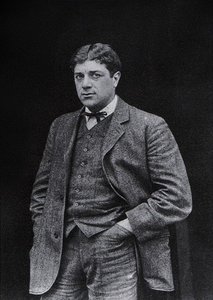
1882 - 1963 , Francia


Manténgase al día con las últimas noticias de arte, ofertas exclusivas e ideas de decoración.
Cuéntanos sobre tu proyecto y nuestros expertos en arte te ofrecerán 3 sugerencias de obras personalizadas.
Permítenos seleccionar 3 opciones exclusivas para ti – ¡Gratis!


 Ver en contexto
 Enviar
 Compartir
 Detalles

 Descargar
 Similares
 Radiografía
 Presentación de diapositivas

 Ver más


