


x

Adquiera una imagen digital de alta resolución y optimizada, muy superior a la vista previa en línea.
Cada archivo es preparado meticulosamente por nuestros especialistas internos mediante el uso de herramientas avanzadas y un experto retoque manual. Nos aseguramos de que cada imagen posea una claridad excepcional, una precisión cromática impecable y un detalle minucioso.
El archivo final se entrega por correo electrónico en un plazo de 72 horas, optimizado para su uso inmediato en entornos profesionales, editoriales y de impresión. Esta es la misma calidad en la que confían los estudios de diseño, las editoriales y las galerías de primer nivel.
Descarga un archivo de alta resolución para exhibición personal, impresión y proyectos creativos. ( Pedir impresión Encargar reproducción pintada a mano)
Al elegir Most-Famous-Paintings.com, no solo está adquiriendo una imagen; está recibiendo una obra de arte digital mejorada profesionalmente, elaborada con precisión y respaldada por una garantía de satisfacción. Esto es todo lo que incluye su pedido, automáticamente:

Recibirá su archivo de imagen digital en alta resolución por correo electrónico en un plazo de 72 horas tras realizar su pedido, listo para su uso inmediato.

Su obra de arte se optimiza profesionalmente mediante herramientas avanzadas de IA y edición manual, garantizando el máximo detalle, claridad y precisión cromática.

¿Has borrado o perdido tu archivo por error? No te preocupes: te lo volveremos a enviar en cualquier momento, sin coste adicional.

Disfrute de su obra de arte al instante sin aduanas, aranceles ni gastos de envío; las descargas digitales siempre están libres de impuestos.

Garantizamos que su imagen digital refleje los colores originales con la mayor fidelidad posible, mediante el uso de herramientas profesionales y gestión del color.

Si no está satisfecho con su imagen digital, la revisaremos o le reembolsaremos el 100% en un plazo de 60 días, sin preguntas.

¿No está satisfecho? Obtenga un reembolso completo dentro de los 60 días posteriores a la recepción de su archivo digital, sin necesidad de explicaciones.

Compra 3 imágenes, ahorra 10% - Compra 5, ahorra 15% - Compra 10+, ahorra 20%. Ideal para proyectos creativos, galerías y agencias.
This untitled work by Georges Braque, created around 1926 (though the exact date remains elusive), offers a captivating glimpse into the artist's evolving approach to form and space during his pivotal period within the development of Cubism. It’s not merely a depiction of a forest scene; it’s an exploration of perception itself – a deliberate fracturing of reality to reveal its underlying geometric structure, mirroring Braque’s deep engagement with the ideas of Paul Cézanne. The painting's stark black and white palette immediately establishes a formal rigor, stripping away any superfluous detail and forcing the viewer to confront the essential shapes and planes that constitute the landscape.
The composition is dominated by a towering tree, its branches reaching upwards in a complex network of lines and angles. This isn’t a naturalistic representation; rather, it's an abstracted embodiment of the tree’s skeletal structure – a series of interlocking geometric forms that suggest both solidity and fragility. The leaves, rendered as dense clusters of overlapping planes, contribute to this sense of fragmentation, creating a visual texture that is simultaneously chaotic and meticulously controlled. Notice how Braque avoids smooth transitions; instead, he employs sharp edges and distinct planes, anticipating the key tenets of Cubism’s deconstruction of traditional perspective.
Adding to the painting's intrigue is the presence of a solitary figure standing near the left side of the scene. This individual, partially obscured by the foliage, appears to be gazing intently at the tree. Their posture – slightly turned towards the subject – suggests a moment of quiet contemplation, perhaps an appreciation for the tree’s inherent beauty or a deeper engagement with its geometric form. The figure's inclusion isn’t merely decorative; it serves as a focal point, inviting the viewer to consider their own relationship to nature and art. Braque frequently used human figures in his work not to represent specific individuals, but rather to embody universal themes of observation and experience – a silent witness to the unfolding drama of the natural world.
This painting is firmly rooted within the principles of Cubism, a revolutionary movement that Braque co-founded with Pablo Picasso. Unlike earlier artistic styles that prioritized realistic representation, Cubism sought to depict objects from multiple viewpoints simultaneously, breaking them down into their fundamental geometric components and reassembling them on the canvas in an abstract manner. Braque’s approach, often referred to as “Analytical Cubism,” involved a deliberate reduction of color palettes – typically limited to monochromatic schemes – to emphasize form and structure. The use of overlapping planes, fragmented forms, and ambiguous spatial relationships are hallmarks of this style, creating a sense of visual complexity that challenges the viewer's perception.
Beyond its formal innovations, the painting carries a subtle symbolic resonance. The tree itself can be interpreted as a symbol of strength, resilience, and connection to the earth – qualities deeply valued in Braque’s native France. The stark contrast between light and shadow further enhances this sense of drama, creating a visual tension that draws the viewer's eye across the composition. Ultimately, “Untitled (9656)” is not simply a landscape; it’s an invitation to engage with the complexities of perception, form, and the enduring beauty of the natural world – a testament to Braque’s pioneering spirit and his profound influence on the course of modern art.

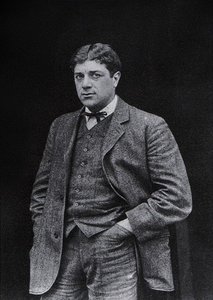
1882 - 1963 , Francia


Manténgase al día con las últimas noticias de arte, ofertas exclusivas e ideas de decoración.
Cuéntanos sobre tu proyecto y nuestros expertos en arte te ofrecerán 3 sugerencias de obras personalizadas.
Dejamos que nosotros seleccionemos 3 opciones exclusivas para ti – ¡Gratis!


 Vista previa
 Compartir
 Compartir
 Ver detalles

 Descargar
 Ver similares
 Radiografía
 Presentación de diapositivas

 Leer más


