x

 Acrylic On PaperOtherOp Art
 2013Contemporary
 200.0 x 1000.0 cm
Impresión giclée o en lienzo de calidad de museo con producción rápida y opciones de acabado flexibles. ( Switch to hand made Painting Switch to Image)
Elija entre nuestros tamaños predefinidos que respetan las proporciones originales de la obra.

Puede introducir sus propias dimensiones para adaptarse a un marco o espacio específico. Si el tamaño seleccionado no coincide con las proporciones de la imagen original, recortaremos la obra de arte o extenderemos la imagen con un borde con efecto espejo o de color sólido. Se enviará una maqueta digital para su aprobación antes de que comience la producción.
Tenga en cuenta que la vista previa en pantalla no refleja el recorte o la extensión real. Solo la maqueta mostrará con precisión la composición final.
Aunque existen tamaños personalizados, recomendamos seleccionar una dimensión de la lista predefinida para preservar las proporciones originales.
Entrega mundial () en 2 semanas en lugar de las 4/5 semanas estándar. (30 julio)


Strip
Tamaño de la reproducción
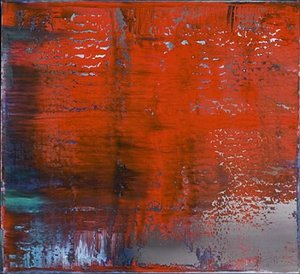
Gerhard Richter's "Strip," a monumental work from 2013, isn’t merely a painting; it’s an invitation to contemplate the very nature of perception and representation. Measuring a substantial 200 x 1000 cm, this acrylic on paper piece immediately commands attention with its bold, almost aggressively simple composition – a series of horizontal bands in varying shades of brown and orange. Yet, beneath this apparent austerity lies a complex interplay of color, texture, and the subtle suggestion of depth that speaks volumes about Richter’s signature style and his ongoing exploration of photographic source material.
The painting firmly places itself within the realm of Op Art, though Richter's approach transcends mere visual stimulation. The stripes aren’t static; they subtly shift and morph depending on the viewer’s perspective, creating a dynamic illusion that plays with our sense of space and form. This effect is achieved through careful manipulation of color intensity and value – a technique rooted in Richter’s decades-long fascination with photography and his method of layering multiple photographic sources to create abstract compositions.
Understanding "Strip" requires acknowledging the profound context of Gerhard Richter's life and career. Born in Dresden, Germany, in 1932, Richter’s early years were profoundly shaped by the political upheavals of post-war Europe. His childhood was marked by displacement and uncertainty, experiences that undoubtedly informed his artistic sensibility – a willingness to question, to deconstruct, and to embrace ambiguity. This formative period instilled within him a deep sense of questioning and a constant negotiation with the fragmented realities of his time.
Richter’s work is inextricably linked to this history of division. His exploration of memory, representation, and the photographic image can be seen as an attempt to grapple with the complexities of German identity in the aftermath of World War II and the subsequent decades of political and social transformation. The painting's restrained palette and deliberate abstraction mirror a certain emotional distance, reflecting Richter’s characteristic refusal to offer easy answers or definitive interpretations.
The seemingly effortless execution of "Strip" belies a meticulous process. Richter typically works with multiple photographic sources, creating composite images that are then translated into abstract paintings. In this instance, he likely employed a technique of layering and blending acrylics to achieve the subtle shifts in color and value that define the work’s visual dynamism. The textured surface – a result of these layered applications – adds another layer of complexity, inviting close inspection and encouraging viewers to lose themselves within its intricate details.
The choice of brown and orange is particularly significant. These earthy tones evoke a sense of warmth and grounding, yet their juxtaposition creates an underlying tension—a subtle discordance that mirrors the complexities of the historical context in which Richter operates. The stripes themselves act as visual anchors, guiding the eye across the canvas and creating a rhythmic pattern that simultaneously draws us in and keeps us at arm’s length.
Ultimately, "Strip" is more than just a visually striking composition; it's an invitation to contemplate the nature of perception and memory. Richter’s work consistently challenges our assumptions about representation, forcing us to question how we see and interpret the world around us. The painting’s ambiguous forms and shifting colors create a sense of unease—a feeling that something is just beyond our grasp. It's a testament to Richter's skill as an artist: he doesn’t offer solutions but rather presents us with questions, inviting us to engage in a dialogue with his work and with ourselves.

1932 - , Alemania
Descubre las 10 obras maestras de la abstracción geométrica que revolucionaron el arte moderno. Explora a Mondrian, Malevich y Kandinsky en Most-Famous-Paintings.com. Reproducciones de alta calidad para tu hogar.

Explore the revolutionary world of Victor Vasarely, father of Op Art. Discover his geometric masterpieces, artistic system, & lasting impact on modern design. A guide for discerning art collectors.

Explore the profound world of Gerhard Richter's abstract paintings. Discover his techniques, influences, and lasting impact on contemporary art – a guide for discerning collectors.

Descubre las 10 obras maestras en acrílico que revolucionaron el arte moderno. Explora la historia de Pollock, Rothko y Warhol, sus técnicas y paletas vibrantes. Encuentra reproducciones de alta calidad e inspírate para decorar tu hogar con .

Explore the enduring legacy of geometric abstraction! Discover key artists, historical movements & investment insights for discerning art collectors. Expert guidance from Most-Famous-Paintings.


Manténgase al día con las últimas noticias de arte, ofertas exclusivas e ideas de decoración.
Cuéntanos sobre tu proyecto y nuestros expertos en arte te ofrecerán 3 sugerencias de obras personalizadas.
Permítenos seleccionar 3 opciones solo para ti – ¡Gratis!


 Enviar
 Compartir
 Detalles

 Descargar
 Similares
 Presentación de diapositivas
 Ver más




































 La opción de vidrio solo está disponible en tamaños inferiores a 110 cm.