x


 Preview
 Comprar impresión Comprar imagen en alta resolución
 Enviar
 Detalles
 Añadir a favoritos
 Descargar
 Similares
 Radiografía
 Presentación de diapositivas
Óleo sobre lienzo pintado a mano en el tamaño y marco de su elección, realizado por encargo por nuestros artistas.





























Elija entre nuestros tamaños predefinidos que respetan las proporciones originales de la obra.

Puede ingresar sus propias dimensiones para adaptarse a un marco o espacio específico. Si el tamaño seleccionado no coincide con las proporciones de la imagen original, recortaremos la obra o extenderemos la pintura con elementos adicionales pintados a mano. Se le enviará una maqueta digital para su aprobación antes de comenzar la producción.
Tenga en cuenta que la vista previa en pantalla no refleja el recorte o la extensión reales. Solo la maqueta mostrará con precisión la composición final.
Si bien existen tamaños personalizados, recomendamos seleccionar una dimensión de la lista predefinida para preservar las proporciones originales.
Entrega mundial () en 3-4 semanas en lugar de las 5 semanas estándar. (27 julio). Sin compromisos con la calidad.


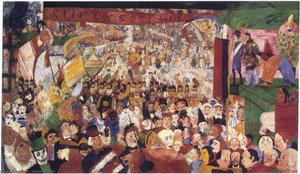
Duel de Masque
Tamaño de la reproducción
James Ensor's "Duel de Masque" (c. 1890) isn’t merely a painting; it’s an immersive plunge into the unsettling heart of masquerade and social decay. This large-scale oil on canvas, largely lost to definitive documentation regarding its exact dimensions, immediately confronts the viewer with a scene brimming with theatrical excess and veiled menace. Set against a muted, almost melancholic backdrop – suggesting a bleak winter morning – it depicts a gathering of figures caught in the aftermath of a duel, their identities obscured by elaborate costumes and masks. The painting’s power lies not in dramatic action, but in its carefully constructed atmosphere of unease, hinting at hidden resentments and unspoken anxieties beneath the veneer of festive entertainment.
Ensor, born in Ostend, Belgium, to an English father and a Belgian mother, possessed a uniquely dual heritage that profoundly shaped his artistic vision. His childhood spent amidst the vibrant chaos of carnival celebrations – a world saturated with masks, puppets, and theatrical performances – became a foundational element of his oeuvre. This fascination with disguise and concealment is powerfully evident in “Duel de Masque,” where each figure embodies a carefully constructed persona, deliberately distancing themselves from genuine emotion or identity. The artist’s early exposure to this world of illusion undoubtedly fueled his exploration of the darker aspects of human nature, often presented through distorted figures and unsettling imagery.
The central motif of “Duel de Masque” – the mask itself – is far more than a simple decorative element. It represents a deliberate attempt to conceal, to create an artificial identity, and ultimately, to distance oneself from responsibility. Each character wears a costume that actively obscures their true nature: a Pierrot with a bloodied face, a Duc de Guise shrouded in velvet, a Domino clutching his head – all figures trapped within the confines of their chosen roles. The skeletal figure prominently displayed adds another layer of symbolic weight, representing mortality and the inevitable decay beneath the surface of social performance. The inclusion of a surgeon, dressed as a doge of Venice, suggests an attempt to mend wounds both physical and emotional, yet his efforts are futile against the pervasive sense of ruin.
Beyond the individual costumes, the painting’s composition contributes significantly to its unsettling effect. The figures are arranged in a deliberately claustrophobic space, creating a feeling of confinement and tension. The muted color palette – dominated by grays, browns, and blacks – further enhances this sense of gloom, while the stark lighting emphasizes the drama of the scene. The deliberate blurring of lines between reality and illusion—the painted backdrop, the theatrical costumes, the obscured faces—forces the viewer to question the nature of truth and deception.
“Duel de Masque” is widely considered a pivotal work in James Ensor's development as an artist, foreshadowing his later explorations into Expressionism and Surrealism. While he initially struggled with the rigid conventions of the Académie Royale des Beaux-Arts in Brussels, Ensor ultimately forged his own distinctive style—characterized by bold colors, distorted figures, and a preoccupation with psychological themes. His willingness to challenge artistic norms and embrace unconventional subject matter established him as a radical innovator within the Belgian art scene.
The painting’s influence extends far beyond its immediate historical context. Ensor's exploration of masks, social satire, and the anxieties of modern life resonated with artists who would later define these movements. Reproductions of “Duel de Masque,” particularly in high-quality formats offered by Most-Famous-Paintings.com, provide a powerful window into Ensor’s artistic vision—a captivating glimpse into a world where appearances are deceiving, and the masks we wear conceal profound emotional turmoil. The painting's enduring appeal lies in its ability to provoke thought and evoke a visceral response, reminding us of the complexities of human identity and the ever-present tension between appearance and reality.

1860 - 1949 , Bélgica

Explore the evolution of Willem de Kooning's iconic Abstract Expressionist paintings. Discover his signature style, key themes & investment potential with expert insights for discerning art collectors.

Descubre el fascinante mundo del Pop Surrealismo. Explora sus orígenes, artistas clave como Mark Ryden y su impacto en el arte contemporáneo. Guía experta para coleccionistas.
Descubre las 25 obras maestras de Max Ernst, el rey del surrealismo. Explora su arte onírico, técnicas innovadoras y simbolismo profundo. Reproducciones de alta calidad para decorar tu hogar con estilo en Most-Famous-Paintings.com

Discover the vibrant world of Ágatha Ruiz de la Prada, a leading figure in contemporary Spanish art. Explore her eclectic style, emotional depth & legacy – a must-read for discerning collectors.
Descubre las 25 obras maestras de René Magritte, el rey del surrealismo. Explora su arte moderno, significado oculto y técnica única. Encuentra reproducciones de alta calidad e inspira tu hogar con Most-Famous-Paintings.com.



Manténgase al día con las últimas noticias de arte, ofertas exclusivas e ideas de decoración.
Cuéntanos sobre tu proyecto y nuestros expertos en arte te ofrecerán 3 sugerencias de obras personalizadas.
Permítenos seleccionar 3 opciones solo para ti – ¡Gratis!


 Compartir


 Ver más







 La opción de vidrio solo está disponible en tamaños inferiores a 110 cm.