x

Impresiones giclée o en lienzo de calidad de museo con producción rápida y opciones de acabado flexibles. ( Encargar reproducción pintada a mano Comprar descarga)





























Elija entre nuestros tamaños predefinidos que respetan las proporciones originales de la obra.

Puede introducir sus propias dimensiones para adaptarse a un marco o espacio específico. Si el tamaño seleccionado no coincide con las proporciones de la imagen original, recortaremos la obra de arte o extenderemos la imagen con un borde con efecto espejo o de color sólido. Se enviará una maqueta digital para su aprobación antes de que comience la producción.
Tenga en cuenta que la vista previa en pantalla no refleja el recorte o la extensión real. Solo la maqueta mostrará con precisión la composición final.
Aunque existen tamaños personalizados, recomendamos seleccionar una dimensión de la lista predefinida para preservar las proporciones originales.
Envío a todo el mundo () en 2 semanas en lugar de las 4/5 semanas estándar. (18 agosto)


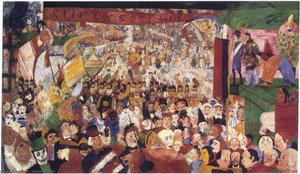
Les Toits d' Ostende 1
Tamaño de la reproducción
James Ensor’s “Les Toits d'Ostende 1” isn’t merely a cityscape; it’s a plunge into a meticulously crafted, unsettling dreamscape. Painted in 1903, this oil-on-canvas work captures the view from Ensor’s attic studio overlooking his hometown of Ostend, Belgium – but transforms that familiar scene into something profoundly strange and deeply evocative. The painting immediately assaults the viewer with a dramatic sky, choked with swirling, bruised clouds that threaten to swallow the town below. These aren't comforting, picturesque clouds; they are active participants in a silent drama, hinting at impending doom or perhaps simply reflecting the artist’s own turbulent inner world.
The architecture of Ostend itself is rendered with a deliberate distortion. The red-brick buildings, typical of the Belgian coastal town, appear compressed and almost claustrophobic, their windows like vacant eyes staring out from the gloom. Chimneys punctuate the rooftops – symbols not just of domestic warmth but also of vulnerability against the elements, suggesting a precarious existence within this manufactured landscape. A prominent clock face adds another layer of unease, its hands frozen in time, emphasizing the stillness and potential stagnation of the scene.
Ensor’s artistic lineage is immediately apparent. He was deeply fascinated by masks – a fascination rooted in his childhood spent amidst the vibrant chaos of Ostend's annual carnival. These weren’t simply decorative objects; they represented disguise, anonymity, and the hidden aspects of human nature. This preoccupation with masks permeates his entire oeuvre, and “Les Toits d'Ostende 1” is no exception. The buildings themselves seem to be wearing masks, concealing their true forms beneath a veneer of solidity.
Furthermore, Ensor’s style aligns closely with the emerging Expressionist movement, though predating its formal definition. He employs a deliberately jarring palette – dominated by dark blues, greens, and browns – to create an atmosphere of anxiety and foreboding. The brushstrokes are loose and agitated, contributing to the sense of unease and instability. The figures within the painting—though largely obscured—suggest a gathering of shadowy inhabitants, adding to the overall feeling of mystery and apprehension.
Beyond its immediate visual impact, “Les Toits d'Ostende 1” is rich in symbolic meaning. The storm-laden sky can be interpreted as a metaphor for societal anxieties or perhaps even Ensor’s own personal struggles. Ostend itself, a bustling resort town, represents the façade of prosperity and leisure, concealing darker realities beneath its cheerful surface. The inclusion of the clock serves not just as a timekeeping device but also as a reminder of mortality – a stark contrast to the seemingly timeless quality of the scene.
Interestingly, Ensor’s own notes reveal a somewhat contradictory perspective on Ostend. While he generally held a deep affection for his hometown, this painting suggests a more critical and perhaps even disillusioned view. It's as if he is exposing the underlying tensions and anxieties that simmer beneath the surface of this idyllic coastal town.
“Les Toits d'Ostende 1” isn’t a comfortable painting; it’s deliberately unsettling. It invites viewers to confront uncomfortable truths about human nature and society, all within the confines of a seemingly ordinary cityscape. Reproductions capture much of this power, offering a tangible connection to Ensor’s unique vision. Most-Famous-Paintings's meticulous hand-painted reproductions ensure that you experience the full depth and complexity of this extraordinary work – a testament to Ensor’s genius and his ability to transform the familiar into the profoundly strange.


1860 - 1949 , Bélgica

Explore the profound depths of Surrealism. From Dalí’s dreamscapes to Magritte’s enigmas, master the history of the subconscious mind through our expert art guide and discover museum-quality oil reproductions of the world's most iconic surrealist masterpieces.



Manténgase al día con las últimas noticias de arte, ofertas exclusivas e ideas de decoración.
Cuéntanos sobre tu proyecto y nuestros expertos en arte te ofrecerán 3 sugerencias de obras personalizadas.
Dejamos que nosotros seleccionemos 3 opciones exclusivas para ti – ¡Gratis!


 Vista previa
 Compartir
 Compartir
 Ver detalles

 Descargar
 Ver similares
 Radiografía
 Presentación de diapositivas
 Leer más







 La opción de vidrio solo está disponible en tamaños inferiores a 110 cm.