


x
 Acrylic On CanvasWallArtBaroque Painting
 1703
1703 345.0 x 206.0 cm
 Pinacoteca Antigua de Múnich
Adquiera una imagen digital de alta resolución y optimizada, muy superior a la vista previa en línea.
Cada archivo es preparado meticulosamente por nuestros especialistas internos mediante el uso de herramientas avanzadas y un experto retoque manual. Nos aseguramos de que cada imagen posea una claridad excepcional, una precisión cromática impecable y un detalle minucioso.
El archivo final se entrega por correo electrónico en un plazo de 72 horas, optimizado para su uso inmediato en entornos profesionales, editoriales y de impresión. Esta es la misma calidad en la que confían los estudios de diseño, las editoriales y las galerías de primer nivel.
Descarga un archivo de alta resolución para exhibición personal, impresión y proyectos creativos. ( Pedir impresión Encargar reproducción pintada a mano)
Al elegir Most-Famous-Paintings.com, no solo está adquiriendo una imagen; está recibiendo una obra de arte digital mejorada profesionalmente, elaborada con precisión y respaldada por una garantía de satisfacción. Esto es todo lo que incluye su pedido, automáticamente:

Recibirá su archivo de imagen digital en alta resolución por correo electrónico en un plazo de 72 horas tras realizar su pedido, listo para su uso inmediato.

Su obra de arte se optimiza profesionalmente mediante herramientas avanzadas de IA y edición manual, garantizando el máximo detalle, claridad y precisión cromática.

¿Has borrado o perdido tu archivo por error? No te preocupes: te lo volveremos a enviar en cualquier momento, sin coste adicional.

Disfrute de su obra de arte al instante sin aduanas, aranceles ni gastos de envío; las descargas digitales siempre están libres de impuestos.

Garantizamos que su imagen digital refleje los colores originales con la mayor fidelidad posible, mediante el uso de herramientas profesionales y gestión del color.

Si no está satisfecho con su imagen digital, la revisaremos o le reembolsaremos el 100% en un plazo de 60 días, sin preguntas.

¿No está satisfecho? Obtenga un reembolso completo dentro de los 60 días posteriores a la recepción de su archivo digital, sin necesidad de explicaciones.

Compra 3 imágenes, ahorra 10% - Compra 5, ahorra 15% - Compra 10+, ahorra 20%. Ideal para proyectos creativos, galerías y agencias.
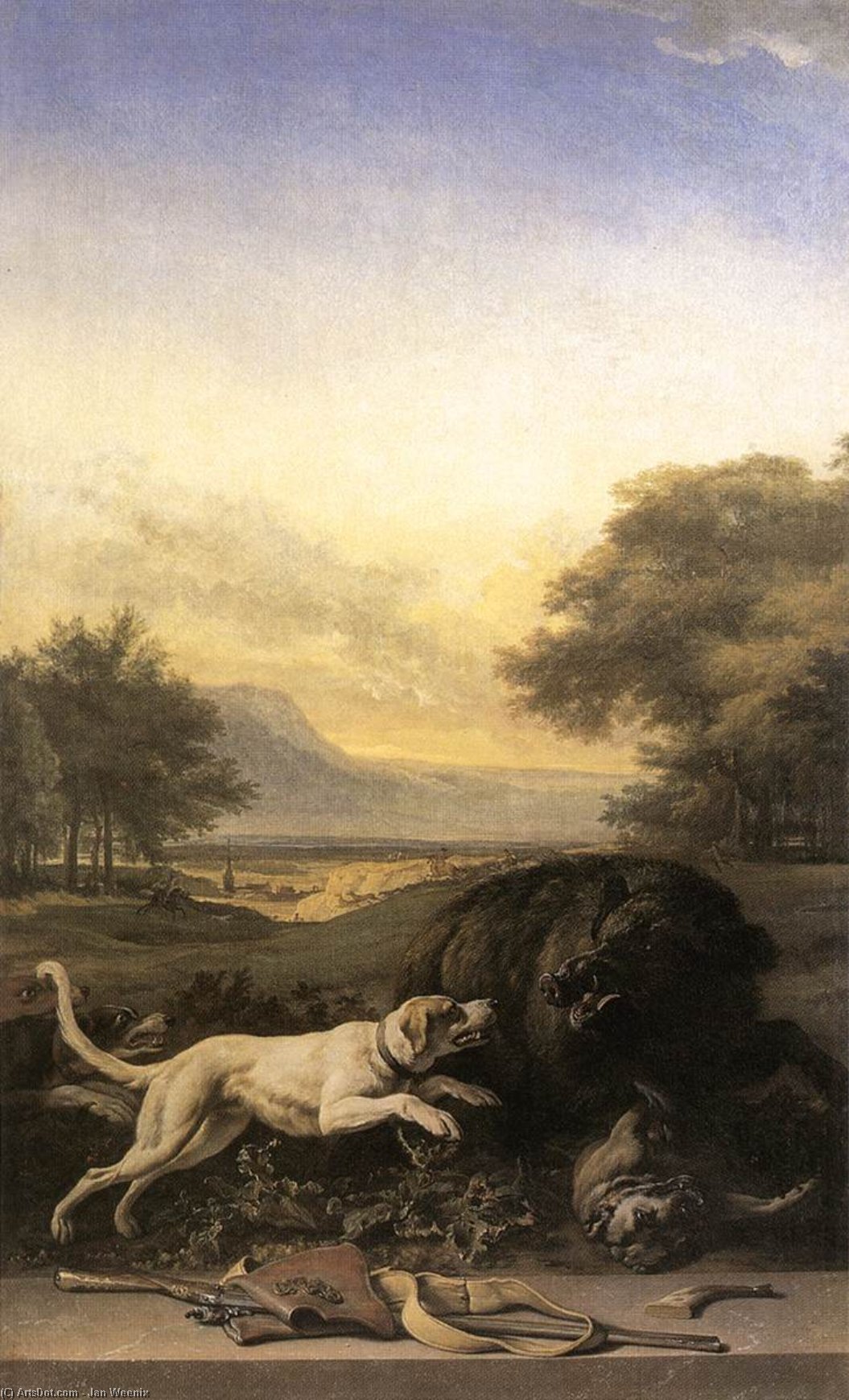
Jan Weenix's "Boar Hunt," painted around 1703, isn’t merely a depiction of a hunt; it’s a meticulously crafted tableau of primal instinct, stoic heroism, and the fleeting beauty of a dramatic moment. This remarkable work, housed within the walls of a museum setting – subtly suggested by the diffused lighting and reflective glass – transports us to a world where man and beast engage in a timeless dance of pursuit and consequence. Weenix, a master of Dutch Baroque realism, elevates the commonplace subject of hunting into an exercise in profound observation and emotional resonance.
The scene unfolds with startling clarity. A magnificent boar, sprawled on its back in a posture of defeated grandeur, dominates the right side of the composition. Its thick hide, rendered with astonishing detail – each bristling hair meticulously captured – speaks to both its formidable power and its imminent demise. Beside it lies a smaller animal, likely a hare or rabbit, adding a layer of poignant vulnerability to the tableau. To the left, a hunting dog, a breed known for its keen tracking abilities, stands poised, either actively pursuing or having just completed its task. The dog’s posture is one of focused intensity, mirroring the boar's own struggle. The background landscape—rolling hills and scattered trees—provides a sense of depth and reinforces the feeling that this event unfolds within a vast, untamed wilderness.
Weenix’s mastery lies in his ability to fuse meticulous realism with an underlying sense of drama. He employs a technique deeply rooted in the Dutch Golden Age, characterized by its careful observation of light and shadow – *chiaroscuro*—to sculpt form and create a palpable atmosphere. Notice how the light catches on the boar's hide, highlighting its texture and musculature, while simultaneously casting deep shadows that emphasize its vulnerability. The artist’s use of color is restrained yet effective; earthy tones dominate, punctuated by the rich browns and reds of the animal’s fur and the subtle greens of the landscape. This palette contributes to a sense of groundedness and authenticity.
The composition itself is carefully balanced, drawing the eye across the scene with a deliberate rhythm. The placement of the animals—the dominant boar on one side, the pursuing dog on the other—creates a dynamic tension that mirrors the hunt’s inherent drama. Furthermore, Weenix's attention to detail extends beyond mere representation; he captures not just the physical appearance of the animals but also their expressions – the boar’s defiant stance, the dog’s focused gaze – imbuing them with a sense of life and personality.
The “Boar Hunt” is rich in symbolic meaning. The hunt itself represents the human desire for mastery over nature, a theme that resonated deeply within the context of 17th-century Europe. However, Weenix doesn’t glorify this pursuit; instead, he presents it with a sobering awareness of mortality and consequence. The fallen boar, lying vulnerable on its back, serves as a potent reminder of the inevitability of death. The dog's role highlights the relationship between hunter and prey, emphasizing the cycle of life and death that governs the natural world.
Moreover, the scene can be interpreted as an allegory for human ambition and the pursuit of glory. The hunters, driven by a desire to prove their skill and courage, engage in a dangerous undertaking with uncertain outcomes. The success of the hunt—represented by the fallen boar—is ultimately tempered by the knowledge that it comes at a cost.
Reproductions of “Boar Hunt” offer a remarkable opportunity to bring this masterpiece into any setting, from a grand salon to a more intimate space. The meticulous detail and evocative atmosphere of the original are faithfully reproduced, allowing viewers to appreciate Weenix’s artistic skill and his profound understanding of human nature. When displayed, consider framing the artwork in a manner that complements its rich colors and dramatic composition. The subdued lighting suggested by the museum setting can be replicated through strategic use of ambient light or accent lighting, further enhancing the work's impact.
Ultimately, “Boar Hunt” is more than just a painting; it’s a window into a bygone era—a testament to the enduring power of art to capture both the beauty and the brutality of the natural world. It invites contemplation on themes of mortality, ambition, and the complex relationship between humanity and its environment.

Jan Weenix (1641-1719) fue un destacado pintor barroco holandés, celebrado por sus ricos detalles en las representaciones de bodegones de caza, piezas de juego y paisajes. Su obra encarna el espíritu artístico de la Edad de Oro, mostrando tanto dominio técnico como una aguda observación del mundo natural.
Nacido en Ámsterdam, Países Bajos, en 1641, Jan Weenix siguió los pasos de su padre como artista. Su padre, Jan Baptist Weenix, también era un pintor respetado que se especializaba en temas similares. Esta influencia familiar resultó crucial para el desarrollo artístico temprano de Jan. Inicialmente trabajó bajo la guía de su padre, aprendiendo las técnicas de la pintura de bodegones y la representación animal.
El estilo de Jan Weenix refleja las influencias de varios artistas clave de su tiempo. Su padre le inculcó un amor por el realismo detallado y las paletas de colores vibrantes. También fue influenciado por pintores como Hendrick Cornelisz Vroom, conocido por sus pinturas marinas, y posiblemente otros que se especializaban en obras animaleras como Melchior de Hondecoeter y Gillis Claesz d'Hondecoeter.
El estilo artístico de Weenix se caracteriza por:
A lo largo de su carrera, Jan Weenix produjo un importante cuerpo de trabajo. Algunas de sus pinturas más notables incluyen:
También recibió encargos de importantes mecenas, incluyendo una invitación a la corte de Johann Wilhelm, Electror Palatino, donde trabajó junto a otros artistas renombrados.
Jan Weenix desempeñó un papel significativo en la popularización de los bodegones de caza y las pinturas de juego durante el período barroco. Sus obras fueron muy solicitadas por coleccionistas y contribuyeron al desarrollo de las tradiciones artísticas holandesas. Ayudó a elevar estos géneros más allá de la mera decoración, infundiéndoles un sentido de realismo, drama y belleza estética.
Su hija, Maria Weenix, continuó la tradición familiar como pintora floral habilidosa, consolidando aún más el nombre Weenix en los anales del arte holandés. El legado de Jan Weenix continúa inspirando a artistas y cautivando al público con sus magistrales representaciones del mundo natural.

1641 - 1719 , Netherlands


Manténgase al día con las últimas noticias de arte, ofertas exclusivas e ideas de decoración.
Cuéntanos sobre tu proyecto y nuestros expertos en arte te ofrecerán 3 sugerencias de obras personalizadas.
Dejamos que nosotros seleccionemos 3 opciones exclusivas para ti – ¡Gratis!


 Vista previa
 Compartir
 Compartir
 Ver detalles

 Descargar
 Ver similares
 Radiografía
 Presentación de diapositivas
 Leer más


