


x

Adquiera una imagen digital de alta resolución y optimizada, muy superior a la vista previa en línea.
Cada archivo es preparado meticulosamente por nuestros especialistas internos mediante el uso de herramientas avanzadas y un experto retoque manual. Nos aseguramos de que cada imagen posea una claridad excepcional, una precisión cromática impecable y un detalle minucioso.
El archivo final se entrega por correo electrónico en un plazo de 72 horas, optimizado para su uso inmediato en entornos profesionales, editoriales y de impresión. Esta es la misma calidad en la que confían los estudios de diseño, las editoriales y las galerías de primer nivel.
Descarga un archivo de alta resolución para exhibición personal, impresión y proyectos creativos. ( Pedir impresión Encargar reproducción pintada a mano)
Al elegir Most-Famous-Paintings.com, no solo está adquiriendo una imagen; está recibiendo una obra de arte digital mejorada profesionalmente, elaborada con precisión y respaldada por una garantía de satisfacción. Esto es todo lo que incluye su pedido, automáticamente:

Recibirá su archivo de imagen digital en alta resolución por correo electrónico en un plazo de 72 horas tras realizar su pedido, listo para su uso inmediato.

Su obra de arte se optimiza profesionalmente mediante herramientas avanzadas de IA y edición manual, garantizando el máximo detalle, claridad y precisión cromática.

¿Has borrado o perdido tu archivo por error? No te preocupes: te lo volveremos a enviar en cualquier momento, sin coste adicional.

Disfrute de su obra de arte al instante sin aduanas, aranceles ni gastos de envío; las descargas digitales siempre están libres de impuestos.

Garantizamos que su imagen digital refleje los colores originales con la mayor fidelidad posible, mediante el uso de herramientas profesionales y gestión del color.

Si no está satisfecho con su imagen digital, la revisaremos o le reembolsaremos el 100% en un plazo de 60 días, sin preguntas.

¿No está satisfecho? Obtenga un reembolso completo dentro de los 60 días posteriores a la recepción de su archivo digital, sin necesidad de explicaciones.

Compra 3 imágenes, ahorra 10% - Compra 5, ahorra 15% - Compra 10+, ahorra 20%. Ideal para proyectos creativos, galerías y agencias.
John Constable's “Overbury Hall, Suffolk,” painted in 1815, isn’t merely a depiction of an old building; it’s a carefully constructed meditation on light, texture, and the enduring spirit of rural England. This remarkable pencil drawing, now housed within the Victoria & Albert Museum’s Prints & Drawings Study Room, offers a poignant glimpse into a bygone era – a time when the rhythms of agricultural life intertwined seamlessly with the beauty of the natural world. The scene unfolds in a quiet corner of Suffolk, where Overbury Hall, a modest yet dignified structure, stands nestled amongst rolling fields and a meandering stream. It’s a landscape imbued with a sense of melancholy and timelessness, reflecting Constable's deep connection to his native county.
Constable’s genius lies not just in his technical skill – the meticulous rendering of weathered wood, the subtle gradations of tone achieved through masterful hatching and cross-hatching – but also in his ability to evoke atmosphere. The drawing is dominated by a soft, diffused light, casting long shadows that suggest both the stillness of the afternoon and the passage of time. This atmospheric quality is further enhanced by Constable’s use of perspective; he employs a flattened approach, characteristic of topographical drawings popular at the time, creating an illusion of depth through carefully placed lines and variations in detail. The composition itself is deliberately balanced, with the building anchoring the scene while the surrounding landscape provides a sense of spaciousness and tranquility.
Executed entirely in pencil on paper, “Overbury Hall” exemplifies Constable's distinctive style – a blend of meticulous observation and expressive brushwork. He employed a technique known as ‘hatching,’ where parallel lines are drawn closely together to create tonal variations, effectively simulating the texture of wood and stone. Cross-hatching, achieved by layering these hatched lines at an angle, adds further depth and richness to the surface. Notice how Constable meticulously captures the rough grain of the building’s timbers, the unevenness of the fields, and the delicate ripples in the water – each detail rendered with a remarkable degree of sensitivity.
The drawing's overall effect is one of quiet contemplation. The lines are not sharply defined; instead, they possess a fluidity that mirrors the natural world itself. This approach reflects Constable’s belief that painting should be an honest representation of nature, capturing its essence rather than simply imitating its appearance. He was deeply influenced by the works of Claude Lorrain and other Old Masters, but he ultimately developed his own unique style – one characterized by a profound understanding of light, color, and texture.
The subject itself, Overbury Hall, is a significant element within the drawing's narrative. While the exact location of the hall remains somewhat debated—scholarly research suggests it may be Overbury Court in Tewkesbury, Worcestershire—it represents a quintessential example of rural architecture from the early 18th century. The building’s modest size and weathered appearance speak to its long history and connection to the land. It's a structure that has witnessed generations of farmers and laborers, silently observing the changing seasons and the ebb and flow of life in Suffolk.
The inclusion of livestock – cows grazing peacefully in the foreground – further reinforces this sense of rural tradition. They are not merely decorative elements; they are integral to the landscape, representing the economic heart of the region. The scene as a whole evokes a feeling of nostalgia for a simpler time—a time when life was closely tied to the rhythms of nature and the land provided sustenance and livelihood.
Beyond its purely representational qualities, “Overbury Hall” is rich in symbolism. The drawing’s muted palette and melancholic atmosphere suggest a sense of loss—the decline of rural life, the fading of traditional ways, and the inevitable passage of time. Yet, there's also an underlying feeling of resilience – a quiet dignity that endures despite the challenges faced by those who inhabit this landscape. Constable’s masterful use of light and shadow creates a powerful emotional resonance, inviting viewers to contemplate the beauty and fragility of the natural world.
Reproductions of “Overbury Hall” offer an exceptional opportunity to bring this evocative scene into your home or office. Whether you're drawn to its historical significance, its artistic merit, or simply its captivating atmosphere, this drawing is a timeless testament to John Constable’s genius and his profound love for the English countryside.
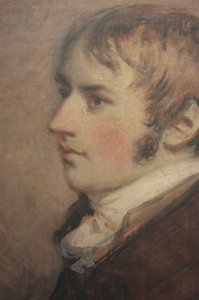
1776 - 1837 , Reino Unido


Manténgase al día con las últimas noticias de arte, ofertas exclusivas e ideas de decoración.
Cuéntanos sobre tu proyecto y nuestros expertos en arte te ofrecerán 3 sugerencias de obras personalizadas.
Dejamos que nosotros seleccionemos 3 opciones exclusivas para ti – ¡Gratis!


 Vista previa
 Compartir
 Compartir
 Ver detalles

 Descargar
 Ver similares
 Radiografía
 Presentación de diapositivas
 Leer más


