x

 WoodSculptureBaroque
 1650Early Modern
 63.0 x 44.0 cm
 Museo de Bellas Artes (Budapest)
Óleo sobre lienzo pintado a mano en el tamaño y marco de su elección, realizado por encargo por nuestros artistas. ( Cambiar a impresión Cambiar a imagen)
Elija entre nuestros tamaños predefinidos que respetan las proporciones originales de la obra.

Puede ingresar sus propias dimensiones para adaptarse a un marco o espacio específico. Si el tamaño seleccionado no coincide con las proporciones de la imagen original, recortaremos la obra o extenderemos la pintura con elementos adicionales pintados a mano. Se le enviará una maqueta digital para su aprobación antes de comenzar la producción.
Tenga en cuenta que la vista previa en pantalla no refleja el recorte o la extensión reales. Solo la maqueta mostrará con precisión la composición final.
Si bien existen tamaños personalizados, recomendamos seleccionar una dimensión de la lista predefinida para preservar las proporciones originales.
Envío a todo el mundo () en 3-4 semanas en lugar de las 5 semanas estándar. (12 agosto). Sin comprometer la calidad.


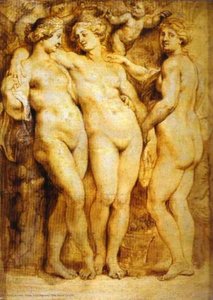
The Three Graces
Tamaño de la reproducción
To stand before this depiction of The Three Graces is to step into a moment suspended between earthly beauty and divine contemplation. These three figures, rendered in the evocative medium of wood, do not merely occupy space; they breathe narrative. They embody an idealized vision of feminine harmony, yet within their collective poise lies a beautiful tension—a dialogue enacted through gesture and gaze. The craftsmanship speaks immediately to the viewer, revealing the meticulous skill required to capture such ephemeral qualities in solid material.
The work dates from 1650, placing it squarely within the vibrant, emotionally charged atmosphere of the late Baroque period. Leonhard Kern, the master sculptor behind this piece, was a figure whose career navigated the tumultuous waters of the Thirty Years' War. His ability to channel profound human emotion into wood, particularly in his smaller-scale works, marks him as a sensitive interpreter of the era’s spiritual and dramatic currents. Observe the material itself: carved from limewood, the sculptor has utilized variations in tone across the three statues, lending an immediate visual richness that prevents any single figure from dominating the composition. This careful handling of wood grain and color variation is a testament to Kern's technical mastery.
The grouping of three figures—the quintessential triad in Western art—is rarely accidental. In classical tradition, the Graces symbolized beauty, charm, and pleasure. Here, however, Kern elevates this symbolism by assigning distinct emotional vectors to each statue. The figure on the left, with her hands clasped near her chest, suggests piety or contained devotion. The central figure, gazing downward, invites introspection, perhaps contemplating a secret or a moment of quiet realization. Finally, the figure on the right, lifting her gaze toward an unseen zenith, points toward aspiration, divine connection, or future hope. Together, they map out a complete emotional spectrum—from humility to contemplation to transcendence.
For the collector or designer seeking an object that transcends mere decoration, this reproduction offers profound depth. The Three Graces are not simply decorative accents; they are conversation starters and sources of quiet meditation. Their inherent drama allows them to anchor a room, whether placed in a formal salon where classical echoes are desired, or within a more intimate setting that appreciates narrative artistry. Owning this piece is acquiring a tangible link to the Baroque pursuit of capturing the soul’s most delicate movements.


1588 - 1662 , Alemania

Explore the profound history of sculpture, from classical realism to modern abstraction. Discover the mastery of form, texture, and medium through an expert art-historical lens designed for discerning collectors and enthusiasts.

Explore the profound differences between Baroque drama and Rococo elegance. Our expert guide delves into art history, chiaroscuro, and the evolution of European masterpieces for collectors and enthusiasts seeking deep historical context.

Explore the profound elegance of Baroque Classicism. Discover how 17th-century masters synthesized dramatic emotion with classical order through the lens of the Counter-Reformation and the works of legends like Carlo Maratta and Andrea Sacchi.


Manténgase al día con las últimas noticias de arte, ofertas exclusivas e ideas de decoración.
Cuéntanos sobre tu proyecto y nuestros expertos en arte te ofrecerán 3 sugerencias de obras personalizadas.
Dejamos que nosotros seleccionemos 3 opciones exclusivas para ti – ¡Gratis!


 Compartir
 Compartir
 Ver detalles

 Descargar
 Ver similares
 Presentación de diapositivas
 Leer más




































 La opción de vidrio solo está disponible en tamaños inferiores a 110 cm.