x

Óleo sobre lienzo pintado a mano en el tamaño y marco de su elección, realizado por encargo por nuestros artistas. ( Pedir impresión Comprar descarga)





























Elija entre nuestros tamaños predefinidos que respetan las proporciones originales de la obra.

Puede ingresar sus propias dimensiones para adaptarse a un marco o espacio específico. Si el tamaño seleccionado no coincide con las proporciones de la imagen original, recortaremos la obra o extenderemos la pintura con elementos adicionales pintados a mano. Se le enviará una maqueta digital para su aprobación antes de comenzar la producción.
Tenga en cuenta que la vista previa en pantalla no refleja el recorte o la extensión reales. Solo la maqueta mostrará con precisión la composición final.
Si bien existen tamaños personalizados, recomendamos seleccionar una dimensión de la lista predefinida para preservar las proporciones originales.
Envío a todo el mundo () en 3-4 semanas en lugar de las 5 semanas estándar. (15 agosto). Sin comprometer la calidad.


untitled (607)
Tamaño de la reproducción
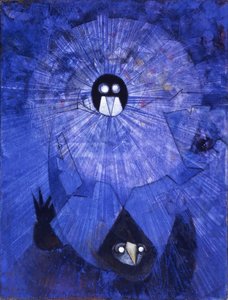
In the hauntingly beautiful realm of Max Ernst’s Untitled (607), the boundaries between reality and the subconscious dissolve into a meticulously crafted dreamscape. Painted circa 1938, this masterpiece serves as a profound window into the Surrealist movement, inviting viewers to wander through a landscape where logic holds no dominion. At the heart of the composition stands a woman, strikingly devoid of a head, an image that immediately arrests the viewer with its unsettling, otherworldly presence. She is positioned amidst a sea of enigmatic figures—some possessing recognizable faces, others shrouded in mystery—creating a sense of a populated yet profoundly lonely world. To the side, a boat-like object drifts upon the water, adding a layer of quiet movement to an otherwise frozen, dreamlike moment.
The visual language of the piece is defined by a captivating tension between meticulous detail and dreamlike distortion. Ernst possesses a singular ability to render textures and forms with such precision that the impossible feels tangibly real. This juxtaposition forces the eye to linger, searching for meaning within the strange anatomy of the figures and the peculiar architecture of the landscape, making it an irresistible focal point for any curated collection.
To understand the depth of Untitled (607), one must look toward the intellectual ferment of post-World War I Europe. Ernst was not merely painting images; he was conducting a psychological experiment. Utilizing the technique of automatism—a method championed by André Breton and his Surrealist circle—Ernst sought to bypass the rational mind and allow the primal, repressed energies of the subconscious to dictate the brushstroke. This process was deeply intertwined with the burgeoning field of Freudian psychoanalysis, as the artist attempted to tap into the hidden anxieties and desires that reside beneath the surface of human consciousness.
The historical context of the late 1930s lends an even heavier weight to the work. The era was marked by profound societal instability and a sense of impending catastrophe. Through his use of fragmented forms and distorted realities, Ernst captures the collective psychological trauma of a generation. The painting acts as a mirror to a world in flux, where the familiar structures of identity and society were being stripped away, leaving behind only the raw, often unsettling, fragments of the human psyche.
Every element within this composition is heavy with symbolic intent, offering layers of meaning for the contemplative observer. The headless woman serves as a poignant metaphor for a fragmented identity—a loss of self that reflects the existential questioning of the modern age. Meanwhile, the drifting boat introduces a dual sense of vulnerability and escape; it represents the precarious nature of our journey through life, yet offers a vessel for fleeing the pressures of a rationalized, often oppressive, reality. Ernst’s masterful use of color further enhances this emotional complexity, employing muted, earthy tones that are punctuated by sudden, vibrant splashes of hue to evoke a sense of sudden, startling realization.
For the interior designer or the passionate art collector, Untitled (607) offers an unparalleled opportunity to introduce intellectual depth and narrative intrigue into a space. As a high-quality reproduction, this piece functions as more than mere decoration; it is a conversation starter that commands attention. Whether placed in a minimalist contemporary setting or a richly textured classical room, the painting’s ability to evoke mystery and profound emotion makes it an enduring choice for those seeking to surround themselves with art that challenges, inspires, and haunts.


1891 - 1976 , Alemania

Explore the profound depths of Surrealism. From Dalí’s dreamscapes to Magritte’s enigmas, master the history of the subconscious mind through our expert art guide and discover museum-quality oil reproductions of the world's most iconic surrealist masterpieces.

Explore the profound depths of Surrealism with our expert guide. From Dalí's dreamscapes to Breton's manifesto, uncover the history, symbolism, and technical mastery of this revolutionary movement. Perfect for students and collectors seeking deep art-historical insight.

Explore the profound history of Surrealist Expressionism. Discover how artists blended dream logic with raw emotion to navigate post-war trauma through masterful, evocative imagery and psychological depth.


Manténgase al día con las últimas noticias de arte, ofertas exclusivas e ideas de decoración.
Cuéntanos sobre tu proyecto y nuestros expertos en arte te ofrecerán 3 sugerencias de obras personalizadas.
Dejamos que nosotros seleccionemos 3 opciones exclusivas para ti – ¡Gratis!


 Vista previa
 Compartir
 Compartir
 Ver detalles

 Descargar
 Ver similares
 Radiografía
 Presentación de diapositivas

 Leer más







 La opción de vidrio solo está disponible en tamaños inferiores a 110 cm.