x

 1475
1475 70.0 x 30.0 cm
 Galería Nacional
Impresiones giclée o en lienzo de calidad de museo con producción rápida y opciones de acabado flexibles. ( Encargar reproducción pintada a mano Comprar descarga)





























Elija entre nuestros tamaños predefinidos que respetan las proporciones originales de la obra.

Puede introducir sus propias dimensiones para adaptarse a un marco o espacio específico. Si el tamaño seleccionado no coincide con las proporciones de la imagen original, recortaremos la obra de arte o extenderemos la imagen con un borde con efecto espejo o de color sólido. Se enviará una maqueta digital para su aprobación antes de que comience la producción.
Tenga en cuenta que la vista previa en pantalla no refleja el recorte o la extensión real. Solo la maqueta mostrará con precisión la composición final.
Aunque existen tamaños personalizados, recomendamos seleccionar una dimensión de la lista predefinida para preservar las proporciones originales.
Envío a todo el mundo () en 2 semanas en lugar de las 4/5 semanas estándar. (21 agosto)


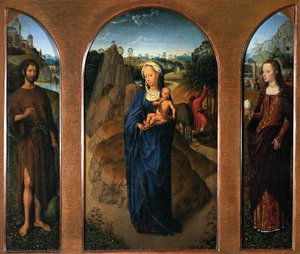
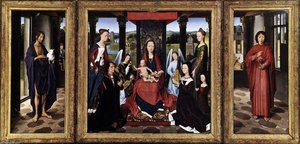
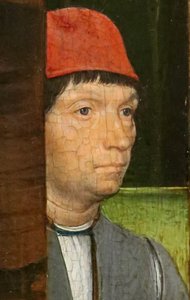
The Donne Triptych (centre panel)
Tamaño de la reproducción
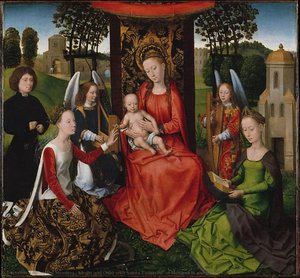
Hans Memling's centre panel of *The Donne Triptych*, painted around 1475, is not merely a religious artwork; it’s a meticulously crafted testament to faith, status, and the burgeoning artistic sensibilities of the Early Netherlandish Renaissance. The scene unfolds with a quiet intimacy, depicting the Virgin Mary tenderly holding the Christ Child, surrounded by a group of women whose expressions are imbued with reverence and gentle contemplation. The composition isn't grand or dramatic; instead, it draws the viewer into a space of serene devotion, inviting shared participation in this sacred moment. The figures, rendered with Memling’s characteristic precision, possess an almost tangible presence, their richly detailed garments and delicate features revealing his mastery of oil painting techniques.
To understand *The Donne Triptych*, one must consider its origins within the vibrant artistic milieu of Bruges. Memling arrived in this flourishing commercial hub after a formative apprenticeship with Rogier van der Weyden in Brussels, absorbing the lessons of emotional depth and refined detail that defined Van der Weyden’s style. However, Memling quickly developed his own distinct voice – one characterized by a serene clarity and an exquisite attention to texture and light. Bruges, as a major center for trade and cultural exchange, attracted patrons from across Europe, including Sir John Donne, the commissioner of this triptych. The presence of such discerning collectors fueled artistic innovation, encouraging artists like Memling to push the boundaries of realism and symbolism.
The painting is replete with symbolic elements that would have resonated deeply with a 15th-century audience. The books scattered throughout the scene likely represent religious texts or allude to learning and spiritual knowledge. The inclusion of Saints Catherine and Barbara, identifiable by their respective attributes (the wheel and tower), speaks to the specific devotional preferences of the Donne family. Even the presence of the horse on the left side isn’t arbitrary; it may symbolize strength, nobility, or even Christ's entry into Jerusalem. The subtle details – the delicate embroidery on the garments, the gleaming surfaces of the jewelry, the carefully rendered folds of drapery – all contribute to a sense of opulent realism that elevates the scene beyond mere representation. The very act of commissioning such an elaborate triptych was itself a statement of piety and social standing.
What truly sets *The Donne Triptych* apart is its enduring emotional impact. Memling doesn’t overwhelm the viewer with dramatic gestures or theatrical displays; instead, he creates an atmosphere of quiet contemplation and heartfelt devotion. The tender interaction between Mary and Jesus, the respectful gazes of the surrounding women, and the dignified presence of Sir John Donne and his family all contribute to a sense of profound spiritual connection. The painting invites us to reflect on themes of faith, motherhood, and the enduring power of divine grace. A reproduction of this masterpiece brings not only artistic beauty into a space but also a timeless message of hope and serenity.

Alemania

Descubra la riqueza y el simbolismo de la pintura flamenca primitiva (siglos XV-XVI). Explore las obras maestras de Van Eyck, van der Weyden y más. Análisis experto e historia del arte en Most-Famous-Paintings.

Descubre las 10 obras maestras del Alto Medieval. Explora la historia, el simbolismo y la belleza de la pintura románica y gótica. Reproducciones exclusivas en Most-Famous-Paintings.com para decorar tu hogar con arte atemporal.

Descubre los 10 imprescindibles del Primitivo Flamenco: Jan van Eyck, Robert Campin y más. Explora la historia, simbolismo y técnica de estas obras maestras renacentistas tempranas. Encuentra reproducciones de arte de museo en Most-Famous-Paintings.com.

Descubre la revolución artística de los Primitivos Flamencos (siglos XV-XVI). Explora su técnica innovadora del óleo, el simbolismo oculto en sus obras y el legado de maestros como Van Eyck y Weyden. ¡Un viaje profundo al Renacimiento nórdico!

Descubre las 10 obras maestras del Renacimiento Flamenco Temprano. Explora la historia de Jan van Eyck, Robert Campin y más. Reproducciones de arte en Most-Famous-Paintings.com para decorar tu hogar con belleza y elegancia. ¡Explora la colección online!


Manténgase al día con las últimas noticias de arte, ofertas exclusivas e ideas de decoración.
Cuéntanos sobre tu proyecto y nuestros expertos en arte te ofrecerán 3 sugerencias de obras personalizadas.
Dejamos que nosotros seleccionemos 3 opciones exclusivas para ti – ¡Gratis!


 Vista previa
 Compartir
 Compartir
 Ver detalles

 Descargar
 Ver similares
 Radiografía
 Presentación de diapositivas
 Leer más







 La opción de vidrio solo está disponible en tamaños inferiores a 110 cm.