


x

Impresiones giclée o en lienzo de calidad de museo con producción rápida y opciones de acabado flexibles. ( Comprar pintura hecha a mano Comprar imagen)
Elija entre nuestros tamaños predefinidos que respetan las proporciones originales de la obra.

Puede introducir sus propias dimensiones para adaptarse a un marco o espacio específico. Si el tamaño seleccionado no coincide con las proporciones de la imagen original, recortaremos la obra de arte o extenderemos la imagen con un borde con efecto espejo o de color sólido. Se enviará una maqueta digital para su aprobación antes de que comience la producción.
Tenga en cuenta que la vista previa en pantalla no refleja el recorte o la extensión real. Solo la maqueta mostrará con precisión la composición final.
Aunque existen tamaños personalizados, recomendamos seleccionar una dimensión de la lista predefinida para preservar las proporciones originales.
Envío a todo el mundo () en 2 semanas en lugar de las 4/5 semanas estándar. (23 agosto)


Sanctus Proculus
Dimensiones de la reproducción
Michelangelo Buonarroti’s *Saint Proculus*, housed within the magnificent Basilica of San Domenico in Bologna, stands as an enduring emblem of the High Renaissance—a period defined by a fervent return to classical ideals and unparalleled artistic innovation. Completed between 1494 and 1495 during his formative years in Florence, this sculpture transcends mere representation; it embodies a profound exploration of human form and spiritual contemplation.
Michelangelo's mastery is immediately evident in the statue’s meticulous anatomical detail. Drawing inspiration from Greek sculptures—particularly those depicting idealized male figures—he painstakingly studied musculature, bone structure, and posture to achieve an astonishing level of realism. This dedication to observation wasn’t simply a technical exercise; it reflected the Renaissance humanist belief that understanding the human body was crucial for comprehending God's creation and achieving spiritual enlightenment. The pose itself—a single-legged stance conveying strength and balance—is deliberately reminiscent of Roman statues, reinforcing Michelangelo’s commitment to reviving classical artistic principles.
Carved from Carrara marble—renowned for its purity and translucency—*Saint Proculus* exemplifies the sculptor's virtuosity. Michelangelo employed a subtractive sculptural technique, meticulously chipping away at the stone to reveal the underlying form. The surface finish is remarkably smooth, achieved through countless passes of polishing tools, resulting in an ethereal glow that captures the light beautifully. This careful attention to material and craftsmanship underscores Michelangelo’s belief that art should strive for perfection—a reflection of God's own artistry.
*Saint Proculus* is not merely a depiction of a saint; it carries significant symbolic weight. The figure wears a toga—a garment associated with Roman senators and symbolizing authority and dignity—further emphasizing the statue’s connection to classical culture. Holding a shield and spear, he embodies courage and defense of faith. His gaze directs upwards, suggesting contemplation and aspiration toward divine grace. Michelangelo's intention was to elevate the viewer emotionally and intellectually, prompting reflection on themes of piety and moral virtue.
Michelangelo’s *Saint Proculus* remains a cornerstone of Renaissance sculpture—a masterpiece that continues to inspire artists and scholars alike. Its enduring beauty lies not only in its technical brilliance but also in its profound spiritual resonance. As a reproduction, it allows admirers worldwide to experience the grandeur of Michelangelo's vision and appreciate the timeless power of classical idealism.


1475 - 1564 , Italia
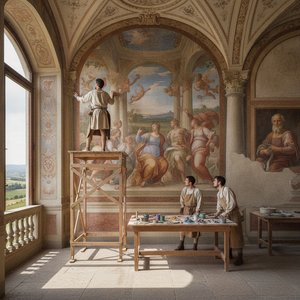
Explore the profound history and technical mastery of fresco painting. From ancient Roman murals to Michelangelo's Sistine Chapel, discover the enduring chemistry and artistry behind this timeless wall painting technique used by the world's greatest masters.


Manténgase al día con las últimas noticias de arte, ofertas exclusivas e ideas de decoración.
Cuéntanos sobre tu proyecto y nuestros expertos en arte te ofrecerán 3 sugerencias de obras personalizadas.
Permítenos seleccionar 3 opciones exclusivas para ti – ¡Gratis!


 Ver en contexto
 Enviar
 Compartir
 Detalles

 Descargar
 Similares
 Radiografía
 Presentación de diapositivas
 Ver más




































 La opción de vidrio solo está disponible en tamaños inferiores a 110 cm.


