x

 Acrylic On CanvasWallArtColor Field Painting
 1959
1959 256.0 x 378.0 cm
 Solomon R. Guggenheim Museum
Adquiera una imagen digital de alta resolución y optimizada, muy superior a la vista previa en línea.
Cada archivo es preparado meticulosamente por nuestros especialistas internos mediante el uso de herramientas avanzadas y un experto retoque manual. Nos aseguramos de que cada imagen posea una claridad excepcional, una precisión cromática impecable y un detalle minucioso.
El archivo final se entrega por correo electrónico en un plazo de 72 horas, optimizado para su uso inmediato en entornos profesionales, editoriales y de impresión. Esta es la misma calidad en la que confían los estudios de diseño, las editoriales y las galerías de primer nivel.
Descarga un archivo de alta resolución para exhibición personal, impresión y proyectos creativos. ( Pedir impresión Encargar reproducción pintada a mano)
Al elegir Most-Famous-Paintings.com, no solo está adquiriendo una imagen; está recibiendo una obra de arte digital mejorada profesionalmente, elaborada con precisión y respaldada por una garantía de satisfacción. Esto es todo lo que incluye su pedido, automáticamente:

Recibirá su archivo de imagen digital en alta resolución por correo electrónico en un plazo de 72 horas tras realizar su pedido, listo para su uso inmediato.

Su obra de arte se optimiza profesionalmente mediante herramientas avanzadas de IA y edición manual, garantizando el máximo detalle, claridad y precisión cromática.

¿Has borrado o perdido tu archivo por error? No te preocupes: te lo volveremos a enviar en cualquier momento, sin coste adicional.

Disfrute de su obra de arte al instante sin aduanas, aranceles ni gastos de envío; las descargas digitales siempre están libres de impuestos.

Garantizamos que su imagen digital refleje los colores originales con la mayor fidelidad posible, mediante el uso de herramientas profesionales y gestión del color.

Si no está satisfecho con su imagen digital, la revisaremos o le reembolsaremos el 100% en un plazo de 60 días, sin preguntas.

¿No está satisfecho? Obtenga un reembolso completo dentro de los 60 días posteriores a la recepción de su archivo digital, sin necesidad de explicaciones.

Compra 3 imágenes, ahorra 10% - Compra 5, ahorra 15% - Compra 10+, ahorra 20%. Ideal para proyectos creativos, galerías y agencias.
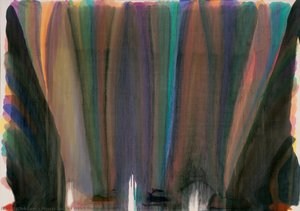
Morris Louis’s “Saraband,” painted in 1959, isn't merely a canvas adorned with color; it’s an immersive experience. This monumental work, measuring nearly 3 x 2.6 meters, immediately draws the viewer into its hazy depths – a realm where form dissolves and emotion takes precedence. Louis, a pivotal figure in Color Field painting, sought to move beyond traditional representation, aiming instead to capture the very essence of color itself. “Saraband” embodies this ambition, inviting contemplation and offering a profound connection through its atmospheric quality and subtle shifts in hue.
The genesis of this piece lies within Louis’s groundbreaking "veil" technique – a method he pioneered by pouring diluted acrylic paint directly onto unprimed canvas. This revolutionary approach allowed the paint to soak into the fabric, creating a luminous, almost ethereal surface that defies conventional brushstrokes. The absence of visible lines contributes significantly to the painting's dreamlike quality, fostering a sense of fluidity and movement reminiscent of a slow, graceful dance – hence the title itself, referencing the stately Spanish dance known for its melancholic beauty.
The color palette of “Saraband” is both complex and remarkably harmonious. Dominating the composition are washes of vibrant oranges, reds, yellows, greens, blues, and purples – a rich tapestry that seems to shift and evolve with every glance. These colors aren’t applied uniformly; instead, they bleed into one another, creating subtle gradations and transitions that suggest depth and movement. The warm beige or light brown background acts as a grounding element, providing a neutral stage for the explosion of color above. Notice how the cooler blues and greens recede slightly, while the warmer reds and yellows advance, subtly manipulating our perception of space within the painting.
Louis’s masterful control over the paint's flow is evident in the way the colors coalesce into vertical bands or columns. These aren’t sharply defined edges; rather, they dissolve at their boundaries, contributing to the overall sense of atmospheric depth and blurring the distinction between foreground and background. This deliberate ambiguity encourages the viewer to lose themselves within the painting, allowing their own emotions and associations to shape their interpretation.
“Saraband” is deliberately devoid of representational imagery – there are no figures or recognizable objects. Instead, its power lies in its ability to evoke a range of emotional responses. The title itself—a reference to a slow, melancholic dance—hints at themes of longing, nostalgia, and perhaps even loss. The flowing colors can be interpreted as representing the ebb and flow of emotions, mirroring the complexities of human experience. It’s a painting that invites introspection, prompting viewers to consider their own personal connections to color, movement, and feeling.
Furthermore, Louis's work during this period was deeply influenced by his interest in spirituality and the subconscious. He sought to create paintings that would bypass rational thought and directly engage with the viewer’s emotions. “Saraband” achieves this beautifully, offering a meditative experience that transcends mere visual pleasure.
Morris Louis was a key figure in the development of Color Field painting, an American movement that emerged in the mid-1950s. Artists like Louis, Barnett Newman, and Helen Frankenthaler sought to elevate color to the primary subject matter of their work, rejecting traditional forms and techniques. “Saraband” stands as a testament to this revolutionary approach, demonstrating Louis’s ability to create large-scale paintings that are both visually stunning and emotionally resonant. His innovative use of acrylic paint and his commitment to exploring the expressive potential of color have had a lasting impact on contemporary art.

1912 - 1962 , Estados Unidos de América


Manténgase al día con las últimas noticias de arte, ofertas exclusivas e ideas de decoración.
Cuéntanos sobre tu proyecto y nuestros expertos en arte te ofrecerán 3 sugerencias de obras personalizadas.
Dejamos que nosotros seleccionemos 3 opciones exclusivas para ti – ¡Gratis!


 Vista previa
 Compartir
 Compartir
 Ver detalles

 Descargar
 Ver similares
 Radiografía
 Presentación de diapositivas
 Leer más