Vende tu arte
Lista de deseos Carrito de compras Cart
x
Vista previaVista previa Vista previa en RAVista previa en RA Pedir impresión Pedir impresiónComprar descarga Comprar descarga CompartirCompartir
Ver detallesVer detalles Añadir a favoritos Añadir a favoritos DescargarDescargar Ver similaresVer similares RadiografíaRadiografía Presentación de diapositivasPresentación de diapositivas

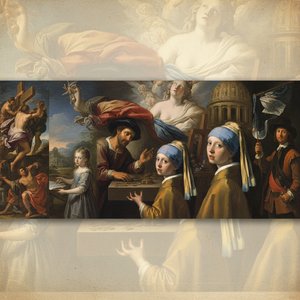
A Cardinal's Procession

A Cardinal’s Procession by Ottavio Leoni (Il Padovano) is an oil painting on copper dating back to 1621. It depicts a solemn procession featuring a cardinal, highlighting architectural elements referencing heraldry and showcasing meticulous detail in the depiction of figures.

Ottavio Leoni fue un pintor barroco romano reconocido por sus elegantes retratos y la imagen excepcional de Caravaggio, obra maestra que sigue fascinando a expertos y visitantes internacionales. Descubre su arte en museos destacados de todo el mundo.

Reproducción al óleo hecha a mano

Óleo sobre lienzo pintado a mano en el tamaño y marco de su elección, realizado por encargo por nuestros artistas. (Pedir impresión Pedir impresiónComprar descarga Comprar descarga)

P118B $10
P118H $10
P118W $10
P438Z $10
P508JH $12
P508YH $12
P805H $10
P805Z $10
P919BZ $10
P919G $10
P919XJ $10
P959ZH $10
P968JZ $12
W106C $8
W218G $10
W218JH $8
W218Y $10
W307PJ $10
W316G $10
W316PJ $8
W316Y $10
W398PJ $8
W4111J $10
W500HY $15
W500JH $15
W692G $12
W849H $8
W940BG $15
W953PJ $8

Standard
custom
CM
INCH

Elija entre nuestros tamaños predefinidos que respetan las proporciones originales de la obra.

ancho
altura

Puede ingresar sus propias dimensiones para adaptarse a un marco o espacio específico. Si el tamaño seleccionado no coincide con las proporciones de la imagen original, recortaremos la obra o extenderemos la pintura con elementos adicionales pintados a mano. Se le enviará una maqueta digital para su aprobación antes de comenzar la producción.
Tenga en cuenta que la vista previa en pantalla no refleja el recorte o la extensión reales. Solo la maqueta mostrará con precisión la composición final.
Si bien existen tamaños personalizados, recomendamos seleccionar una dimensión de la lista predefinida para preservar las proporciones originales.

Ejemplos de lo que se puede personalizar: Reemplace el rostro con una foto del cliente; Agregue una mascota (por ejemplo, cambie un gato por un perro); Incluya un mensaje oculto en el fondo; Cambie el paisaje o los elementos del fondo.
Tras realizar el pedido, el equipo de Most-Famous-Paintings.com enviará un correo electrónico al cliente para solicitar instrucciones y proporcionarle una vista previa del boceto.

Envío a todo el mundo () en 3-4 semanas en lugar de las 5 semanas estándar. (15 agosto). Sin comprometer la calidad.

why_choose_icon
Envío exprés gratuito a todo el mundo
why_choose_icon
Lienzo de lino de alta calidad
why_choose_icon
Seguro de envío completo
why_choose_icon
Garantía de reembolso de aranceles aduaneros
why_choose_icon
Garantía de fidelidad cromática exacta
why_choose_icon
Política de devolución de 60 días (solo por defectos)
why_choose_icon
Garantía de devolución del 100% del dinero
why_choose_icon
Oferta por volumen

Precio total

$ 272

reproduction

A Cardinal's Procession

Técnica de reproducción

Tamaño de la reproducción

-

Precio total

$ 272

Datos clave

  • Influences: Venetian painting
  • Title: A Cardinal's Procession
  • Notable elements or techniques: Rare Caravaggio image
  • Medium: Oil on copper
  • Dimensions: 39 x 38 cm
  • Movement: Baroque
  • Location: The Metropolitan Museum of Art

Cuestionario de arte

Cada pregunta tiene una única respuesta correcta.

Pregunta 1:
What is the primary subject matter of ‘A Cardinal’s Procession’?
Pregunta 2:
The lion and eagles on the mace symbolize what?
Pregunta 3:
What is notable about the architecture featured in the painting?
Pregunta 4:
Who painted ‘A Cardinal’s Procession’?
Pregunta 5:
What artistic technique is prominently employed in ‘A Cardinal’s Procession’?

Descripción de la obra

A Rediscovered Voice of Baroque Rome: Exploring Ottavio Leoni’s “A Cardinal’s Procession”

Ottavio Leoni (Il Padovano), a name largely absent from the annals of art history, represents a fascinating enigma—a brilliant artist whose output defied recognition during his lifetime and subsequently vanished into obscurity. Yet, recent scholarship has begun to illuminate Leoni's remarkable talent, revealing an oeuvre characterized by elegant compositions and masterful execution, particularly in his portraits and, crucially, his groundbreaking engraving of Michelangelo Merisi Caravaggio’s “The Calling of Saint Matthew.” This article delves into the life of Leoni, examines his artistic achievements, analyzes his influences, and contemplates the enduring significance of his work within the vibrant tapestry of Baroque Rome.

Early Life and Artistic Formation: The Shadow of Venetian Tradition

Born around 1578 in Rome—a city pulsating with artistic fervor under papal patronage—Leoni’s formative years were steeped in the legacy of Venetian painting. His father, Lodovico Leoni, was a respected goldsmith, medalist, and creator of portraits executed in wax—a profession that instilled in Ottavio an instinctive understanding of sculptural modeling and meticulous detail. This familial connection ensured he absorbed the stylistic precepts championed by artists like Titian and Tintoretto, establishing him firmly within the Venetian tradition’s emphasis on luminous color palettes and dramatic chiaroscuro effects. While biographical details remain sparse, surviving documentation suggests Leoni honed his skills under the tutelage of prominent Roman sculptors, further enriching his artistic repertoire.

“A Cardinal’s Procession”: A Portrait of Dignity Amidst Complexity

The painting itself—titled “A Cardinal’s Procession”—is a captivating study in restrained elegance and symbolic richness. Executed in oil on copper around 1621, it depicts a solemn procession featuring a cardinal at the center, flanked by several attendants. The scene unfolds against an architectural backdrop that blends classical grandeur with hints of modern urban design—a deliberate juxtaposition reflecting the tensions inherent within Baroque Rome’s intellectual landscape. Notably, the inclusion of a lion and eagles adorning the silver and gold mace held aloft by the cardinal’s entourage harkens back to papal heraldry, signifying authority and divine sanction. The meticulous rendering of drapery folds and facial expressions speaks volumes about Leoni's technical prowess—a testament to his ability to capture not merely likeness but also psychological nuance.

Caravaggio’s Influence: A Singular Achievement

Perhaps Leoni’s most celebrated accomplishment was his engraving of Caravaggio’s “The Calling of Saint Matthew,” a monumental undertaking that cemented his reputation as one of the foremost printmakers of his era. This ambitious project demanded unparalleled skill in transferring tonal values and textures from oil paint to copper plate—a technique notoriously difficult to master. Leoni's rendition captures the dramatic immediacy and emotional intensity characteristic of Caravaggio’s style, demonstrating a profound understanding of chiaroscuro and its ability to convey psychological drama. The engraving stands as an exceptional example of Baroque printmaking, showcasing Leoni’s artistic vision and technical virtuosity—a singular achievement that continues to inspire admiration among art historians and collectors alike.

Legacy and Rediscovery: Bringing Leoni Back into Focus

Despite his obscurity during his lifetime, Ottavio Leoni's work has experienced a resurgence of interest in recent decades. Scholars have painstakingly reconstructed his artistic output through meticulous archival research—revealing a prolific artist whose oeuvre encompasses portraits, sculptures, and prints spanning across multiple genres. His rediscovery underscores the importance of revisiting forgotten artists and recognizing their contributions to Baroque art history. “A Cardinal’s Procession,” with its understated beauty and subtle symbolism, serves as a poignant reminder that artistic genius can flourish even in the shadows—waiting for future generations to illuminate its brilliance.

Biografía del artista

Ottavio Leoni: The Rediscovered Roman Portraitist

Ottavio Leoni (1578 – 4 September 1630) was an Italian painter and printmaker of the early Baroque, active primarily in Rome. He remains largely unrecognized by art historians today—a testament to his obscurity during his lifetime and a frustrating challenge for scholars attempting to reconstruct his artistic legacy. Despite being almost entirely forgotten, Leoni’s work possesses remarkable elegance and technical skill, particularly evident in his portraits and his groundbreaking engraving of Michelangelo Merisi Caravaggio's masterpiece. This article delves into Leoni’s life, artistic output, influences, and enduring significance within the context of Baroque Rome.

Early Life and Training

Born around 1578 in Rome, Ottavio Leoni received his formative artistic training from his father, Lodovico Leoni—a respected painter himself—who instilled in him a foundational understanding of Venetian painting techniques. The dominant style of the era prioritized luminous color palettes and dramatic compositions, shaping Leoni’s subsequent artistic endeavors profoundly. Biographical details concerning Leoni's early years are scarce; however, meticulous observation and diligent practice prepared him for a career dedicated to capturing likenesses and conveying emotion through visual representation—a hallmark of Venetian art.

Notable Paintings: Altarpieces and Religious Commissions

Leoni gained recognition as an artist through commissions from prominent churches throughout Rome. Among his most celebrated achievements are the Annunciation for Sant’Eustachio, depicting Saint Mary receiving the divine messenger with breathtaking realism and spiritual fervor—a testament to Leoni's mastery of chiaroscuro. Similarly, the Virgin and Child with St. Giacomo for Santa Maria della Minerva showcases Leoni’s meticulous attention to detail and his ability to imbue religious subjects with palpable emotion. He served as president of the Accademia di San Luca, demonstrating his unwavering commitment to artistic excellence and fostering intellectual discourse within Rome's vibrant cultural milieu. Furthermore, he undertook significant projects honoring Saint Martina—a monumental altarpiece that solidified Leoni’s reputation as a leading artist of his time.

Caravaggio’s Portrait: A Singular Achievement

Leoni achieved unparalleled renown for his engraving of Michelangelo Merisi Caravaggio’s “Saint Jerome Wrestling with Demons.” Produced around 1625, this print stands alone as the sole documented portrait of Caravaggio by another artist—a feat that underscores Leoni's exceptional draughtsmanship and artistic vision. The engraving captures Caravaggio’s brooding gaze and muscular physique with astonishing accuracy, conveying not merely physical likeness but also psychological depth—a characteristic hallmark of Baroque art. It represents a triumph of artistic technique and serves as invaluable documentation of Caravaggio’s life and oeuvre.

Influence and Legacy

Leoni's meticulous observation of anatomy and his masterful manipulation of light and shadow established him as a pioneer of Baroque realism—a stylistic approach that prioritized naturalism and emotional expression over idealized representations. His influence extended beyond his own artistic output, shaping the sensibilities of subsequent generations of painters who embraced Leoni’s techniques and aesthetic principles. Although overshadowed by more celebrated contemporaries during his lifetime, Ottavio Leoni's legacy persists through his enduring engravings—a testament to his unwavering dedication to capturing the essence of human experience—and his contribution to the artistic landscape of Rome during its golden age. His rediscovery in recent decades has prompted renewed scholarly interest and reaffirmed his position as a significant figure within Baroque art history. Leoni’s artwork can be found in prestigious museums across Europe and America, including Fine Arts Museums of San Francisco; Museum of Fine Arts, Boston; National Gallery of Art; Bowes Museum; Courtauld Institute of Art; Los Angeles County Museum of Art; and Palazzo Ruspoli, Rome, Italy. These institutions showcase his paintings and engravings, ensuring that Leoni’s artistic achievements continue to inspire admiration and scholarly study for years to come.
Ottavio Leoni

Ottavio Leoni

1578 - 1630 , Italia

Datos clave

  • Artistic Movement Or Style: Barroco temprano
  • Artists Or Movements Influenced By This Artist: ['Renacimiento']
  • Artists Who Influenced This Artist: ['Michelangelo Buonarroti']
  • Date Of Birth: Roma, Italia (1578)
  • Date Of Death: 4 septiembre 1630
  • Full Name: Ottavio Leoni
  • Nationality: Italiano
  • Notable Artworks:
    • Retrato de Guido Reni
    • Autorretrato
    • Una procesión
  • Place Of Birth: Roma