x


Óleo sobre lienzo pintado a mano en el tamaño y marco de su elección, realizado por encargo por nuestros artistas. ( Cambiar a impresión Cambiar a imagen)





























Elija entre nuestros tamaños predefinidos que respetan las proporciones originales de la obra.

Puede ingresar sus propias dimensiones para adaptarse a un marco o espacio específico. Si el tamaño seleccionado no coincide con las proporciones de la imagen original, recortaremos la obra o extenderemos la pintura con elementos adicionales pintados a mano. Se le enviará una maqueta digital para su aprobación antes de comenzar la producción.
Tenga en cuenta que la vista previa en pantalla no refleja el recorte o la extensión reales. Solo la maqueta mostrará con precisión la composición final.
Si bien existen tamaños personalizados, recomendamos seleccionar una dimensión de la lista predefinida para preservar las proporciones originales.
Entrega mundial () en 3-4 semanas en lugar de las 5 semanas estándar. (30 julio). Sin compromisos con la calidad.


Untitled
Tamaño de la reproducción
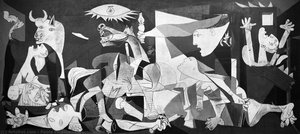
The stark monochrome palette of Pablo Picasso's "Untitled" (1937) immediately commands attention, pulling the viewer into a world of fractured forms and profound unease. More than just a depiction of figures, this painting is a visceral embodiment of trauma – a direct response to the devastating bombing of Guernica during the Spanish Civil War. It’s a work that transcends mere representation, becoming instead a raw, unfiltered expression of suffering and chaos, characteristic of Picasso's mature style following his relocation to France.
The composition is dominated by two elongated, almost skeletal figures, their bodies contorted in agony. These aren’t portraits of individuals; they are archetypes of human despair, rendered with a deliberate crudeness that amplifies the emotional impact. Surrounding them are smaller, amorphous shapes – fragments of faces, limbs, and distorted bodies – suggesting the disintegration of humanity under the relentless assault of violence. Picasso masterfully employs overlapping lines and planes, creating a sense of claustrophobia and disorientation. The figures seem trapped within a collapsing space, mirroring the psychological state of those caught in the heart of war.
While undeniably rooted in the principles of Cubism – evident in the fragmented forms and multiple perspectives – “Untitled” moves beyond purely analytical deconstruction. Picasso abandons the geometric precision of his earlier Cubist works, embracing a more emotionally charged approach. The lines are thick, jagged, and deliberately uneven, conveying a sense of urgency and instability. This shift aligns the painting with Expressionism, a movement that prioritized subjective experience over objective reality. The use of black, white, and grey further intensifies this emotional resonance, stripping away any potential for beauty or comfort.
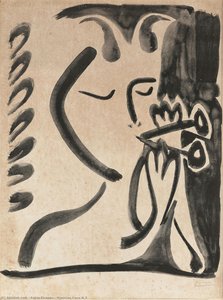
Technically, the work likely originated as an etching or woodcut – a process well-suited to Picasso’s expressive lines and dramatic contrasts. The texture created by the etched lines adds another layer of physicality to the image, mirroring the palpable sense of destruction depicted. The deliberate lack of depth and perspective contributes to the feeling of being trapped within the scene, forcing the viewer to confront the horror head-on.
Beyond its immediate depiction of violence, “Untitled” is laden with symbolic weight. The prominent figure on the left, seemingly a mother clutching her dead child, evokes universal themes of loss and maternal grief – timeless symbols of human suffering. The bull, often interpreted as representing brutality and darkness, stands impassively amidst the chaos, while the horse, writhing in agony, embodies vulnerability and innocence. These recurring motifs within Picasso’s work frequently allude to broader societal anxieties and the destructive forces at play in the world.
Crucially, this painting emerged from a specific historical context – the brutal realities of the Spanish Civil War. Picasso, deeply affected by the news reports of Guernica's destruction, channeled his outrage and sorrow into this powerful visual statement. “Untitled” is not simply an artistic exercise; it’s a poignant memorial to the victims of war and a stark warning against its horrors. It remains a profoundly moving testament to the enduring capacity for human suffering and the urgent need for peace.
Reproductions of “Untitled” capture much of the original’s raw power, offering a compelling glimpse into Picasso's artistic vision. When selecting a high-quality reproduction, consider the medium – archival prints on fine art paper will best preserve the nuances of tone and texture. This iconic work continues to resonate with audiences today, serving as a potent reminder of the devastating consequences of conflict and the importance of empathy and understanding. Its enduring legacy ensures that Picasso’s “Untitled” remains a vital piece of art history, prompting reflection and inspiring dialogue for generations to come.


1881 - 1973 , España
Descubre cómo la abstracción en blanco y negro eleva el diseño arquitectónico moderno. Expertos revelan secretos de iluminación, materiales y minimalismo para espacios sofisticados y atemporales.

Explore the captivating world of Lyonel Feininger, a pivotal figure bridging Expressionism & Cubism. Discover his architectural visions, Bauhaus influence, and enduring legacy in modern art history. Learn more at Most-Famous-Paintings.

Explore the captivating world of monochrome art! Discover its rich history, influential artists like Malevich & Klein, and profound emotional impact. Expert insights for collectors & design enthusiasts.

Explore the rich history & artistic power of black and white photography. From early techniques to iconic masters like Ansel Adams, discover why monochrome continues to captivate art lovers today. Expert insights for collectors.

Explore the revolutionary art of Pablo Picasso with Most-Famous-Paintings.com. Discover Cubism's origins, symbolism in his masterpieces & investment insights for collectors. Expert appraisal & custom reproductions available.


Manténgase al día con las últimas noticias de arte, ofertas exclusivas e ideas de decoración.
Cuéntanos sobre tu proyecto y nuestros expertos en arte te ofrecerán 3 sugerencias de obras personalizadas.
Permítenos seleccionar 3 opciones solo para ti – ¡Gratis!


 Vista previa
 Compartir
 Compartir
 Ver detalles

 Descargar
 Ver similares
 Radiografía
 Presentación automática
 Leer más







 La opción de vidrio solo está disponible en tamaños inferiores a 110 cm.