x

Óleo sobre lienzo pintado a mano en el tamaño y marco de su elección, realizado por encargo por nuestros artistas. ( Cambiar a impresión Cambiar a imagen)





























Elija entre nuestros tamaños predefinidos que respetan las proporciones originales de la obra.

Puede ingresar sus propias dimensiones para adaptarse a un marco o espacio específico. Si el tamaño seleccionado no coincide con las proporciones de la imagen original, recortaremos la obra o extenderemos la pintura con elementos adicionales pintados a mano. Se le enviará una maqueta digital para su aprobación antes de comenzar la producción.
Tenga en cuenta que la vista previa en pantalla no refleja el recorte o la extensión reales. Solo la maqueta mostrará con precisión la composición final.
Si bien existen tamaños personalizados, recomendamos seleccionar una dimensión de la lista predefinida para preservar las proporciones originales.
Envío a todo el mundo () en 3-4 semanas en lugar de las 5 semanas estándar. (8 agosto). Sin comprometer la calidad.


Bodegón con cerezas
Tamaño de la reproducción
Paul Cézanne stands as an undeniable cornerstone of modern art history, marking the decisive transition from Impressionism’s fleeting impressions to Cubism's fractured perspectives. His oeuvre—including Still Life with Plate of Cherries—didn’t merely influence artistic movements; it fundamentally reshaped how artists approached representation itself.
The Artist: Paul Cézanne
Born in Aix-en-Provence in 1839, Cézanne initially pursued a legal education but swiftly abandoned it for the passionate embrace of painting. Guided by mentors like Jean-Auguste-Dominique Ingres and Camille Corot, he honed his skills early on, absorbing influences from Romanticism and Realism before embarking on his groundbreaking stylistic evolution.
The Painting: Still Life with Plate of Cherries
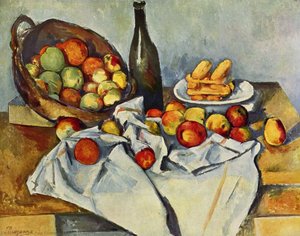
Created in the late 1880s, Still Life with Plate of Cherries is an oil painting on canvas—a deceptively simple composition that belies Cézanne’s revolutionary technique.
Composition Analysis
At its core, the artwork utilizes a tabletop as its stage, fostering a palpable sense of immediacy and intimacy. Cézanne meticulously balances the arrangement of fruits—primarily cherries and apples—with tableware elements like a plate and bowls. This careful orchestration isn’t merely aesthetically pleasing; it reflects Cézanne's profound belief that art should capture the underlying structure of objects rather than merely mimicking their appearance.
Color and Texture: Cézanne’s Bold Approach
Cézanne’s distinctive style is characterized by thick, impasto brushstrokes—heavy applications of paint that create a textured surface—and vibrant hues. He eschewed Impressionist blending techniques in favor of juxtaposing colors to convey their emotional resonance and to emphasize the solidity of form. The luminous reds and yellows of the cherries stand out against the muted tones of the tablecloth, demonstrating Cézanne’s masterful manipulation of color.
Symbolism and Emotional Impact
Beyond its formal qualities, Still Life with Plate of Cherries speaks to themes of stillness and contemplation—a hallmark of Cézanne’s artistic vision. The painting invites viewers to pause and consider the beauty inherent in everyday objects, mirroring Cézanne's desire to elevate art beyond mere representation into a conduit for emotional experience.
Conclusion
Paul Cézanne’s Still Life with Plate of Cherries remains a testament to Cézanne’s artistic genius—a pivotal work that cemented his legacy as one of the most influential painters of the late nineteenth century. At Most-Famous-Paintings, we offer meticulously crafted reproductions of Cézanne's masterpieces, allowing you to bring this iconic image into your home or studio and experience its enduring beauty firsthand.
For a deeper understanding of Cézanne’s artistic journey and his contribution to the evolution of modern art, explore Paul Cezanne page at Most-Famous-Paintings.
Furthermore, immerse yourself in the captivating world of Brazilian Art Deco by visiting Museu de História e Artes do Estado do Rio de Janeiro (Brazil) page at Most-Famous-Paintings.


1839 - 1906 , Francia

Explore the profound evolution of Post-Impressionist landscapes. From Van Gogh's emotional brushwork to Cézanne's structural mastery, discover how these visionaries redefined art history through color and form in this expert guide for fine art enthusiasts.

Explore the transformative era of Post-Impressionism. Discover how masters like Van Gogh moved beyond light to embrace emotion, structure, and vibrant color, redefining modern art history through expressive brushwork and symbolic depth.


Manténgase al día con las últimas noticias de arte, ofertas exclusivas e ideas de decoración.
Cuéntanos sobre tu proyecto y nuestros expertos en arte te ofrecerán 3 sugerencias de obras personalizadas.
Dejamos que nosotros seleccionemos 3 opciones exclusivas para ti – ¡Gratis!


 Vista previa
 Compartir
 Compartir
 Ver detalles

 Descargar
 Ver similares
 Radiografía
 Presentación de diapositivas

 Leer más







 La opción de vidrio solo está disponible en tamaños inferiores a 110 cm.